Market intelligence

Decide with data,
not assumptions.

Clear, actionable market reports: verified data, competitive analysis and expert judgement to decide with solid ground.

Rigorous · Objective · Actionable
4languages
PDFfree samples
PDF interiorPDF interiorPDF interior
Inside the reportPages, charts and verifiable sources
01

Know your market

We provide market analysis that removes the guesswork. Built from verified, triangulated sources, with every figure cited and its confidence level stated. So you can act on certainties, not assumptions.

02

Know your competition

We go beyond «the market is fragmented». We map every brand by name: how many locations it has, where it operates and its real size. Know the ground before you step on it.

03

Know your next move

We don't stop at the data. Every report arrives with readings and recommendations to decide where, how and against whom to compete. Your next move starts here.

Catalogue

Available reports

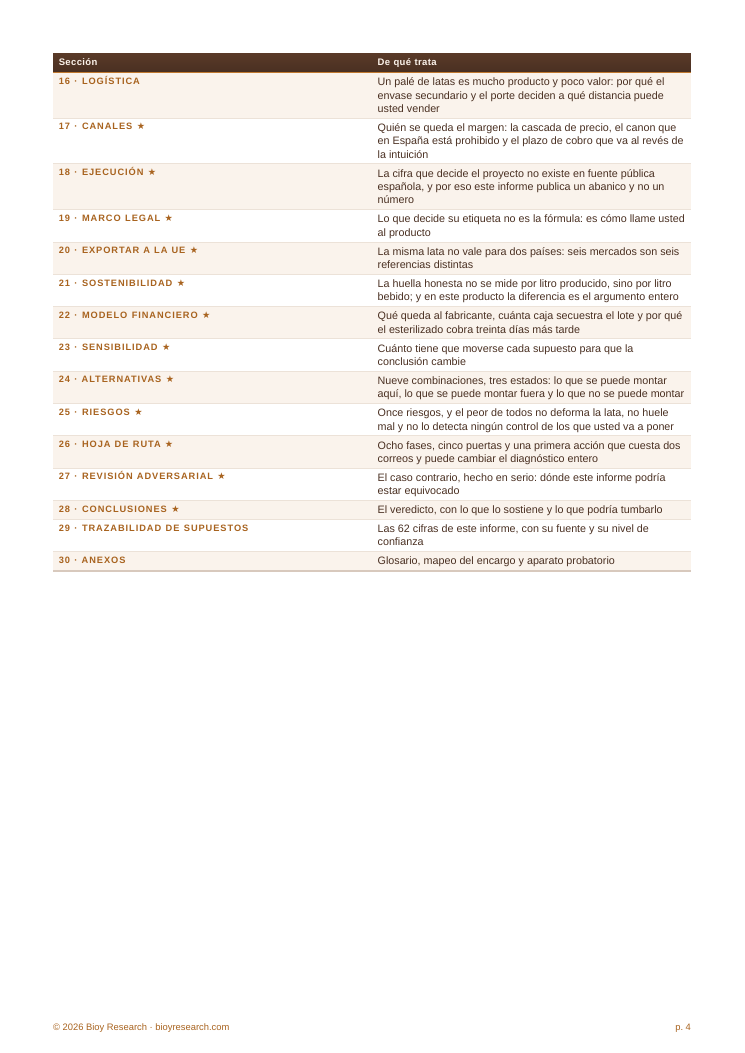
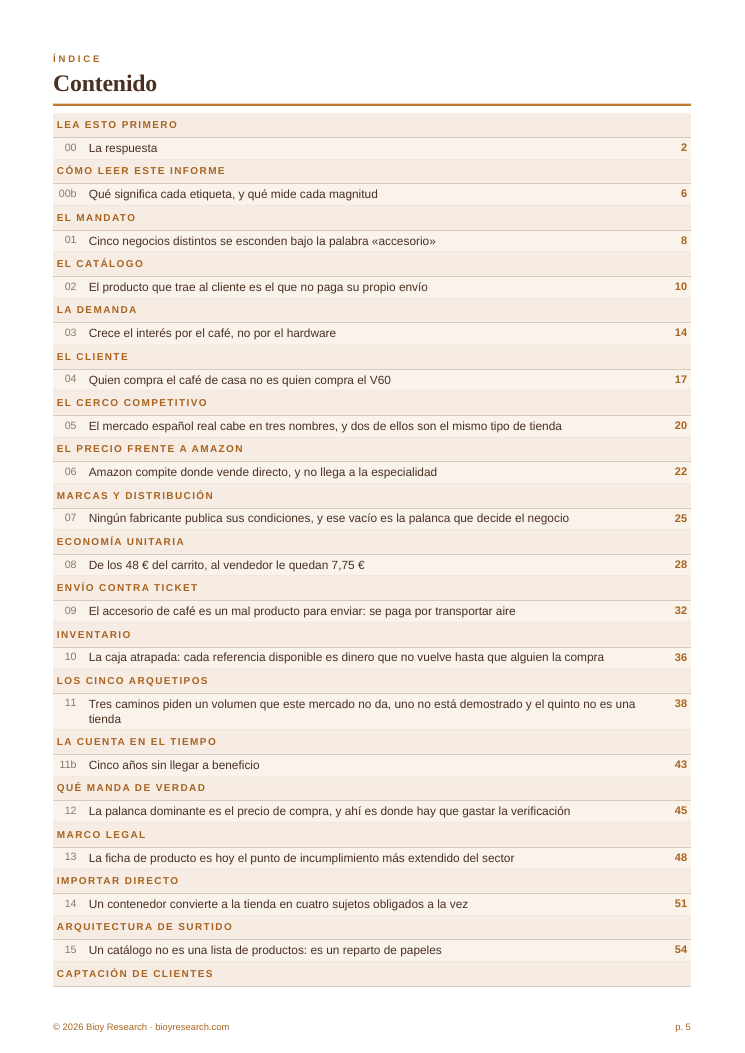
Each report turns hard-to-compile data into a direct analysis: a real competitive map, economics and location-level opportunity.

All reports

Full catalogue by market, country and vertical.

Coffee capsule recycling in the EU · A decision report for an operator-investorPDF interior
Available
2026 editionFree sample

Coffee capsule recycling in the EU · A decision report for an operator-investor

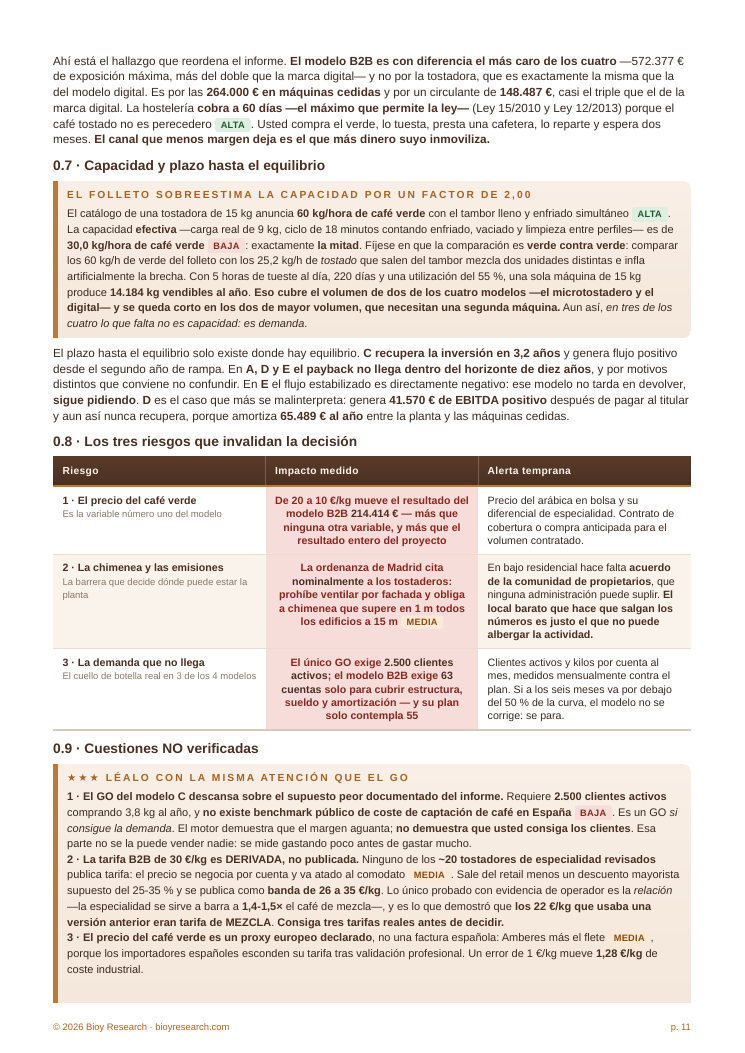
A decision report for the waste operator or the investor weighing whether to BUILD a business collecting and treating used coffee capsules in the European Union. The question that orders everything is not «what is the recovered aluminium worth?» but «who pays the cost of bringing that capsule —wet, light and scattered— to the plant?». Five decision archetypes run through the same financial engine (mass balance, NPV, gate-fee break-even, sensitivity tornado), the physics of the capsule gram by gram, the PPWR's EPR framework with its exact dates, the real competitive map (Nespresso, Podback, CITEO, Austria) and an adversarial review briefed to destroy the thesis. Scope: harmonised EU, Spain as the test case. 2026 data · Edition 7.

€3,499
individual licence · PDF
View details →
Private-Label Coffee: the own-brand buyer's decisionPDF interior
Available
2026 editionFree sample

Private-Label Coffee: the own-brand buyer's decision

A decision report for whoever buys or launches a private-label coffee —retailer, D2C brand or horeca operator— and needs to know, format by format, where the margin fits. It resolves, with the real arithmetic of the value split (from shelf price to net price to the maker's margin, with rebate and supplier approval), a GO/NO-GO verdict by buyer archetype: ground, capsule and instant across the European Union, with the unit economics, the sensitivity matrix, the map of makers and co-packers, the legal framework (EUDR, labelling, packaging) and an adversarial review that attacks its own thesis. Edition 7.

€990
individual licence · PDF
View details →
Mercadona's Total Quality ModelPDF interior
Available
2026 editionFree sample

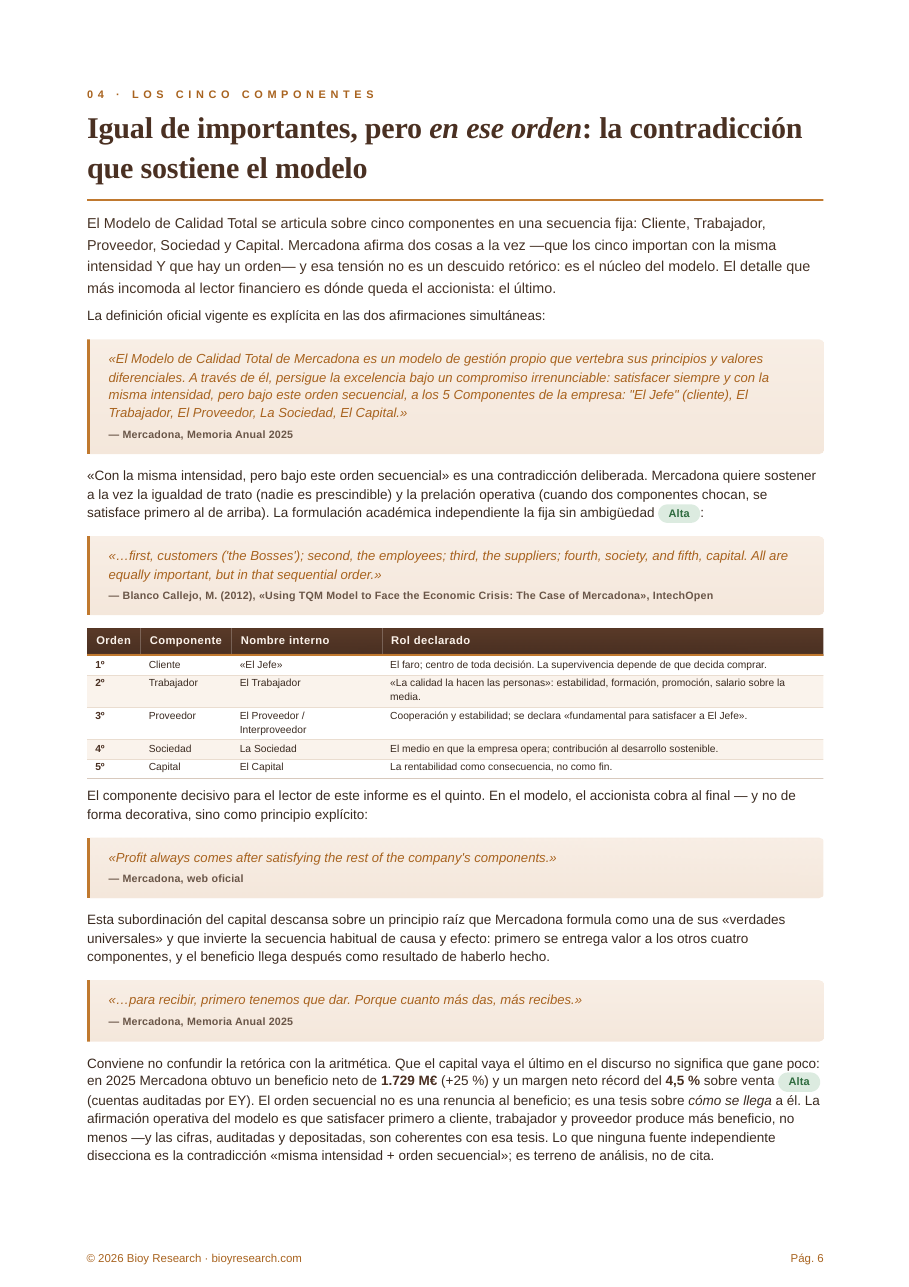
Mercadona's Total Quality Model

An analysis for anyone running a chain or a mid-sized retail business who has ever thought "we should do what Mercadona does." This is not a company biography: it is a reverse-engineering of the model, piece by piece, to separate what a retailer can replicate without Mercadona's size from what stays anchored to scale. With the real arithmetic of margin and turnover, the supplier system as it is today, the labour pillar with its two sides as verified in the courts, a benchmark against Consum, Dia, Lidl and Trader Joe's, and a replicability verdict component by component. Edition 7.

€990
individual licence · PDF
View details →
Inditex's Global Business ModelPDF interior
Available
2026 editionFree sample

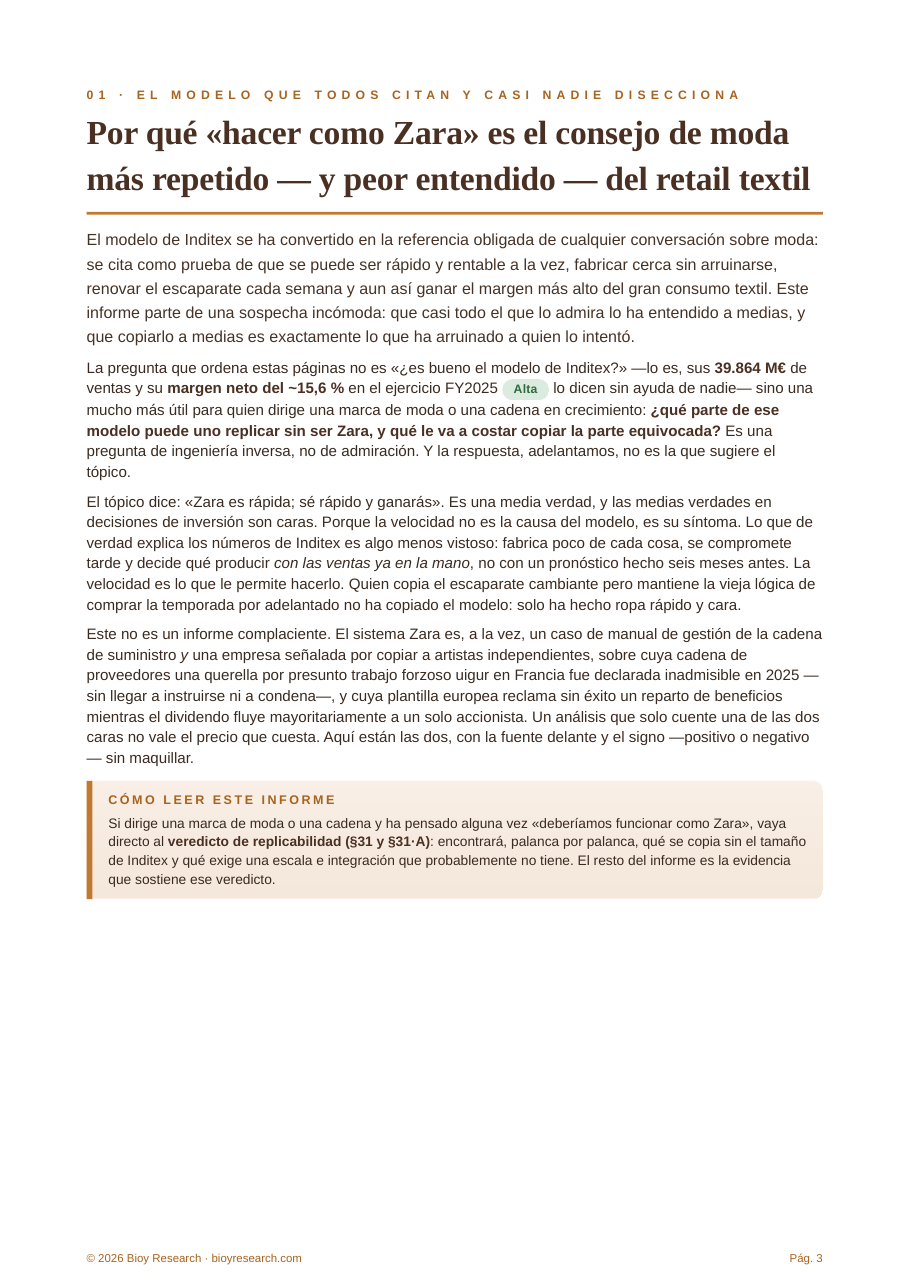
Inditex's Global Business Model

An analysis for anyone running a fashion brand or a growing chain who has ever thought "we should operate like Zara." This is not a company biography: it is a reverse-engineering of the system, lever by lever, to separate what another brand can replicate without Inditex's size from what stays anchored to scale. With the real arithmetic of margin and working capital, proximity sourcing as it actually is today —and its expiry date—, the supply chain with both sides verified, a benchmark against H&M, Shein, Primark, Uniqlo and Mango, and a quantified model that puts numbers on which product types justify copying deferred inventory. Edition 7.

€990
individual licence · PDF
View details →
Mikel Coffee: franchise due diligencePDF interior
Available
2026 editionFree sample

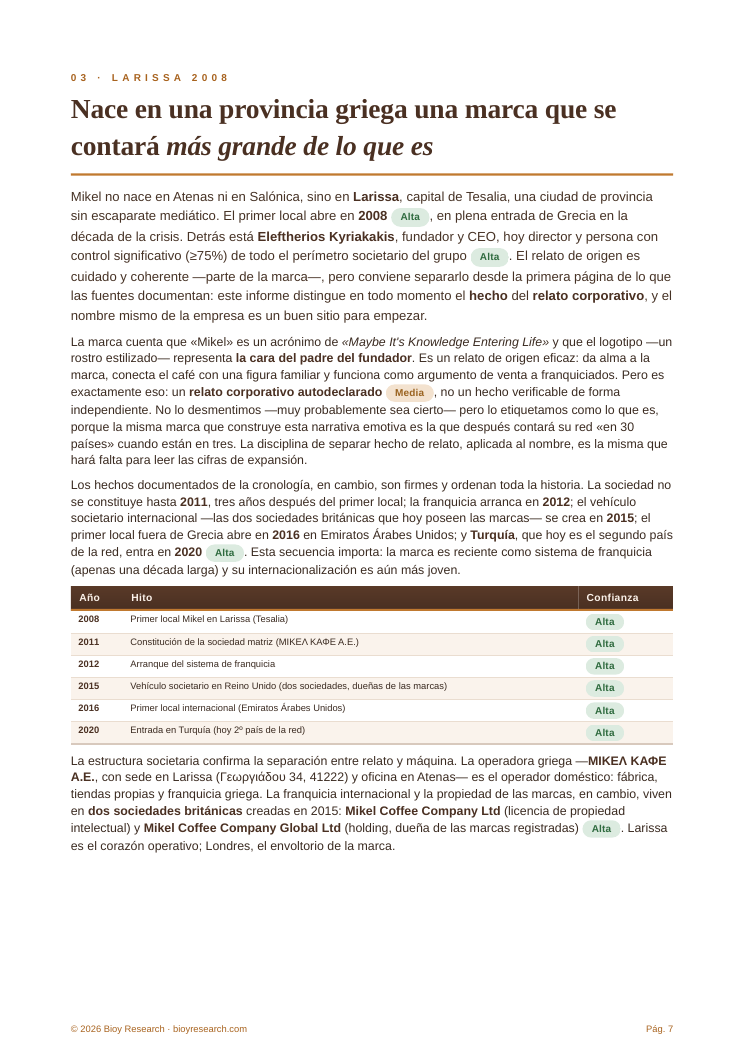
Mikel Coffee: franchise due diligence

A decision report for the SME with the money on the table, asking whether buying a Mikel Coffee franchise —or opening several— recovers the capital or merely pays a salary. This is not a brand brochure: it is the forensic file with which you sign or walk away, with the economics of a typical store modelled on 2026 Greek costs, the owner's shadow salary booked into the accounts, the real figures of the Greek parent company, the network of ~418 stores reconciled country by country against what the brand advertises, the franchisor's three income streams —including the coffee the franchisee is obliged to buy—, and a verdict for each option. Stated and proven upfront: in the base case this is self-employment, not an investment. Edition 7.

€3,499
individual licence · PDF
View details →
Coffee e-commerce: selling coffee online in SpainPDF interior
Available
2026 editionFree sample

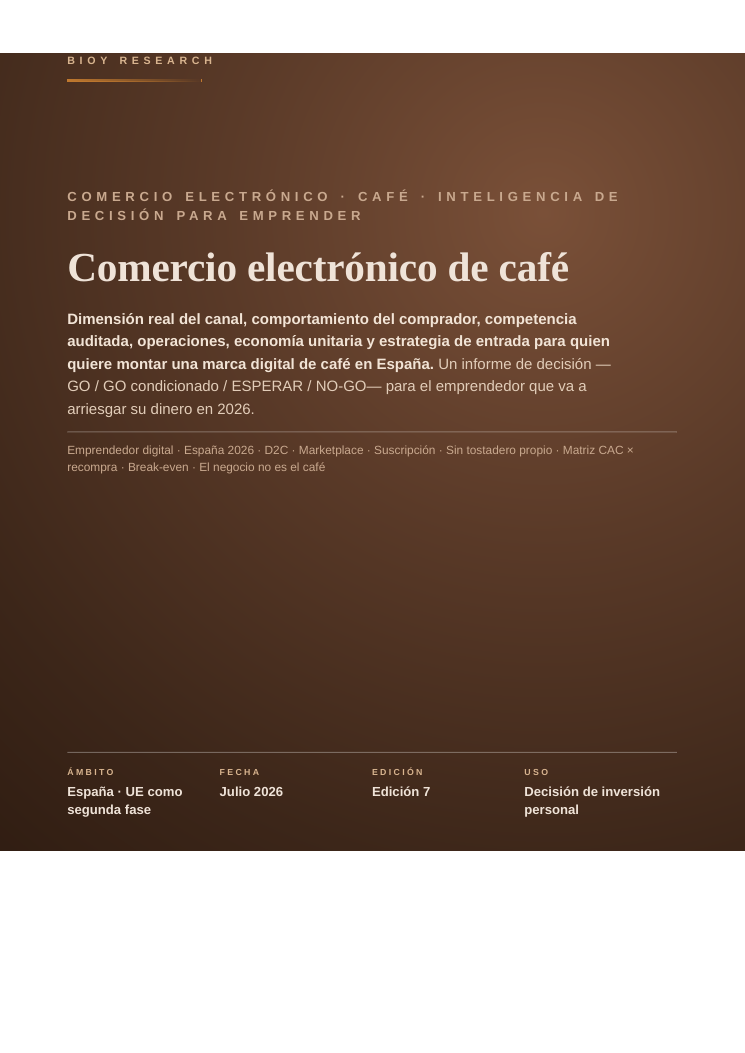
Coffee e-commerce: selling coffee online in Spain

A decision report for the digital entrepreneur who wants to build an online coffee brand without owning a roastery, buying the roast in from a third party. The thesis: the order's margin is not the problem; the customer who buys only once is. The report resolves, with the real arithmetic of the order line by line, a decision matrix on acquisition cost and repeat-purchase frequency, a dated audit of Spanish stores, the taxonomy of eleven distinct business models, the verified legal and tax framework, and an adversarial review that attacks the report's own thesis, exactly which box your case falls into. Edition 7.

€990
individual licence · PDF
View details →
Monthly coffee subscription: the roaster's subscriber clubPDF interior
Available
2026 editionFree sample

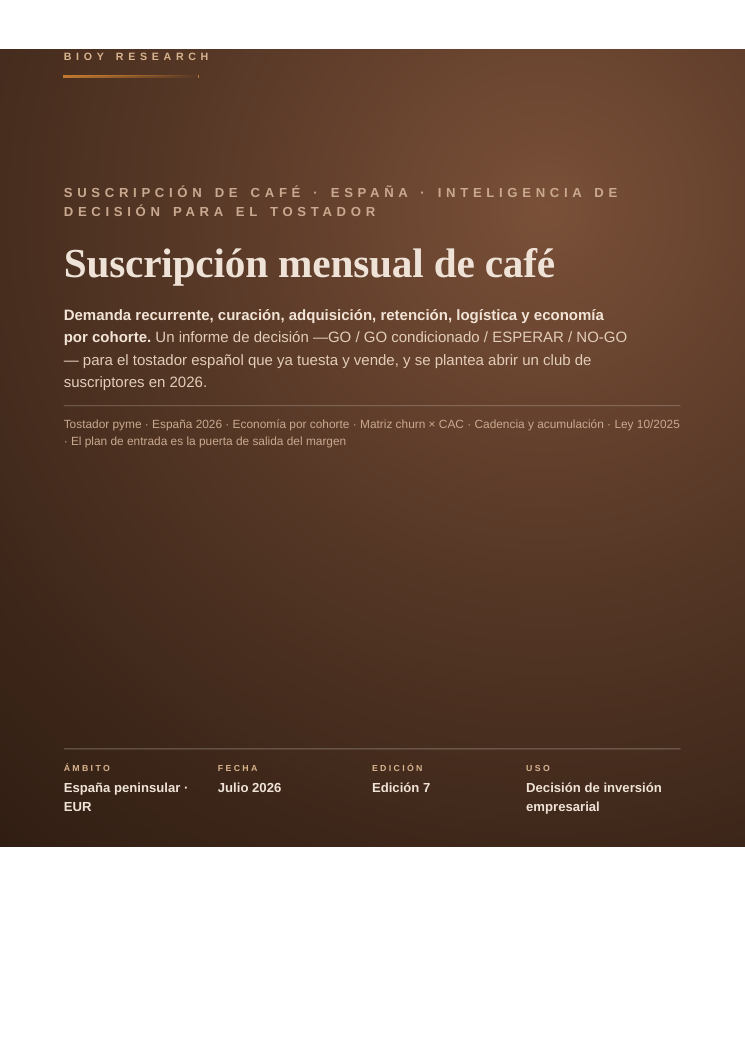
Monthly coffee subscription: the roaster's subscriber club

A decision report for the roaster who already produces and sells, and is considering opening a subscription club. The thesis starts from official data: the average Spanish household consumes 156 g of pure roast coffee a month and the market's entry plan ships 271 g. The report resolves, with cohort economics calculated shipment by shipment, a grid of 60 combinations of size, cadence and household profile; the shipping-cost staircase by weight band, which decides which plan makes money; a dated audit of five Spanish operators; the legal framework verified in the Spanish official gazette —renewal notice and right of withdrawal—; the break-even with and without the owner's time; and an adversarial review that attacks the report's own thesis, exactly which box your case falls into. Edition 7.

€990
individual licence · PDF
View details →
How to choose a European postgraduate degree after PsychologyPDF interior
Available
2026 editionFree sample

How to choose a European postgraduate degree after Psychology

Cost, employability, return and risk of each option, for the Psychology graduate who is not yet sure about their specialisation. The thesis: the postgraduate degree is not the decision; the LICENCE TO PRACTISE is. Decide what you want to be allowed to do, check the programme actually grants it, and only then look at prestige, country and price. A decision framework with 3 worked archetypes, the recognition-and-licensing map (EuroPsy, MPGS/PIR, GZ/BIG, Approbation, DClinPsy, OPP), 26 career paths, in-depth country files for 6 countries plus 11 second-tier ones, and a financial return model with simulator, sensitivity analysis and an FMEA risk matrix. Edition 7.

€349
individual licence · PDF
View details →
Entering Argentina · Professional espresso machinesPDF interior
Available
2026 editionFree sample

Entering Argentina · Professional espresso machines

The entry file into Argentina for a European maker of traditional espresso machines (1, 2 and 3 groups). The finding that orders everything else: it is not "don't enter Argentina", it is "don't enter with THAT machine". The border is one of product, not price. There are two markets: the traditional bar is a NO-GO — four Argentine factories (La Valente since 1955, Lainex, RILO, Monaco) sell a 2-group machine at US$ 3,959, with local parts and service, while the Spanish machine lands at US$ 7,754 — and the specialty café is a conditional GO — it pays US$ 6,000-30,000 and zero out of six fit a domestic machine. The question that decides it: does your machine have PID and a multi-boiler? Five entry models run through the same financial engine (NPV, break-even, scenarios, tornado), the comodato quantified as a premium channel, and an adversarial review by four experts that DESTROYED the flagship finding: the supposed "category E" of the EU-Mercosur deal turned out to be false. 2026 data · Edition 7.

€3,499
single licence · PDF
View details →
Kosher Certification · A Decision Report for an Exporting ManufacturerPDF interior
Available
2026 editionFree sample

Kosher Certification · A Decision Report for an Exporting Manufacturer

A decision report for a food-and-ingredient manufacturer weighing kosher certification for export. The question that orders everything is not "how much more will I sell?" but "which specific account closes to me without the symbol, and what does it cost to certify MY plant?". The kosher symbol is a B2B channel-access requirement, not a premium: it rarely lifts the price, but without it you are shut out. Four decision archetypes run through the same financial engine (NPV, break-even, a sensitivity tornado, scenarios), the map of certifiers (OU, KLBD, the Chief Rabbinate) chosen back-to-front from the buyer, the complexity by product category, and an adversarial review briefed to destroy the thesis. Scope: the US, Israel and the EU. 2026 data · Edition 7.

€3,499
single licence · PDF
View details →
Coffee distribution to the hospitality trade in Spain · Decision report on setting up a distributorPDF interior
Available
2026 editionFree sample

Coffee distribution to the hospitality trade in Spain · Decision report on setting up a distributor

A decision report for the entrepreneur or small business weighing up whether to set up a coffee distribution business serving bars and restaurants in Spain. The question that orders everything is not "can I win customers?" but "does this business pay a return on the capital I am about to put in, or does it merely pay me a wage?". Five business models — multi-brand with no assets, exclusive distributor with loaned equipment (comodato), own-label coffee under the distributor's brand, speciality coffee specialist, and buying an existing book of accounts — all run through the same financial engine: NPV, IRR, break-even and a sensitivity tornado, with the owner's market salary deducted before any talk of profit. It includes the real funnel behind the hospitality census (from 235,623 venues down to those you can genuinely win), the consumption threshold below which an account destroys margin, the profit and loss of a single bar line by line, the full loaned-equipment cycle modelled by cohorts, the route density that sets the minimum viable scale, the case law on exclusive supply contracts, and an eight-round adversarial review that corrected 34 errors in the report itself. Scope: Spain. 2026 data · Edition 7.
€3,499
single-user licence · PDF
View details →
Artisan coffee roastery in Spain · Decision report on setting up a roasting plantPDF interior
Available
2026 editionFree sample

Artisan coffee roastery in Spain · Decision report on setting up a roasting plant

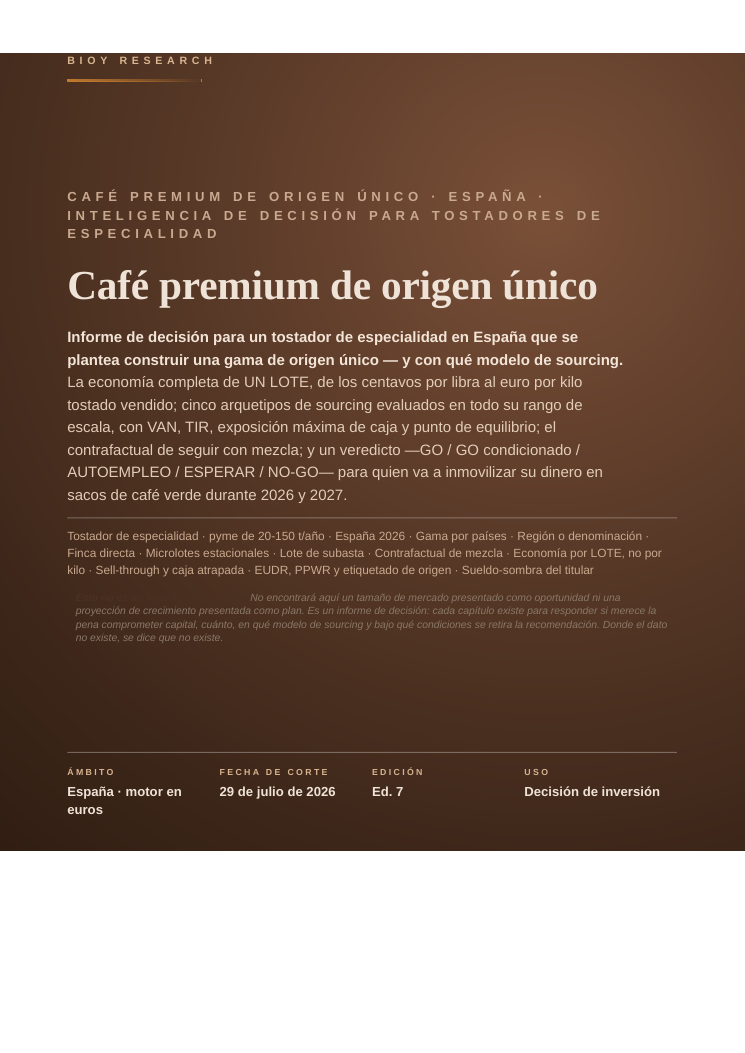
Decision report for the entrepreneur or small business weighing whether to set up an artisan coffee roastery in Spain. The question that governs everything is not «do I know how to roast?», but «does the business pay back the capital I am about to put in, or does it just pay me a salary?». Four archetypes —micro-roastery with local sales, digital brand with its own plant, B2B production for the hospitality trade, and private label for third parties— run through the same financial engine: NPV, IRR, break-even and a sensitivity tornado, with the owner's market salary deducted before any talk of profit. It covers the full conversion chain (green kilo → roasted → sellable → net revenue), the real industrial cost per kilo against the maquila (contract roasting) rate, the machines lent out under comodato (free loan of an espresso machine tied to an exclusive supply contract) that nobody budgets for, the legal, food-safety and tax framework (RGSEAA — the Spanish food business register, APPCC — the Spanish HACCP food-safety plan, IVA — Spanish VAT, RETA — the Spanish self-employed social security scheme, Impuesto de Sociedades — Spanish corporate income tax, from 2027) and an adversarial review briefed to destroy the thesis, which pulled a fifth planned archetype out of the report. Scope: Spain. 2026 data · Edition 7.
€3,499
single licence · PDF
View details →
Rainforest Alliance Certification in Coffee · A Decision Report for an EU BrandPDF interior
Available
2026 editionFree sample

Rainforest Alliance Certification in Coffee · A Decision Report for an EU Brand

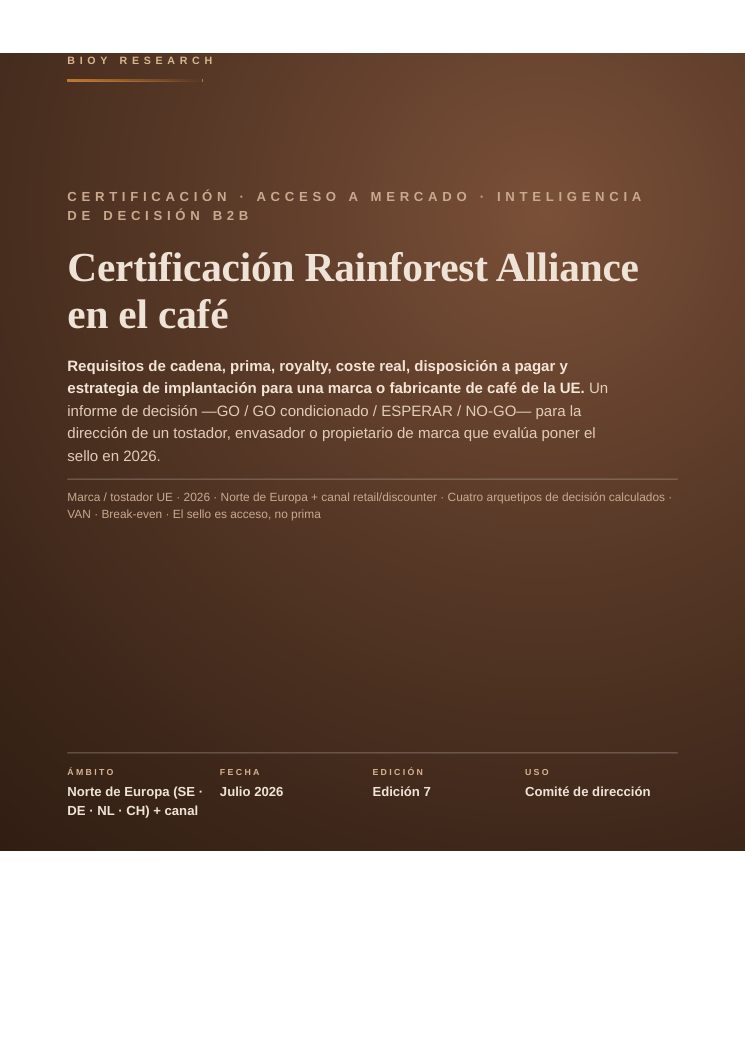
A decision report for an EU coffee brand or manufacturer weighing whether to certify its chain and put the Rainforest Alliance seal on the pack. The question that orders everything is not "will I sell more?" but "is the seal shelf access, a consumer premium, or a sunk cost for MY chain?". In mainstream coffee the seal rarely lifts the price: it is a listing requirement that opens — or does not close — the account with the retailer. Four decision archetypes run through the same financial engine (NPV, IRR, break-even, a sensitivity tornado), the real cost of the seal (per-kilo royalty, traceability, audit), what it guarantees and what it does not against EUDR and greenwashing, the market files by country and channel, and an adversarial review briefed to destroy the thesis. Scope: the EU. 2026 data · Edition 7.

€3,499
single licence · PDF
View details →
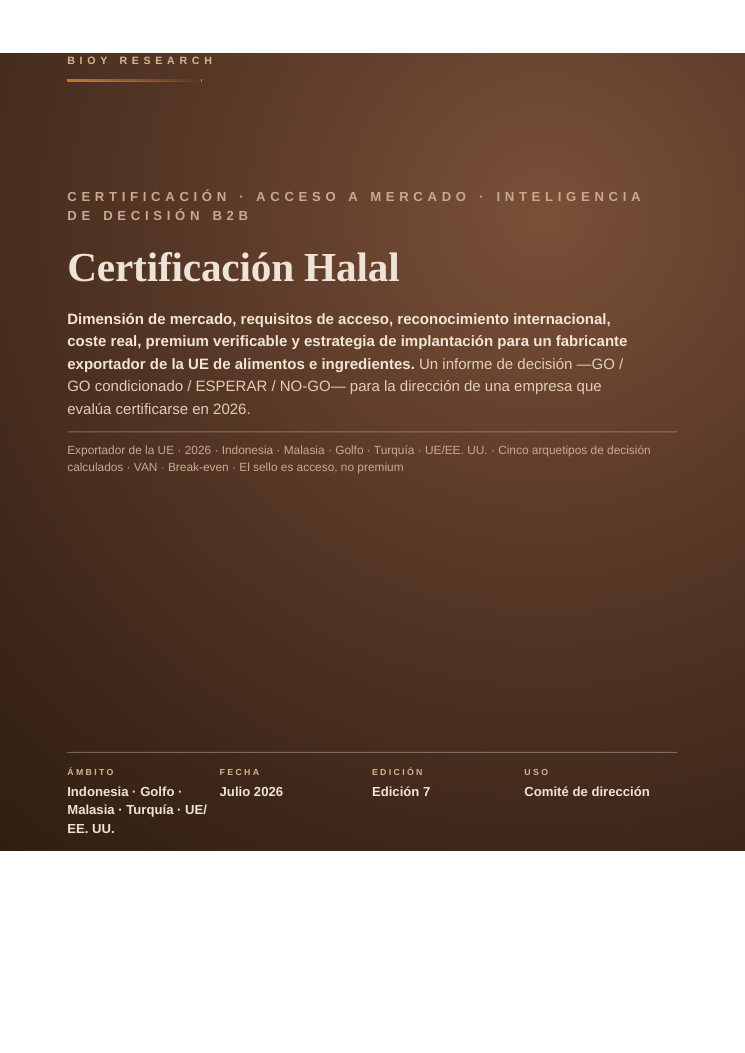
Halal Certification · A Decision Report for an EU Exporting ManufacturerPDF interior
Available
2026 editionFree sample

Halal Certification · A Decision Report for an EU Exporting Manufacturer

A decision report for an EU food-and-ingredient manufacturer (based in Spain) weighing halal certification for export. The question that orders everything is not "how much more will I sell?" but "in which destination is the mark mandatory by law, which agency does that customs authority recognise, and what does it cost to adapt MY plant?". Halal is not a premium: in Indonesia it is mandatory by law and in the Gulf it is mandatory for any animal product; without the right mark the container does not enter. Five decision archetypes run through the same financial engine (NPV, IRR, break-even, a sensitivity tornado, scenarios), the recognition map across more than 400 agencies —the expensive mistake is not getting certified, it is doing so with the one the destination customs authority does not recognise—, the complexity by product category, the separate case of ritual slaughter, and an adversarial review briefed to destroy the thesis. Scope: Indonesia, the Gulf (GCC), Malaysia, Türkiye and the EU/US. 2026 data · Edition 7.

€3,499
single licence · PDF
View details →
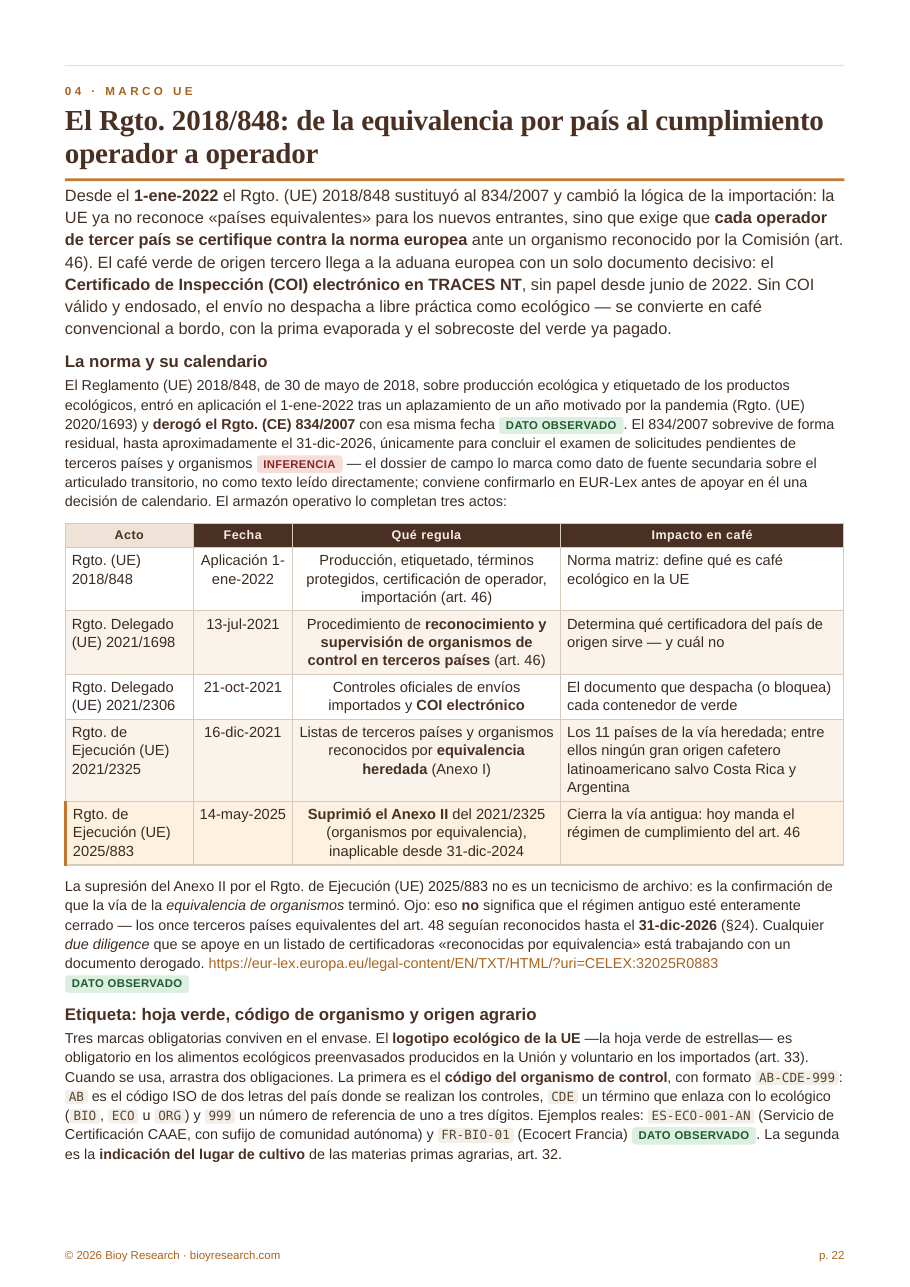
Organic Coffee in the EU · An Investment Decision ReportPDF interior
Available
2026 editionFree sample

Organic Coffee in the EU · An Investment Decision Report

Investment due diligence for the management or investment committee of an agri-food company weighing capital in the certified organic coffee chain into the European Union. The question that orders everything is not «how fast is the organic market growing?», but «at which link does the seal actually leave money, and against what is it compared?». Three archetypes —converting production at origin, buying certified green and roasting, certifying an existing plant— plus a format variant, all run through the same financial engine (NPV, IRR, payback, lever bridge, break-even and tornado), with the reproducible model delivered alongside the report. Covers the Reg. (EU) 2018/848 framework and compliance-route imports with a COI in TRACES NT, the EUDR (Reg. 2023/1115) with its current dates and cost, the PPWR for the capsule format, the gap between certified volume and volume sold at a premium, real willingness to pay, and an adversarial review briefed to destroy the thesis. Currency EUR. 2026 data · Edition 7.

€3,499
single licence · PDF
View details →
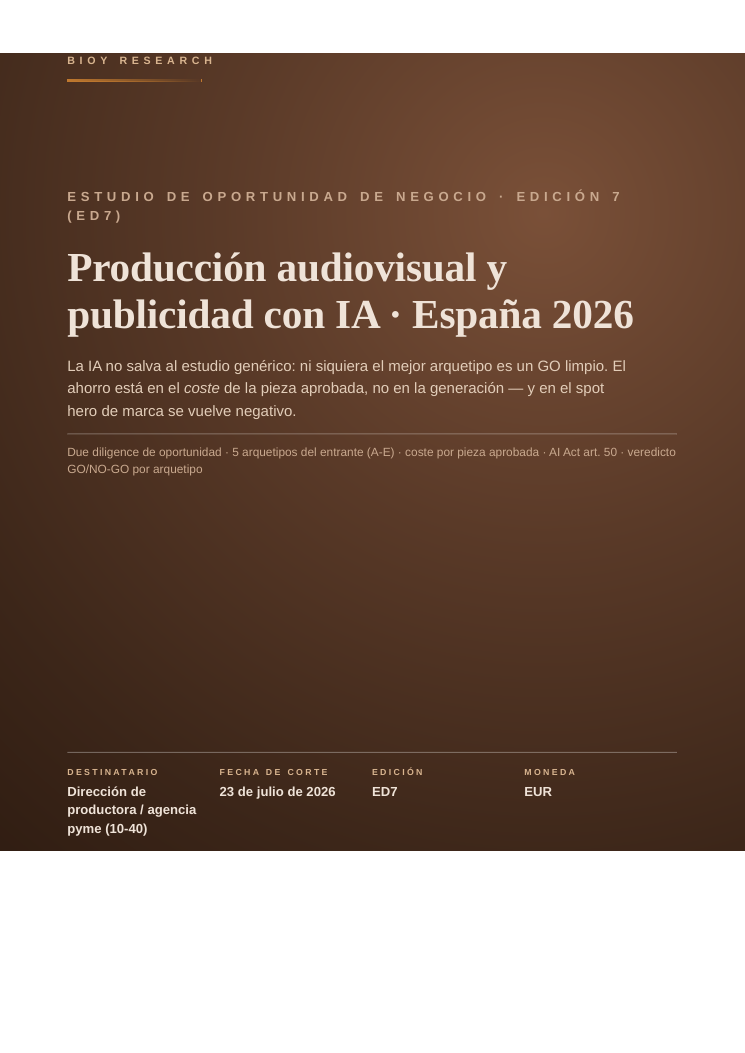
AI Audiovisual Production & Advertising · Spain 2026PDF interior
Available
2026 editionFree sample

AI Audiovisual Production & Advertising · Spain 2026

Opportunity due diligence for a small or mid-sized audiovisual production company or agency (10-40 people) in Spain weighing whether to capture value with generative AI. The question that orders everything is not «how much does AI speed up production?», but «on which type of piece does the cost per approved piece actually fall, and against what is it compared?». Five archetypes —augmented studio, AI-native production house, automation for agencies, self-service SaaS platform, and vertical specialist— all run through the same economic engine (NPV, IRR, maximum cash exposure, break-even, tornado and base, adverse and severe scenarios), with the reproducible model delivered alongside the report. The finding that orders the thesis: the saving is not in generating, it is in the cost per approved piece, and it is a spread by type of piece —very large on product video and versioning, and evaporating on the brand hero spot. Covers the AI Act (Reg. (EU) 2024/1689) framework with the deepfake transparency of Art. 50, the intellectual property of AI output, image and voice rights (Organic Law 1/1982), the copyright indemnity offered by each tool, and Spanish taxation, plus an adversarial review briefed to destroy the thesis. Currency EUR. 2026 data · Edition 7.

€3,499
single licence · PDF
View details →
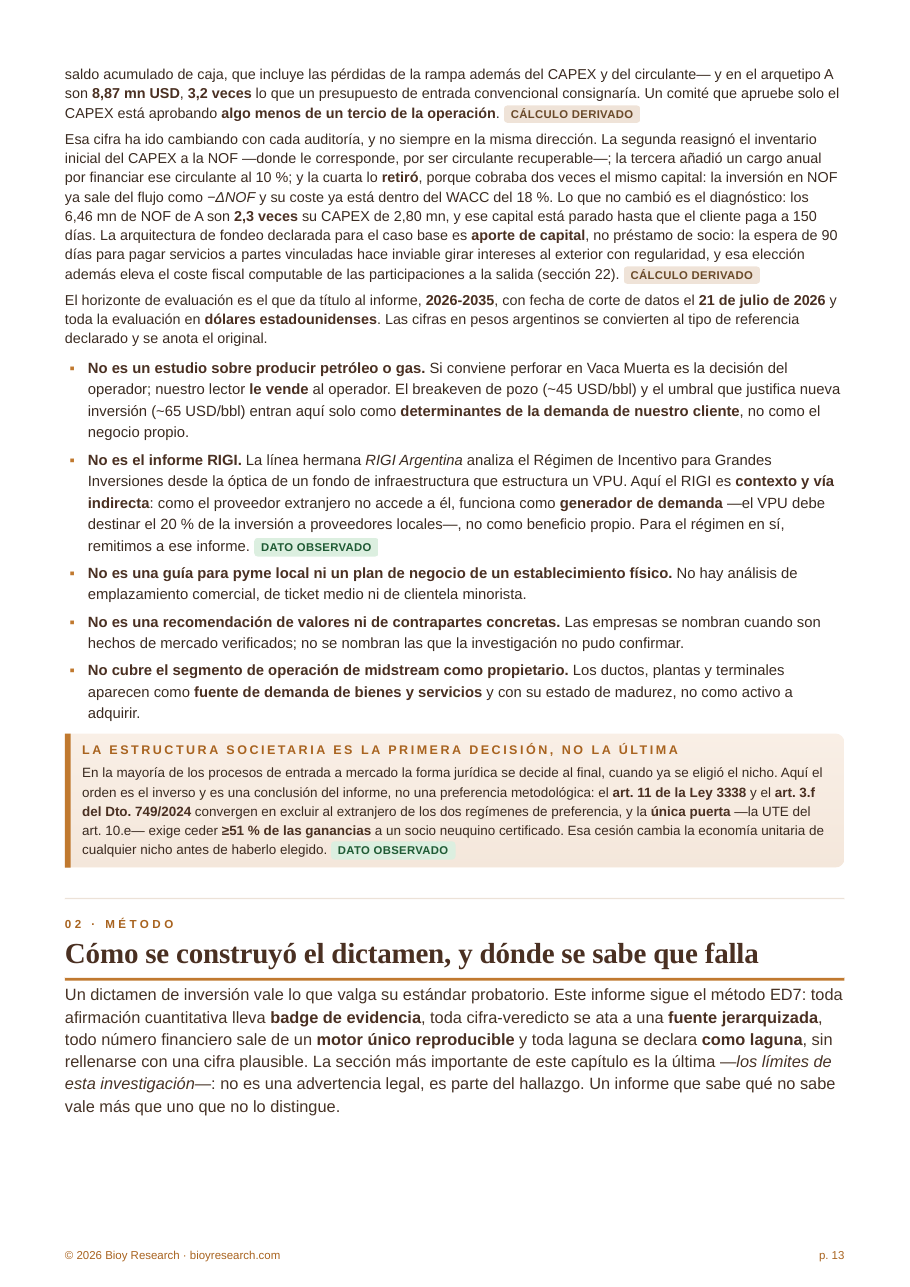
Vaca Muerta 2026-2035 · Entering as a supplier to the operatorsPDF interior
Available
2026 editionFree sample

Vaca Muerta 2026-2035 · Entering as a supplier to the operators

Market-entry due diligence for the board of an industrial or services company weighing whether to sell to Vaca Muerta operators. This is not a report about investing in oil: the reader does not drill, the reader SELLS to those who do. The question that orders everything is not «how fast is the basin growing?» but «how much of that spend is genuinely addressable by a foreign entrant, and at what margin?». The announced-investment headline is discounted step by step down to the spend a supplier can actually invoice; Neuquén's local-content law is read against the official text —including the arithmetic that caps a foreign-owned company—; and four entry archetypes run through the same economic engine (NPV, IRR, gross-margin threshold, working capital, utilisation break-even). With an adversarial review, four documented rounds of external audit and the evidence gaps declared. Currency USD. 2026 data · Edition 7.

€3,499
single licence · PDF
See details →
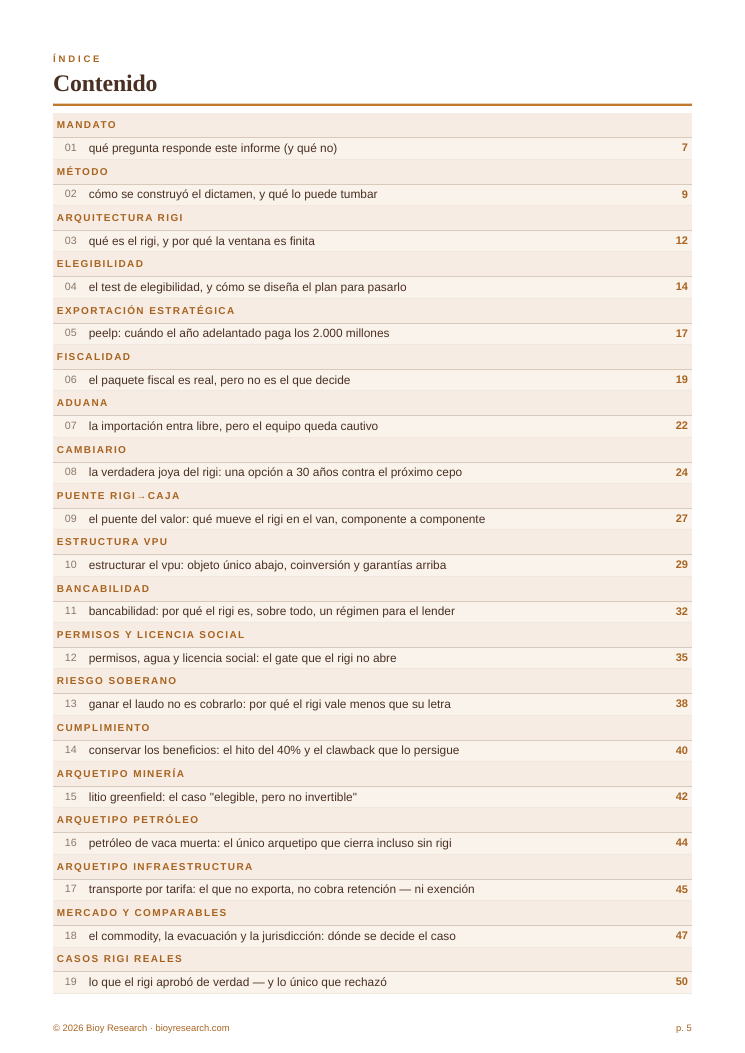
RIGI Argentina · An Investment Decision Report for a FundPDF interior
Available
2026 editionFree sample

RIGI Argentina · An Investment Decision Report for a Fund

An investment due diligence for the committee of an infrastructure or natural-resources fund weighing whether to finance a large-scale Argentine project under RIGI (the Large Investment Incentive Regime). The question that orders everything is not "how much does the incentive yield?" but "is this project investable, how does the product leave the country, and who buys it?". RIGI-eligible is not the same as investable: approval is an act about the vehicle, not about feasibility. Four investment archetypes run through the same financial engine (NPV, IRR, DSCR, break-even, project-finance waterfall), RIGI read as a 30-year FX-and-stability regime rather than a corporate-tax one, sovereign risk with its track record of arbitral awards —formal law is not effective protection—, the constraint that decides (evacuation and offtake, not the incentive), and an adversarial review briefed to destroy the thesis. Scope: lithium, Vaca Muerta and evacuation infrastructure. Currency USD. 2026 data · Edition 7.

€3,499
single licence · PDF
View details →
Sports Supplements · A Decision Report for Launching an Own Brand in the EUPDF interior
Available
2026 editionFree sample

Sports Supplements · A Decision Report for Launching an Own Brand in the EU

A decision report for the founder or investment committee weighing the launch of an own-brand sports supplement line in the EU (based in Spain), manufactured through a co-packer and sold across D2C, marketplace, retail and gyms. The question that orders everything is not "which product is trending?" but "what am I legally allowed to say, what does the tub really cost, and which channel leaves me a margin once its fees are taken out?". Five launch archetypes run through the same financial engine (NPV, IRR, payback, break-even, tornado, scenarios), the ingredient–goal–evidence–dose matrix built on the AIS and IOC frameworks, the claims straitjacket verified against the full EU Register of Regulation 1924/2006, the anti-doping exposure under strict liability, the tub-by-tub cost with official rate cards, and an adversarial review that changed the verdict —published with its before and after. 180 pages · 2026 data · Edition 7.

€3,499
single licence · PDF
View details →
Entering Brazil · Professional espresso machinesPDF interior
Available
2026 editionFree sample

Entering Brazil · Professional espresso machines

The entry file into Brazil for a European maker of traditional espresso machines (1, 2 and 3 groups). The finding that orders everything else: the import duty on your machine is 20% — or 0% — and what separates the two is a filing worth R$ 1.58 million. But only if your boiler falls inside a paragraph written by a civil servant: the one-group machine does not fit the spec sheet and pays the 20%. Five entry models run through the same financial engine (NPV, IRR, break-even, scenarios), the Brazilian comodato quantified for the first time — "free" is the most expensive way to have a machine — and an adversarial review by four experts briefed to destroy the thesis: they found 26 objections and the report was rewritten. 2026 data · Edition 7.

€3,499
single licence · PDF
View details →
Spain EV Charging Market Entry Playbook 2026PDF interior
Available
2026 editionFree sample

Spain EV Charging Market Entry Playbook 2026

The Spanish EV charging market read as an entry decision by a foreign charge point operator, an infrastructure fund or a fleet-charging operator. Eight business models run through the same financial engine: one creates value, seven destroy it. The thesis is uncomfortable — the enemy is not Spain, it is direct current: hold the fleet and the kilowatt-hours constant and AC returns 14.1% IRR while DC returns between −4.7% and +2%. And the whole business fits inside four cents: the one asset that works needs a price above €0.36/kWh, and the price Spanish fleets are actually signing is €0.32/kWh — extracted from the technical evaluation report of a signed Ministry of Defence framework agreement. Grid access, permitting, tariffs, city and corridor prioritisation, line-by-line CAPEX/OPEX benchmarks, entry routes and partnerships, 8 due-diligence checklists and 5 ready-to-use templates. 2025–2026 data · Edition 6.

€3,499
individual licence · PDF
View details →
Doing Business in the UAE: Market Entry ReportPDF interior
Available
2026 editionFree sample

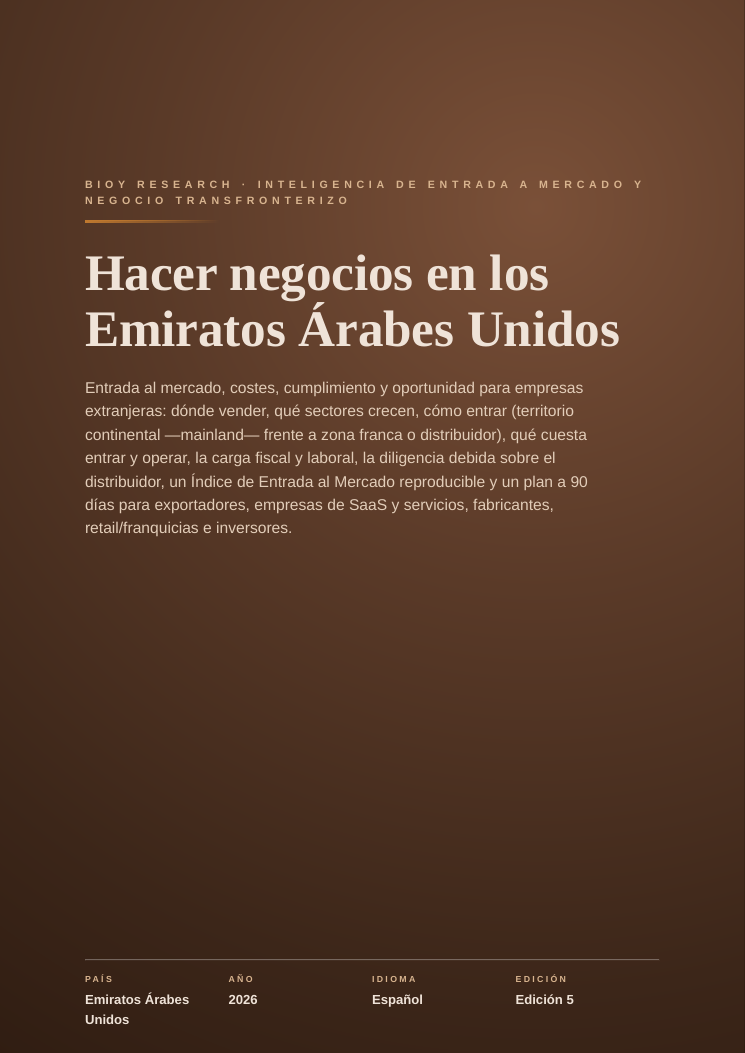
Doing Business in the UAE: Market Entry Report

A market-entry decision manual for foreign companies that want to sell, invest, hire, set up an entity, import/export or find partners in the United Arab Emirates. Written for five buyer archetypes: exporters, SaaS/digital and professional services, manufacturers looking for distributors, retail/franchise, and investors/family offices. With a reproducible Market Entry Score across 8 weighted pillars (UAE 64/100, benchmarked against Singapore 76, Ireland 71, Saudi Arabia 58 and Qatar 55), a cost-to-enter / cost-to-operate model with a 2D decision matrix and a calculated tornado (year-1 all-in: AED 87k sell-from-abroad · AED 262k free-zone lean · AED 848k mainland LLC · AED 1.29m DIFC/ADGM), and a 90-day entry plan by archetype. Covers the mainland vs free zone vs offshore decision (100% foreign ownership since 2021; the QFZP 0% rate is conditional and forfeitable), the Commercial Agencies Law trap, corporate tax 9% / VAT 5% / 15% DMTT, labour costs, gratuity and Emiratisation, the bank account as the real gate (banking is the worst-scoring pillar: 42/100), customs, ICV and government tenders, the top-10 concrete entry plays and the emirate map (Dubai, Abu Dhabi, Sharjah, Northern Emirates). 2025–2026 data · Edition 5.
€299
individual licence · PDF
View details →
Premium Children's Enrichment Studios: Germany Market Entry ReportPDF interior
Available
2026 editionFree sample

Premium Children's Enrichment Studios: Germany Market Entry Report

Germany's premium children's enrichment sector read as a market-entry decision — music, art, STEM/coding/robotics, languages, premium sport & movement, drama and early-development, across recurring classes, memberships, camps, birthday parties and franchises. A market with no single audited figure (triangulated at ~€2–4bn) on a shrinking demographic base (654,241 births in 2025, the lowest since 1946), with no national cross-format brand and whitespace in physical STEM/coding. With the regulatory-tax spine (per-discipline USt under §4 Nr. 21 — music/languages/coding exempt vs. swimming/riding/leisure at 19%; the 2028 Scheinselbständigkeit/Herrenberg time-bomb; child protection), a prime classroom-hour capacity engine, economics by format, the Speckgürtel geographic arbitrage and an Edition-5 decision simulator with break-even at 93 enrolments. 2024–2026 data · Edition 5.

€299
individual licence · PDF
View details →
EUDR compliance for importers of coffee, cocoa and chocolate · Edition 5 2026PDF interior
Available
2026 editionFree sample

EUDR compliance for importers of coffee, cocoa and chocolate · Edition 5 2026

An operational playbook to comply with Regulation (EU) 2023/1115 (EUDR): traceability, geolocation, the DDS in TRACES, risk assessment and mitigation, country benchmarking, penalties and timeline, with a multi-country focus on Spain, Germany, France and Italy. Edition 5.

€299
individual licence · PDF
View details →
Artisan bakeries and premium bakery cafés in Spain · Market study 2026PDF interior
Available
2026 editionFree sample

Artisan bakeries and premium bakery cafés in Spain · Market study 2026

An investment market study for artisan bakeries, sourdough and premium bakery cafés in Spain: real competition by neighbourhood, prices, five formats compared, unit economics and a GO/NO-GO decision simulator. Edition 5.

€299
individual licence · PDF
View details →
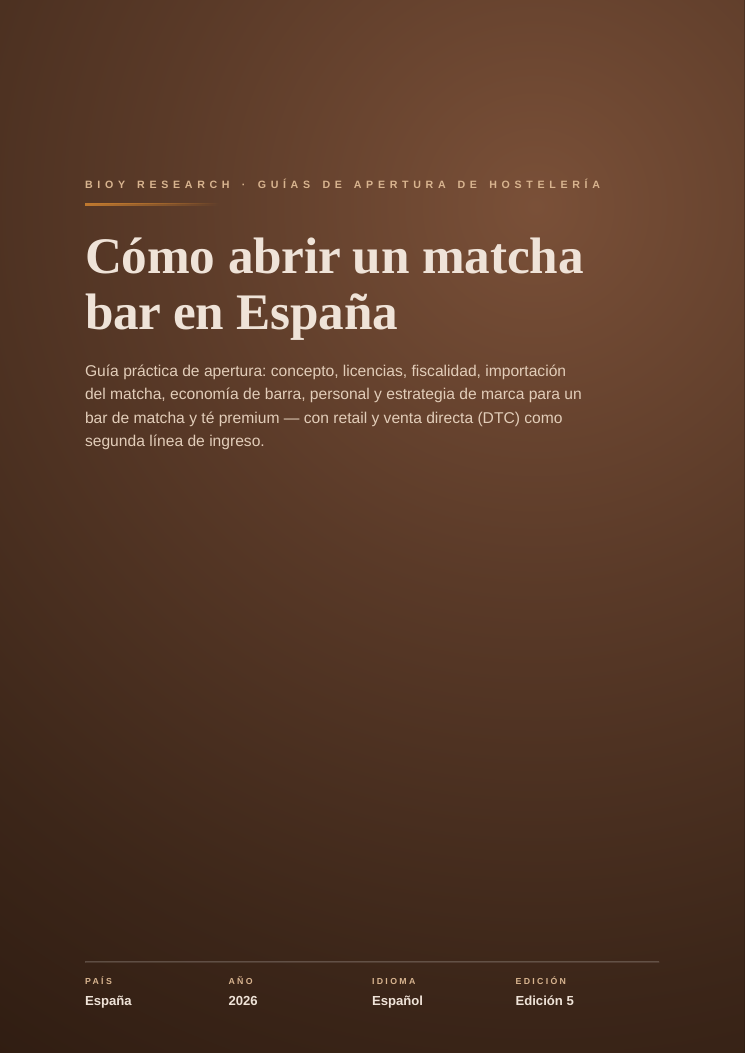
How to Open a Matcha Bar in Spain · Practical Guide 2026PDF interior
Available
2026 editionFree sample

How to Open a Matcha Bar in Spain · Practical Guide 2026

A practical opening guide, not a market study: how to set up a single-product matcha bar in Spain, with retail and direct-to-consumer (DTC) as a second revenue line. It is cheap to build (no espresso machine, saving €6,000–15,000), but holding the margin is not (matcha food cost 25–40% vs 15–25% for coffee, and rising with the supply crisis). Concept, licences, tax, matcha importing, bar economics, staffing and brand, with a GO/NO-GO decision simulator (§20·A). Edition 5.

€299
individual licence · PDF
View details →
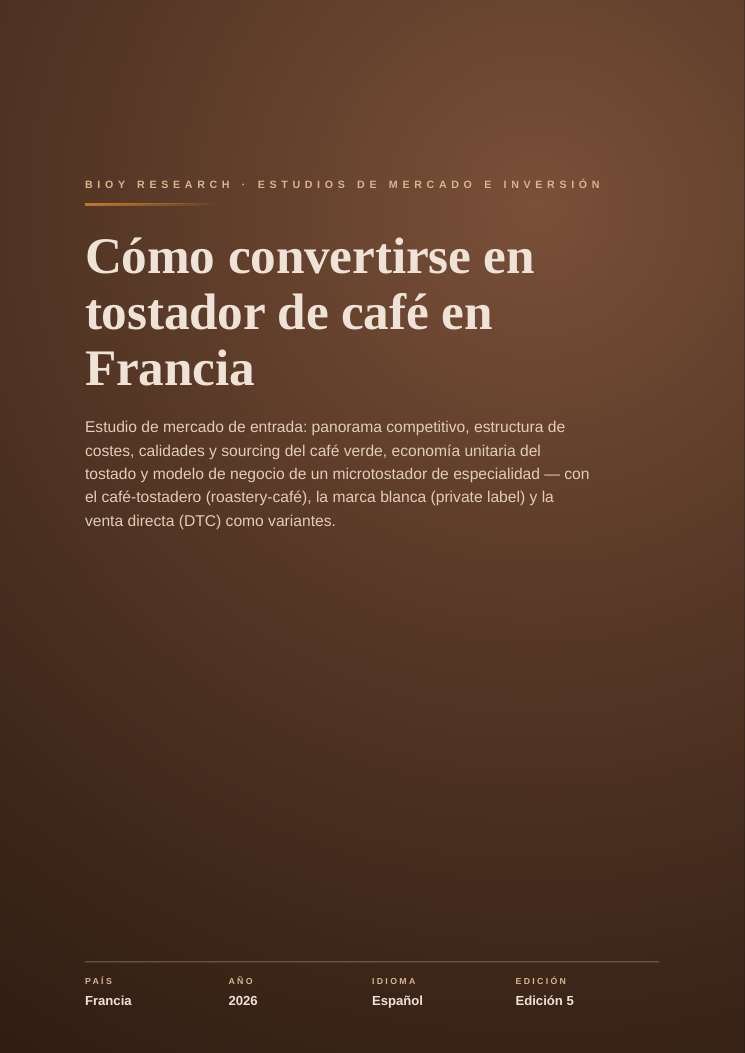
The coffee roasting business in France · 2026 StudyPDF interior
Available
2026 editionFree sample

The coffee roasting business in France · 2026 Study

A market and investment study of the coffee roasting business (torréfaction) in France: B2B manufacturing, not a coffee shop. Buy green coffee, roast it and sell beans or ground to hospitality (CHR), shops, direct-to-consumer (DTC) and private label. The thesis: you don't win by roasting, you win in the sales channel and the mix; green coffee is 60–75% of cost and is in a historic crisis (arabica +190% since 2023). Focus format: the specialty micro-roaster (a 5–15 kg roaster), with roastery-café, private-label and industrial variants. The tax finding: roasted coffee in a bag is taxed at 5.5% VAT in France (Art. 278-0 bis CGI), not 20%, and the tariff favours roasting in France (green coffee 0% vs imported roasted 7.5%). Break-even 1,372 kg/month, GO ≥ 2,000 kg/month, capital from €85,000; the real risk is working capital. ED5 decision simulator (§20·A). 2026 data · Edition 5.

€299
individual licence · PDF
View details →
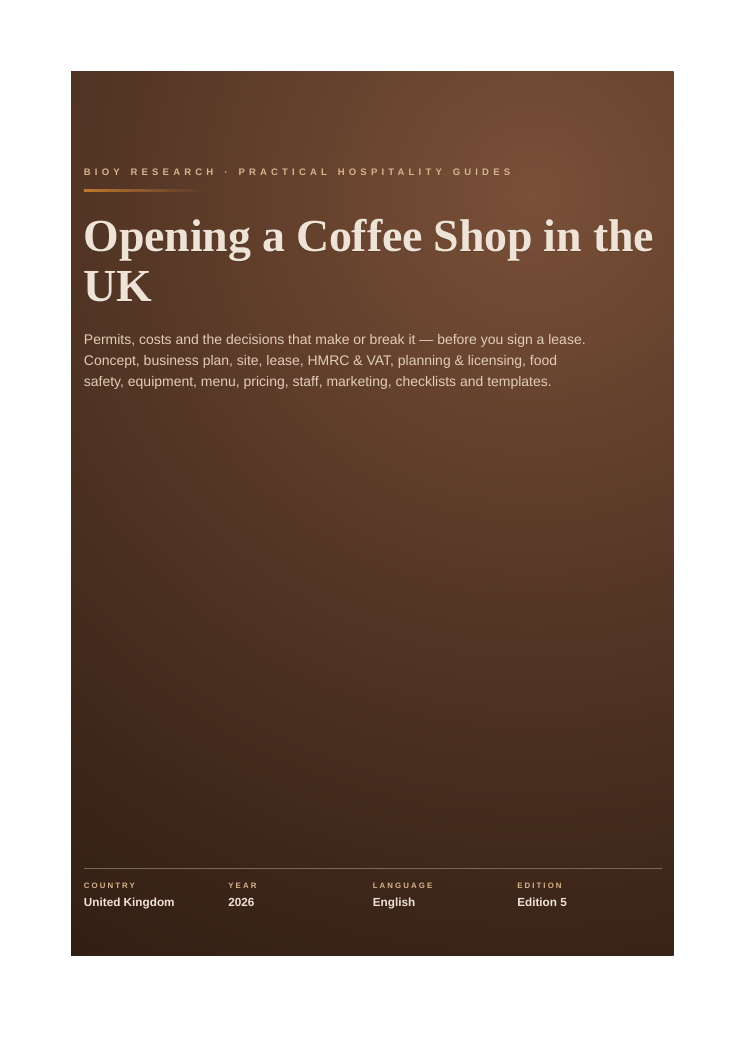
How to open a coffee shop in the UK · Practical guide 2026PDF interior
Available
2026 editionFree sample

How to open a coffee shop in the UK · Practical guide 2026

A practical, operational playbook, not a market study: the steps, the real numbers and the decision filters to open one coffee shop in the UK. Planning (Use Class E: convert an ex-shop with no permission) and the two deal-killers (external flue and pavement licence); tax (the £90k VAT cliff, eat-in 20% vs cold-takeaway 0%, business rates, Corporation Tax); money (build CAPEX £110k–150k, total cash to open safely £145k–245k+, break-even ~130–151 covers/day, a model £320k P&L at ~9% net, NLW £12.71/hr). The Edition 5 highlight is a decision simulator (§20·A) with a tornado of 6 levers and a GO/ALERT/NO-GO matrix. City drill-down (London, Manchester, Birmingham, Bristol) and England/Scotland/Wales/NI divergences. 108 pages, 96 sections and 33 quotes from UK operators · Edition 5.

€299
individual licence · PDF
View details →
How to Open a Coffee Shop in Italy · Practical Guide 2026PDF interior
Available
2026 editionFree sample

How to Open a Coffee Shop in Italy · Practical Guide 2026

A practical, operational playbook, not a market study: the steps, the real numbers and the decision filters to open a bar or caffetteria in Italy. The three models (traditional bar, specialty and take-away), the professional requirement (SAB) you need before the money, the zone tutelate where you cannot open, the SCIA and the comodato d'uso, the VAT that depends on where it is consumed, real CAPEX and P&L, break-even and a decision simulator with a GO/NO-GO verdict. Milan · Rome · Turin · Bologna. 115 pages, 90 sections and 15 industry voices · Edition 7.

€299
single licence · PDF
View details →
How to Open a Coffee Shop in Greece · Practical Guide 2026PDF interior
Available
2026 editionFree sample

How to Open a Coffee Shop in Greece · Practical Guide 2026

A practical, operational playbook, not a market study: the steps, the real numbers and the decision filters to open a coffee shop in Greece. The comodato (χρησιδάνειο) that makes opening cheap but takes the margin with it, the δήμος that decides more than the State, the four doors of the premises, the ΦΠΑ that depends on where it is consumed, the collective agreement (ΣΣΕ) with the real cost of staff, real CAPEX and P&L, break-even and a decision simulator with a GO/NO-GO verdict. Athens · Thessaloniki · Symi. 242 pages, 92 sections and 26 industry voices · Edition 7.

€299
single licence · PDF
View details →
How to Open a Coffee Shop in France · Practical Guide 2026PDF interior
Available
2026 editionFree sample

How to Open a Coffee Shop in France · Practical Guide 2026

A practical, operational playbook, not a market study: the steps, the real numbers and the decision filters to open a café, a bistrot or a coffee shop in France. The three models (traditional bistrot, specialty and take-away), the closed-quota licence III/IV that you don't create but buy, the fonds de commerce that decides viability, the droit au bail and the pas-de-porte, the bail 3-6-9, the dual VAT (10% coffee/food, 20% alcohol), the café presté / contrat brasseur, real CAPEX and P&L, break-even and a decision simulator with a GO/NO-GO verdict and a plan de financement (DSCR). Paris · Lyon · Bordeaux · Lille. 108 pages and 90 sections · Edition 7.

€299
single licence · PDF
View details →
How to Open a Coffee Shop in Portugal · Practical Guide 2026PDF interior
Available
2026 editionFree sample

How to Open a Coffee Shop in Portugal · Practical Guide 2026

A practical, operational playbook, not a market study: the steps, the real numbers and the decision filters to open a café-pastelaria, a specialty coffee shop or a take-away in Portugal. The three models and which one fits, why the pastelaria pays for the business and the bica doesn't (a frozen preço social ~€0.90 that yields no margin), the real barrier that isn't the licence but the premises' planning fitness (the alteração de utilização, which from 3 Aug 2026 becomes a comunicação prévia under DL 108/2026, yet where the PDM and the condomínio still decide) and the renda inflated by tourism and Alojamento Local. The trespasse versus building from scratch, the arrendamento comercial (NRAU), the Delta machine comodato, dual VAT (13% coffee/food, 23% alcohol and cold drinks), IRC, the CCT da restauração, real CAPEX and P&L, break-even and a decision simulator with a GO/NO-GO verdict. Lisbon · Porto · Braga · Coimbra. 101 pages and 89 sections · Edition 7.

€299
individual licence · PDF
View details →
How to Open a Coffee Shop in Germany · Practical Guide 2026PDF interior
Available
2026 editionFree sample

How to Open a Coffee Shop in Germany · Practical Guide 2026

A practical, operational playbook, not a market study: the steps, the real numbers and the decision filters to open a coffee shop in Germany. The three models (specialty café, Konditorei-Café 'Kaffee und Kuchen' and coffee-to-go), the licence you do NOT need (an alcohol-free café needs no Gaststättenerlaubnis) versus the real barrier (the Nutzungsänderung, the change-of-use of the premises), the USt (VAT) that changes within the same cup (19% / 7% depending on the product and the channel, and the plant milk that loses the 7%), the Minijob that is not cheap labour, the Mindestlohn that rises by law on a fixed date, the Gewerbemiete and the Kaffeesteuer hidden in the bean, real CAPEX and P&L, break-even and a decision simulator with a GO/NO-GO verdict. Berlin · Munich · Hamburg · Leipzig. 136 pages, 90 sections and 27 industry voices · Edition 7.

€299
single licence · PDF
View details →
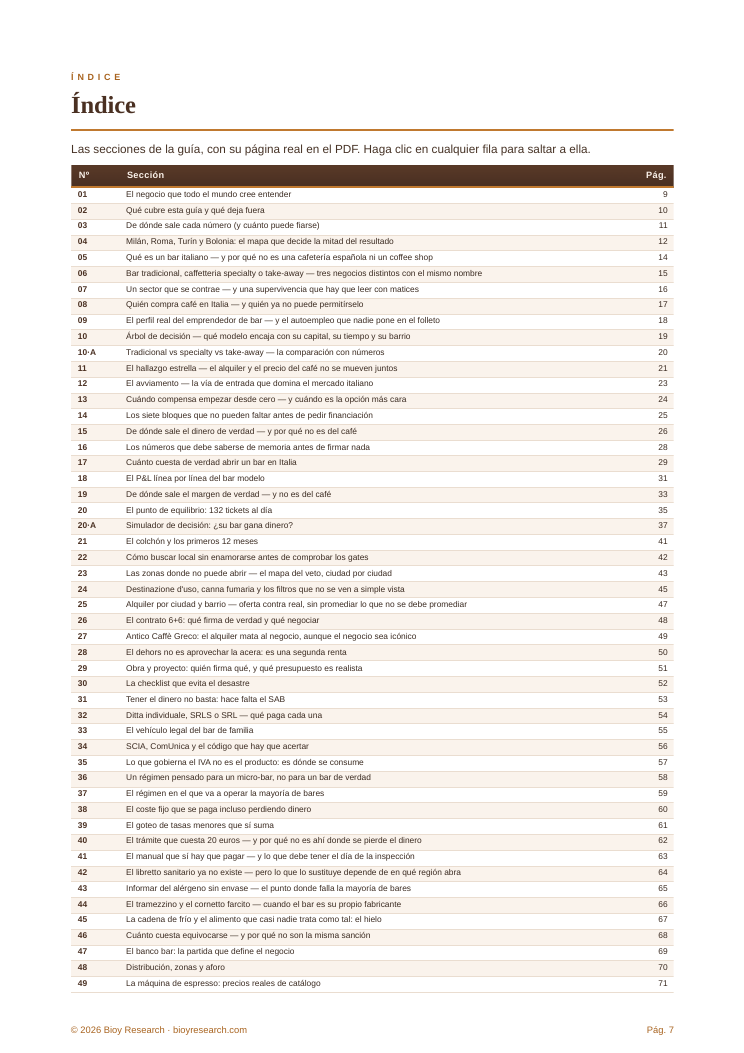
How to open a coffee shop in Spain · Practical guide 2026PDF interior
Available
2026 editionFree sample

How to open a coffee shop in Spain · Practical guide 2026

A practical, operational guide, not a market study: the steps, the real numbers and the decision filters to open a coffee shop in Spain. Permits and licences by city (Madrid, Barcelona, Valencia, Seville), the three deal-killers of the premises (extraction flue, planning compatibility, change of use), real CAPEX (€50,000–€80,000) and P&L, break-even (~€400/day ≈ 80 tickets) and 2026 tax (10% VAT, RETA scheme, €1,221 minimum wage). The Edition 5 highlight is a decision simulator that crosses tickets/day × average ticket and returns a GO/NO-GO verdict with a payback table. 108 pages, 89 sections and 53 quotes from Spanish operators · Edition 5.

€299
individual licence · PDF
View details →
The specialty coffee market in SpainPDF interior
Available
2026 editionFree sample

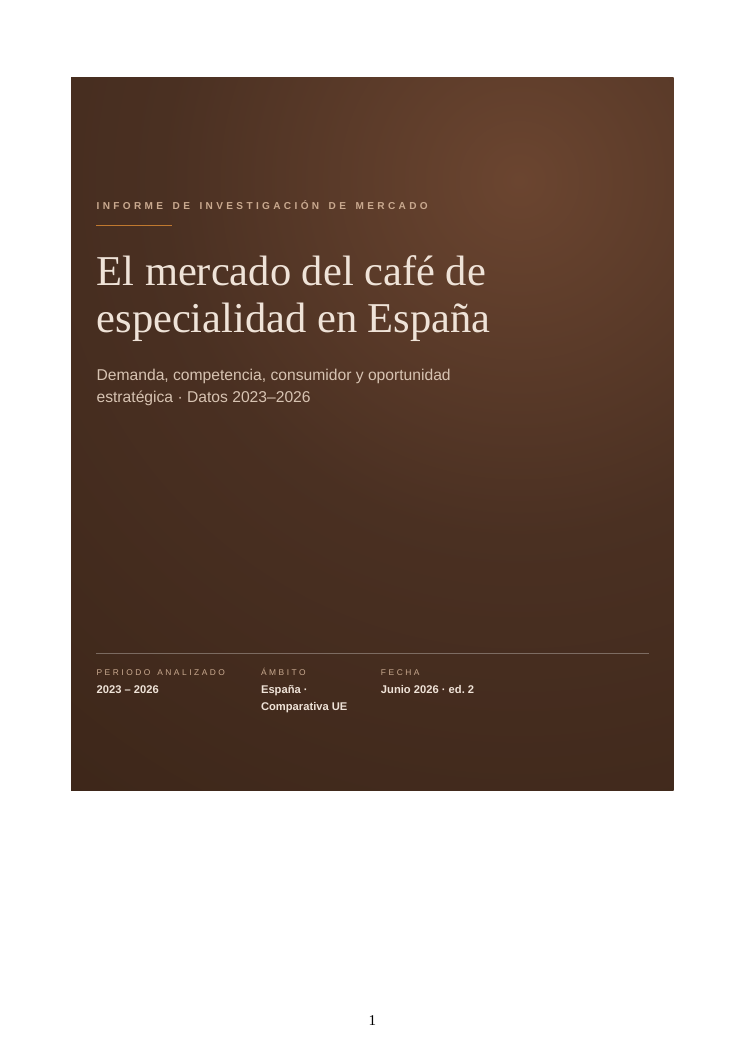
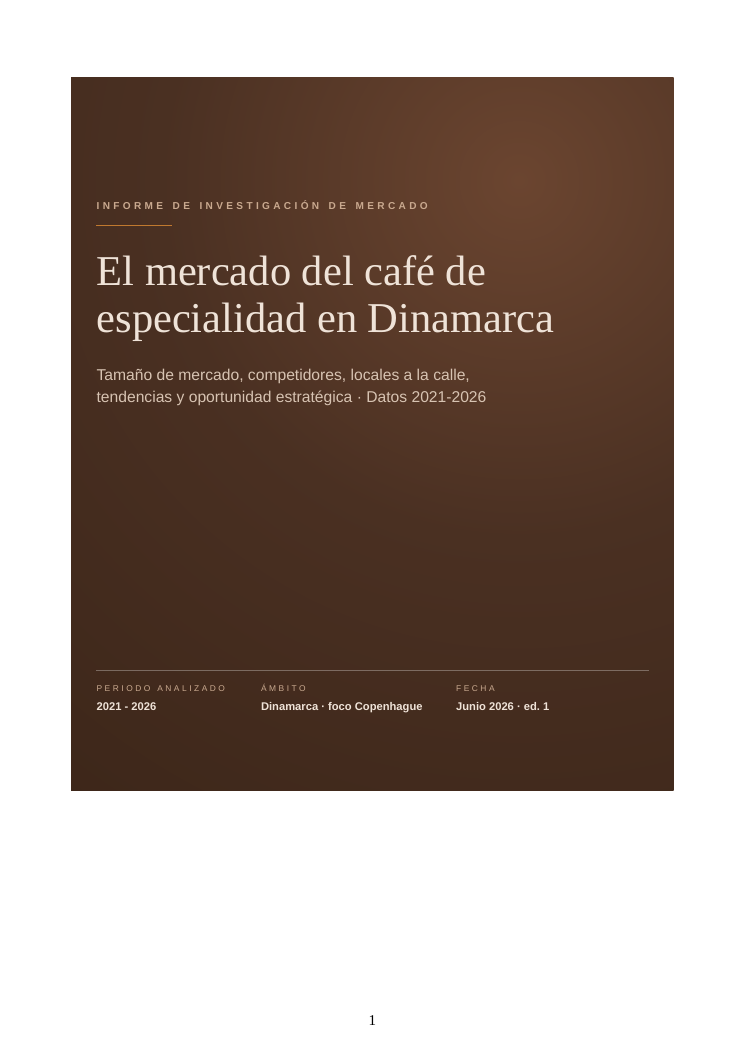
The specialty coffee market in Spain

Demand, competition, consumer and strategic opportunity. A map of 15 brands with real location counts, density by city and economics. Data 2023–2026.

€299
individual licence · PDF
View details →
The specialty coffee market in GermanyPDF interior
Available
2026 editionFree sample

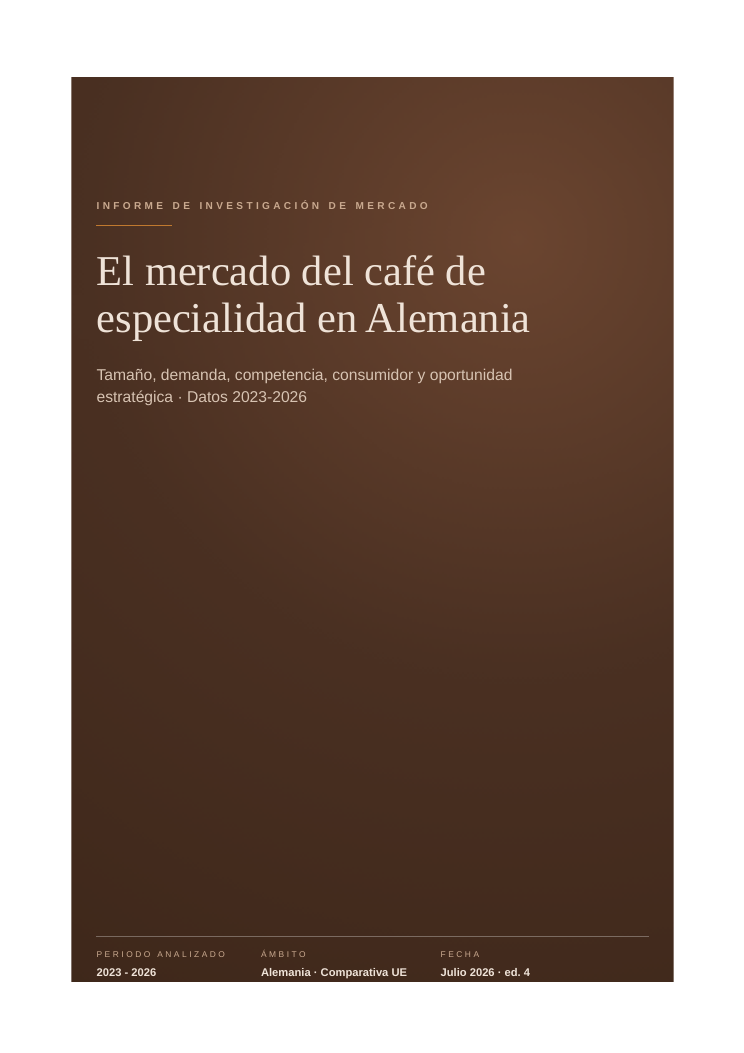
The specialty coffee market in Germany

Europe's largest specialty market and its leading roasting hub. Channels, competitors by archetype, EUDR traceability and underserved gaps for a new brand, with deep dives into Berlin, Hamburg and Munich. Data 2023–2026.

€299
individual licence · PDF
View details →
The specialty coffee market in ChinaPDF interior
Available
2026 editionFree sample

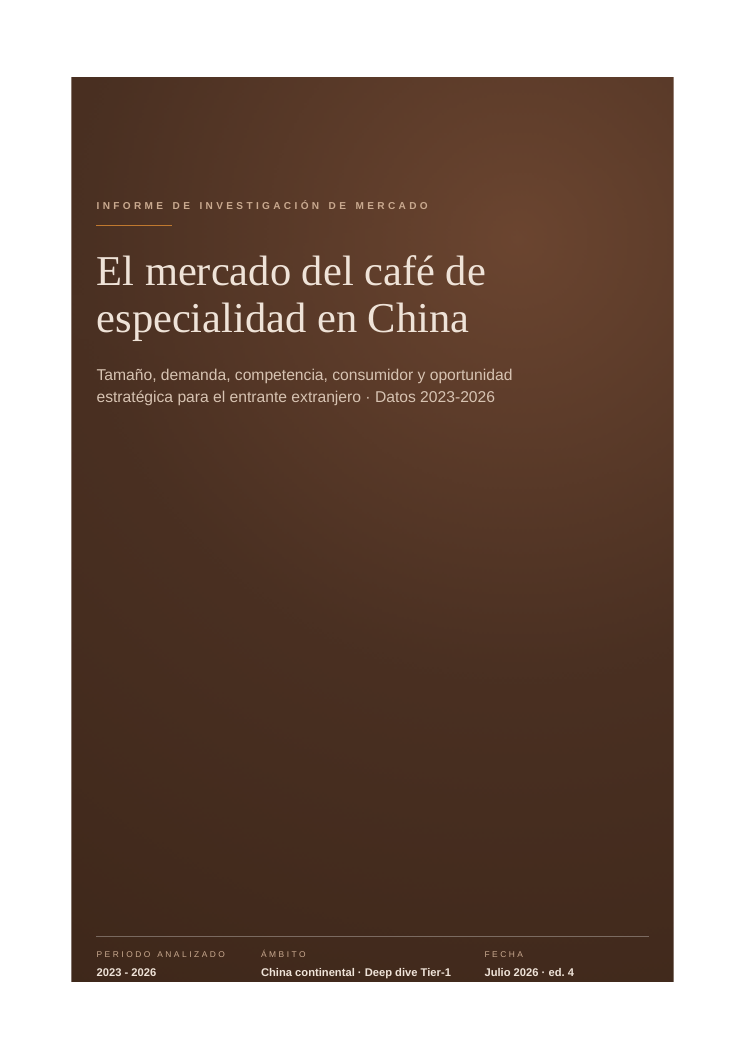
The specialty coffee market in China

The world's fastest-growing coffee market, split between the ¥9.9 price war (Luckin, Cotti) and the premium end (%Arabica, Manner). For the foreign entrant: WFOE, local partners and deep dives into Shanghai, Beijing, Shenzhen and Chengdu. Data 2023–2026.

€299
individual licence · PDF
View details →
The specialty coffee market in AndorraPDF interior
Available
2026 editionFree sample

The specialty coffee market in Andorra

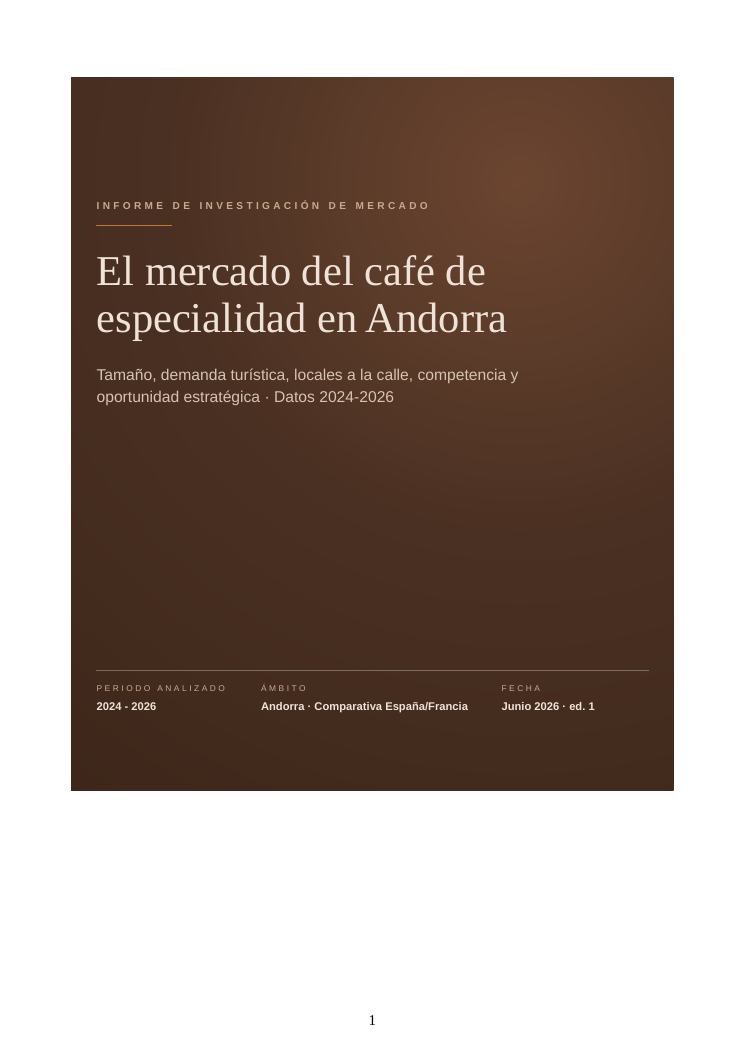
A compact, high-spend market driven by tourism and snow: resident plus visitor demand, footfall corridors, favourable taxation and the economics of a street-level outlet. Data 2023–2026.

€299
individual licence · PDF
View details →
The specialty coffee market in FrancePDF interior
Available
2026 editionFree sample

The specialty coffee market in France

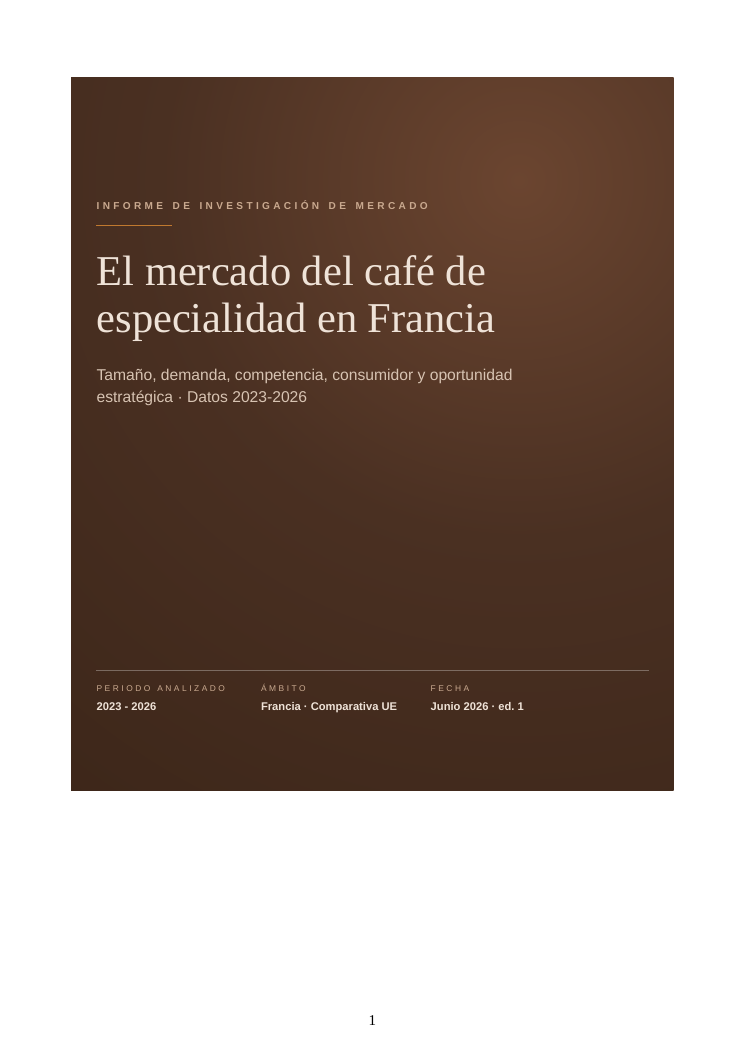
From the capsule-dominated home to the rise of néocafés: demand, the French consumer, competition by archetype and the economics of entering through Paris, Lyon, Bordeaux and Marseille. Data 2023–2026.

€299
individual licence · PDF
View details →
The specialty coffee market in the NetherlandsPDF interior
Available
2026 editionFree sample

The specialty coffee market in the Netherlands

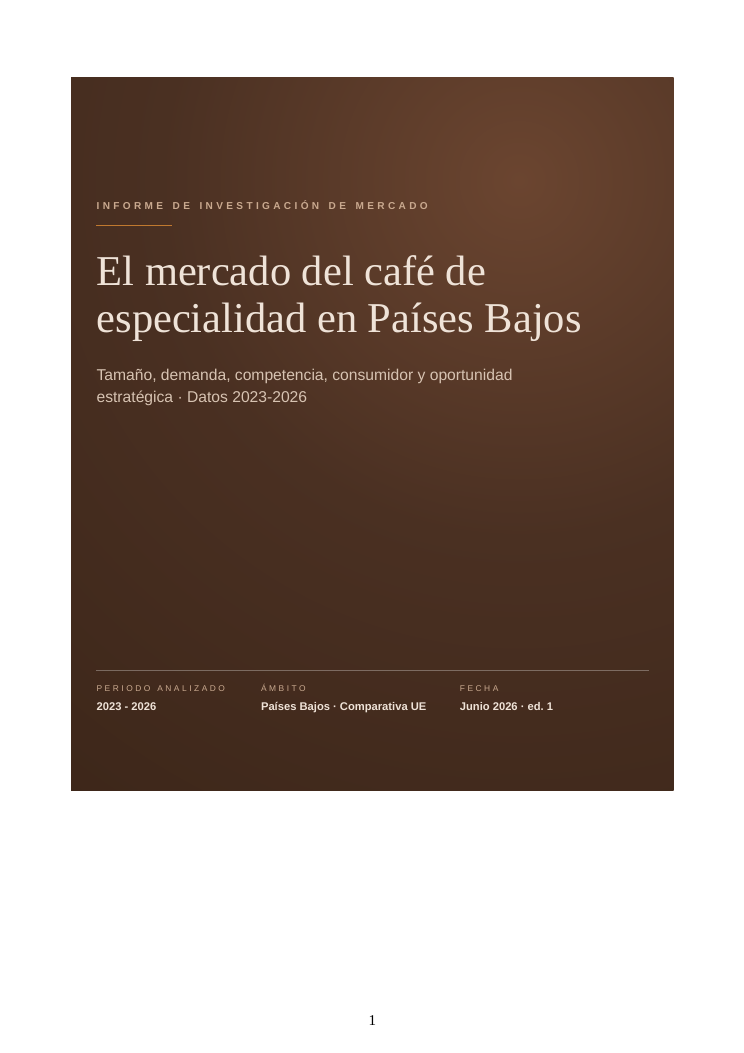
A mature coffee culture and Europe's re-export hub: home, office and out-of-home channels, competitors by archetype and the opportunity in Amsterdam, Rotterdam, Utrecht and The Hague. Data 2023–2026.

€299
individual licence · PDF
View details →
The specialty coffee market in PortugalPDF interior
Available
2026 editionFree sample

The specialty coffee market in Portugal

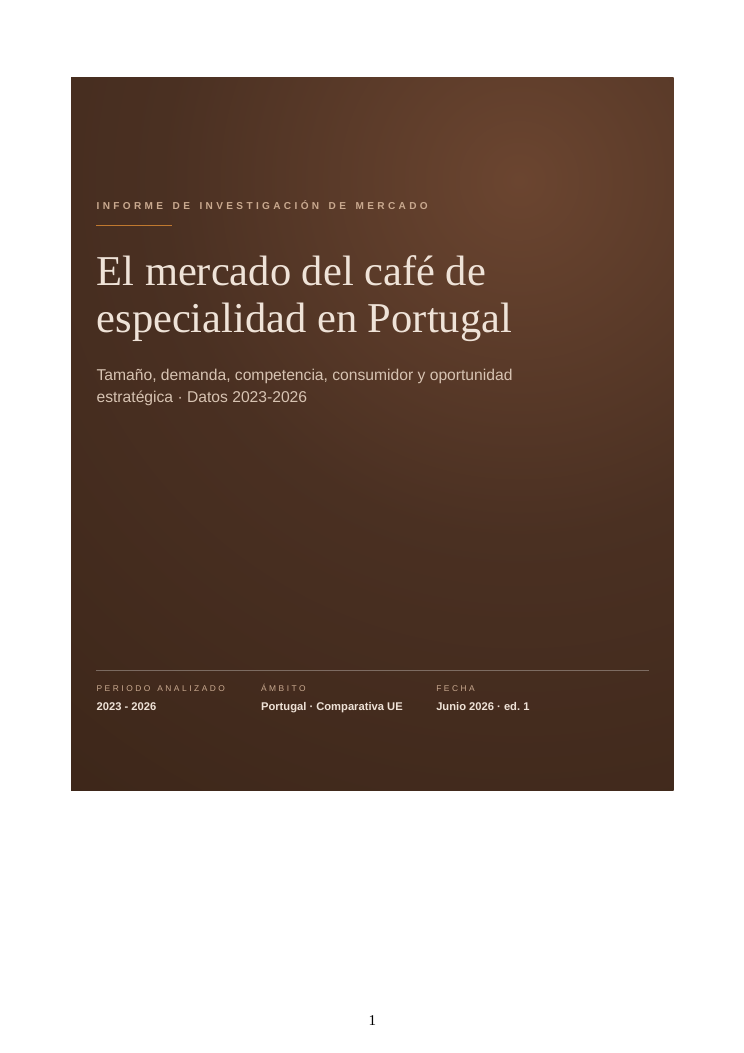
Beyond the bica: a tourism-fuelled specialty wave across coffee shops and brunch. Demand, the Portuguese consumer, competition and the economics of entering Lisbon, Porto, Cascais and the Algarve. Data 2023–2026.

€299
individual licence · PDF
View details →
The specialty coffee market in ItalyPDF interior
Available
2026 editionFree sample

The specialty coffee market in Italy

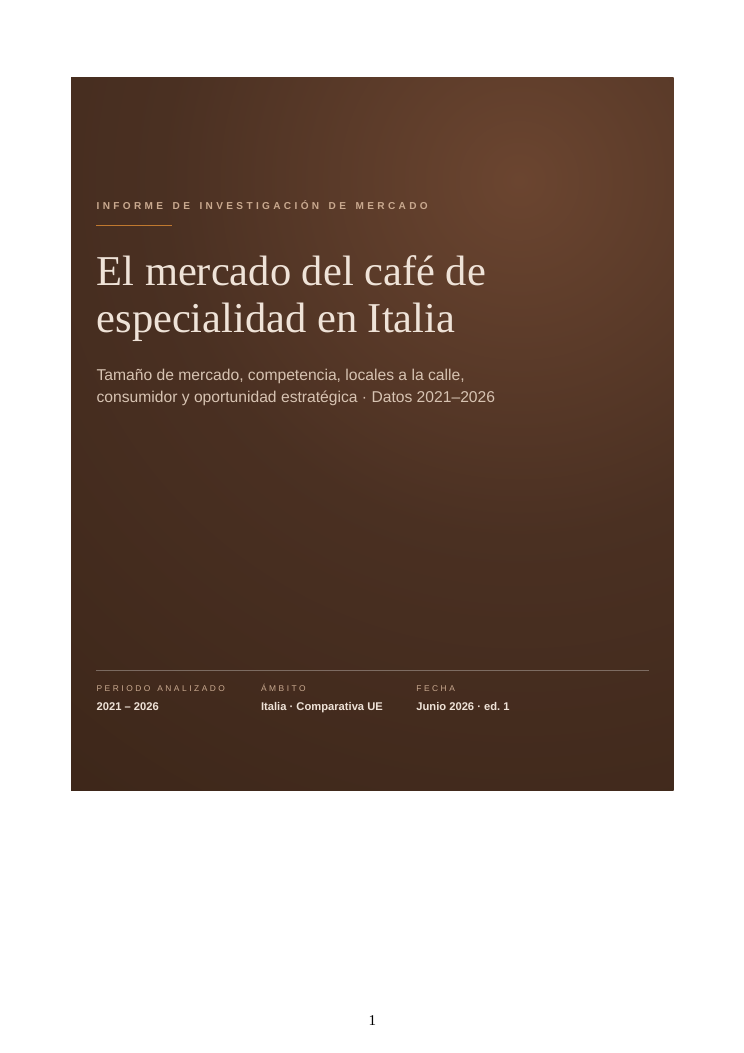
The home of espresso meets the specialty wave: how a deeply rooted €1 coffee culture premiumises. Demand, competition by archetype and the economics of entering Rome, Milan, Florence and beyond. Data 2021–2026.

€299
individual licence · PDF
View details →
The specialty coffee market in the UKPDF interior
Available
2026 editionFree sample

The specialty coffee market in the UK

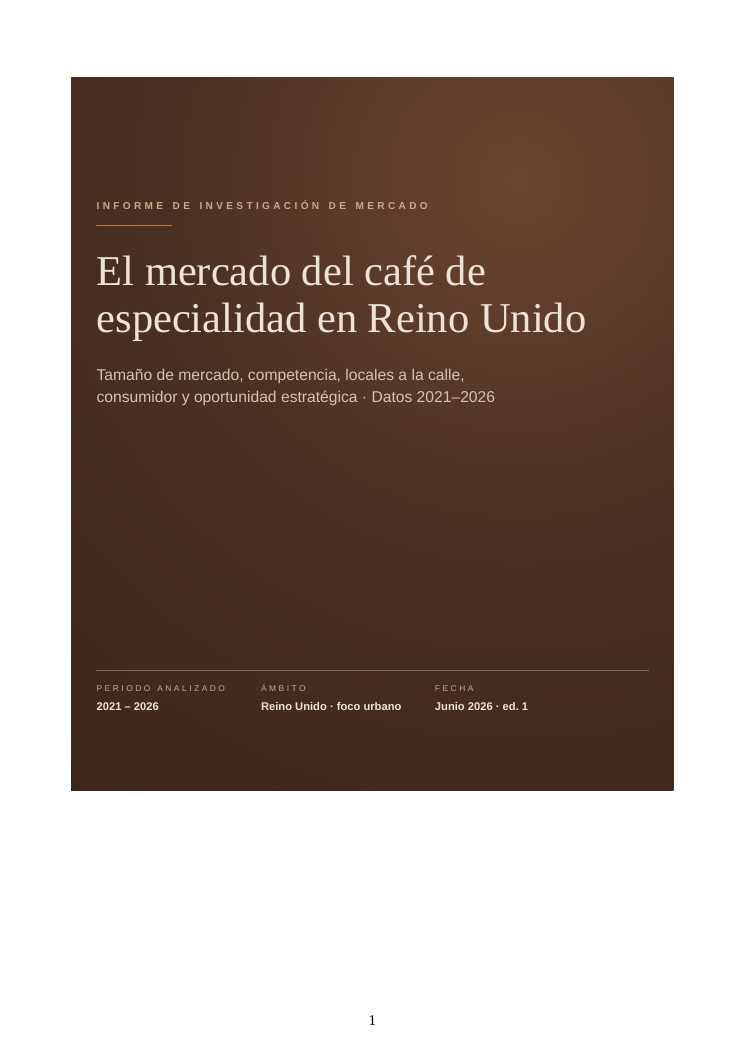
A mature £6.8bn out-of-home market with a leading independent scene: demand, competition by archetype and the economics of entering London, Manchester and beyond, factoring the National Living Wage and licensing. Data in £, 2023–2026.

€299
individual licence · PDF
View details →
The specialty coffee market in FinlandPDF interior
Available
2026 editionFree sample

The specialty coffee market in Finland

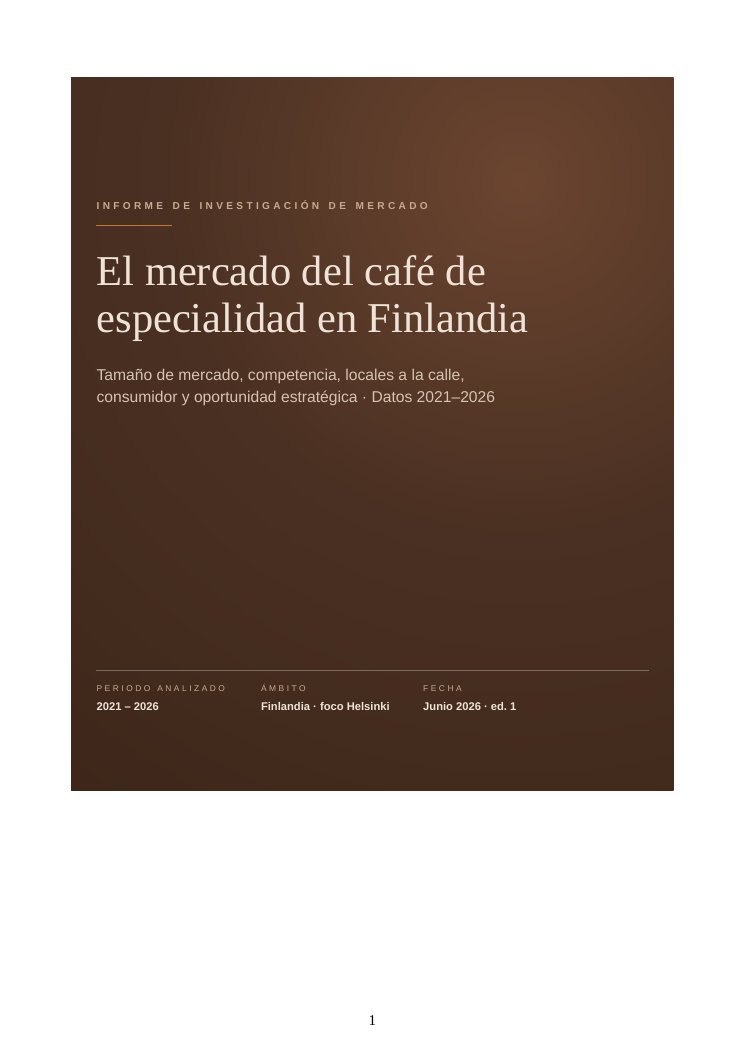
The world's highest per-capita coffee consumption and a deep filter culture ripe for premiumisation. Demand, competition and the economics of entering Helsinki, Tampere, Turku and beyond. Data 2021–2026.

€299
individual licence · PDF
View details →
The specialty coffee market in NorwayPDF interior
Available
2026 editionFree sample

The specialty coffee market in Norway

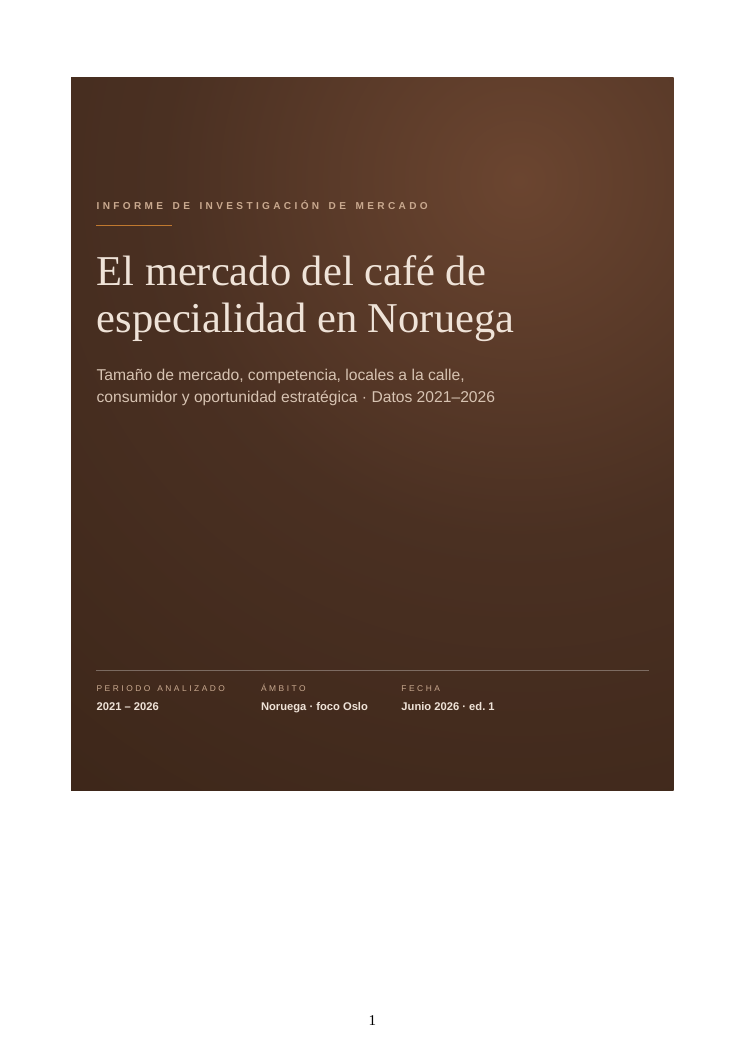
A world-class specialty scene led by names like Tim Wendelboe and Fuglen, set against high labour costs. Demand, competition and the economics of entering Oslo, Bergen and beyond. Data 2021–2026.

€299
individual licence · PDF
View details →
The specialty coffee market in IcelandPDF interior
Available
2026 editionFree sample

The specialty coffee market in Iceland

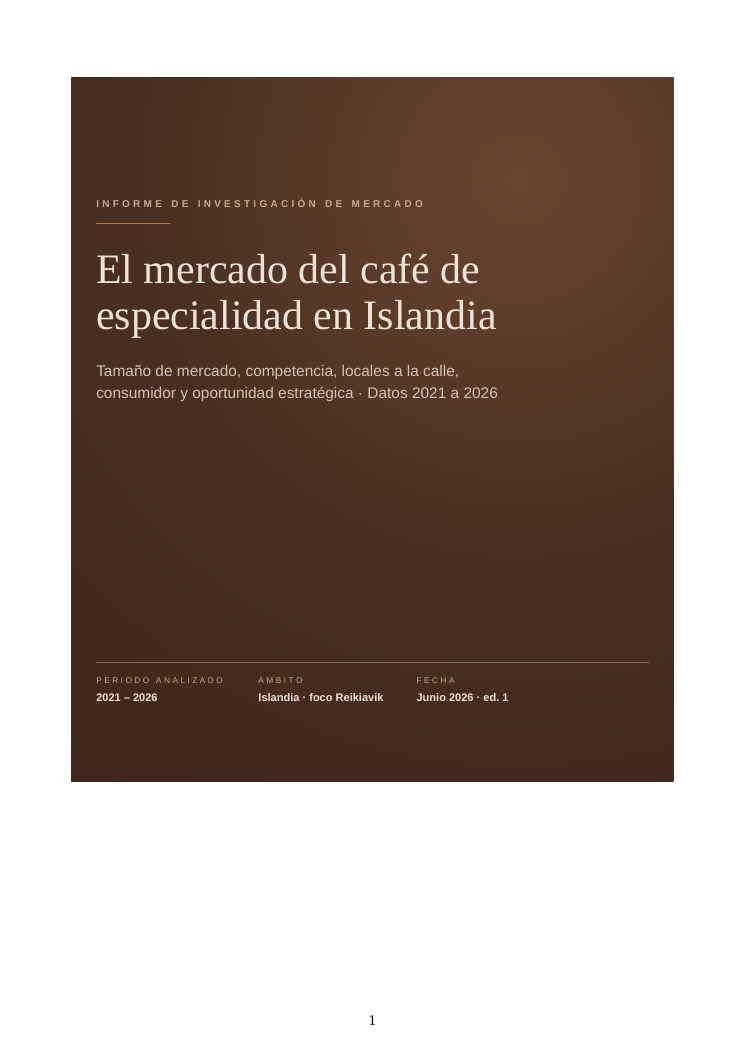
A market driven by mass tourism (2.27M visitors vs 389,000 residents) and an all-local scene with no Starbucks. Demand, competition and the economics of entering Reykjavík, the capital region, Akureyri and the tourist nodes. Data 2021–2026.

€299
individual licence · PDF
View details →
The specialty coffee market in LuxembourgPDF interior
Available
2026 editionFree sample

The specialty coffee market in Luxembourg

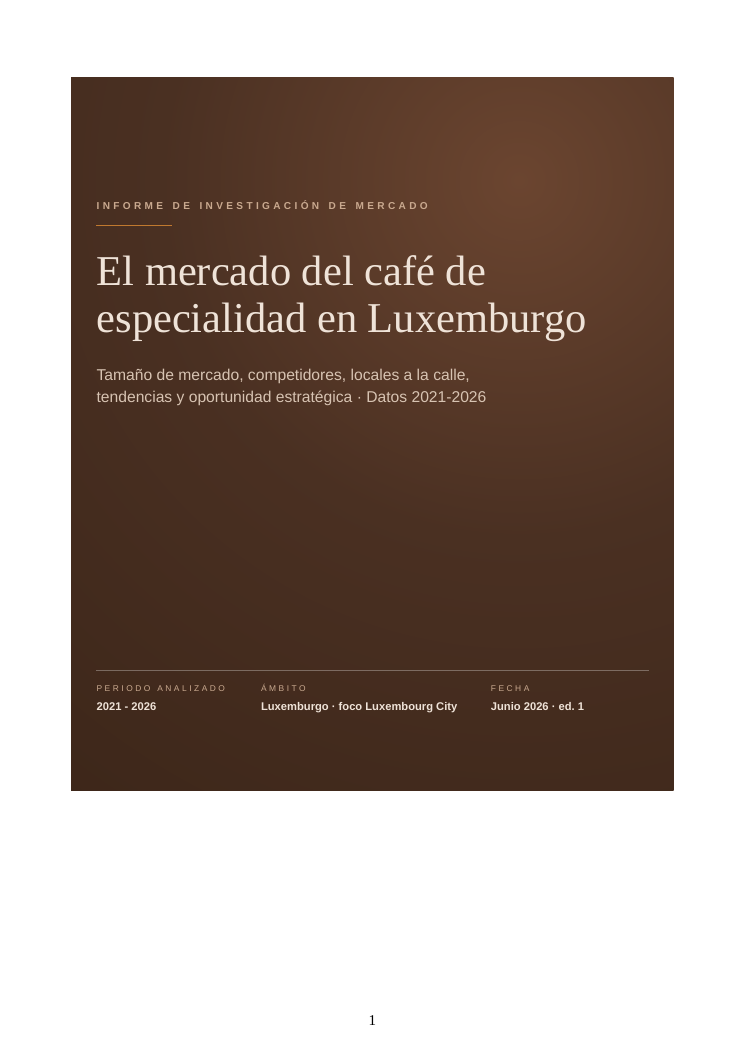
A small market with the EU's highest disposable income, ~231,000 cross-border workers and a highly international population: demand, a curated scene (~14 cafés and 2 roasters) and the economics of entering Luxembourg City, Esch-sur-Alzette/Belval and secondary nodes. Data 2024–2026.

€299
individual licence · PDF
View details →
The specialty coffee market in BelgiumPDF interior
Available
2026 editionFree sample

The specialty coffee market in Belgium

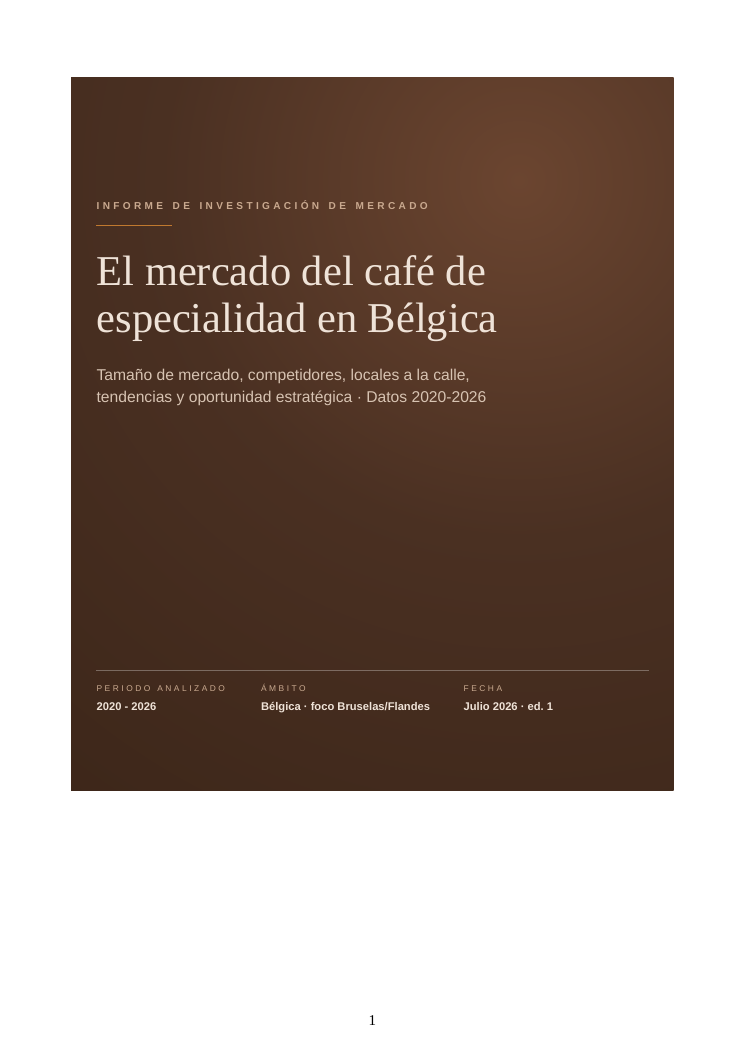
A European green-coffee hub with a mature, bilingual scene (FR/NL): the TAM is adjusted for its hub function, not direct final consumption. Demand, competitive map and entry economics, with reference specialty operators (MOK, Caffènation, OR Coffee, WAY, Beyers). HORECA agreement CP 302, the March 2026 VAT reform (served coffee at 12%) and EUDR applies. Deep dive of Brussels, Antwerp, Ghent and Leuven. Data 2024–2026.

€299
individual licence · PDF
View details →
The specialty coffee market in CzechiaPDF interior
Available
2026 editionFree sample

The specialty coffee market in Czechia

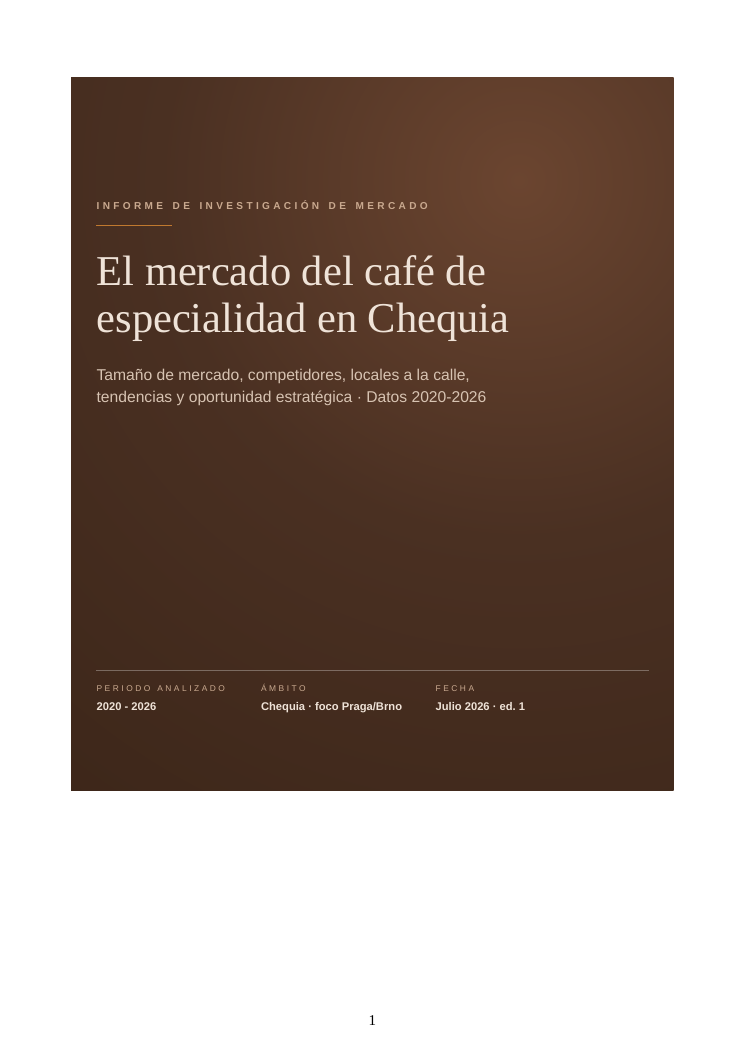
Prague is one of Central Europe's specialty capitals: a mature scene with a strong direct-trade and roasting culture (Doubleshot was the first Czech specialty roaster). Demand, competitive map and entry economics, with reference operators (Doubleshot, mamacoffee, Rusty Nails, The Miners, Rebelbean, Father's, onesip/Candycane). Low labour cost by European standards but a fast-rising minimum wage (CZK 22,400/month in 2026), no binding HORECA agreement, tiered VAT (DPH: served coffee 21%, food 12%, retail beans 12%) and EUDR applies as an EU country. Deep dive of Prague, Brno, Ostrava, Olomouc and Pilsen. Data 2020–2026.

€299
individual licence · PDF
View details →
The specialty coffee market in HungaryPDF interior
Available
2026 editionFree sample

The specialty coffee market in Hungary

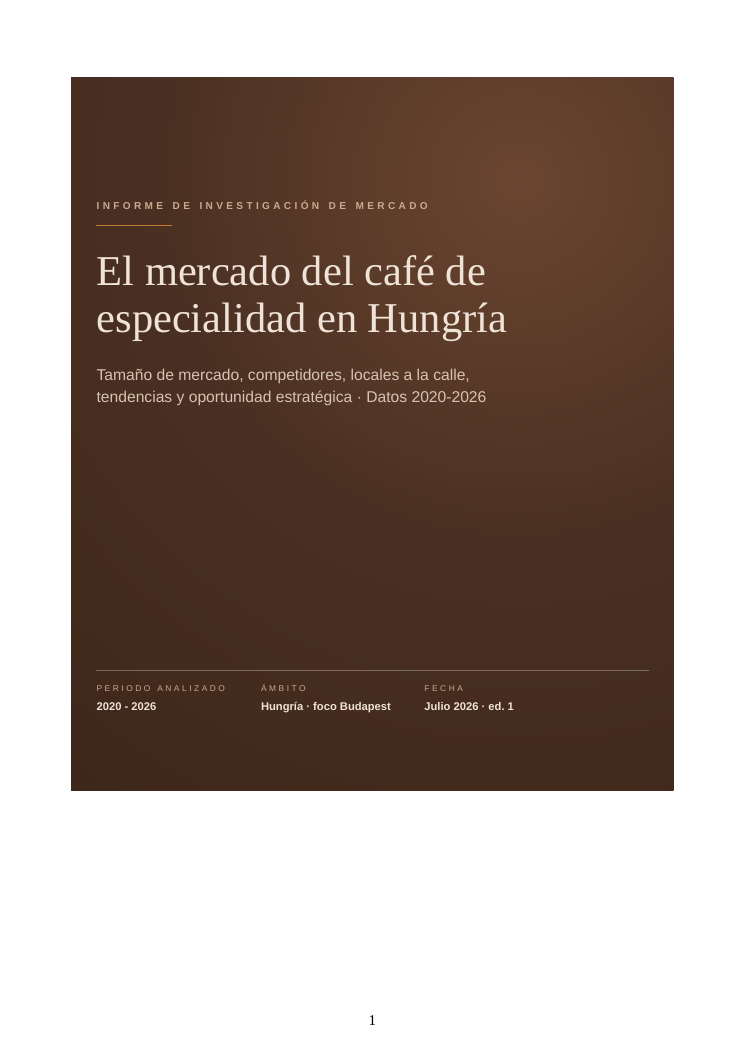
Budapest is one of Central Europe's finest specialty scenes: mature, collaborative (operators "help each other out") and where specialty is "already the standard, not a niche" (Attila Molnár). Demand, competitive map and entry economics, with reference operators (Casino Mocca, Espresso Embassy, Madal, Kontakt, My Little Melbourne, One Eleven). Low labour cost with a single employer charge (szocho 13%, the lowest in the region) but a fast-rising minimum wage (minimálbér HUF 322,800/month and garantált bérminimum HUF 373,200 in 2026), a shortage of skilled baristas, VAT (ÁFA) with a key nuance (served coffee 27% in a pure café with no kitchen, or 5% with a hot kitchen melegkonyha; retail beans 27%) and EUDR applies as an EU country. Deep dive of Budapest, Pécs and Szeged, plus Lake Balaton. Data 2020–2026.

€299
individual licence · PDF
View details →
The specialty coffee market in GreecePDF interior
Available
2026 editionFree sample

The specialty coffee market in Greece

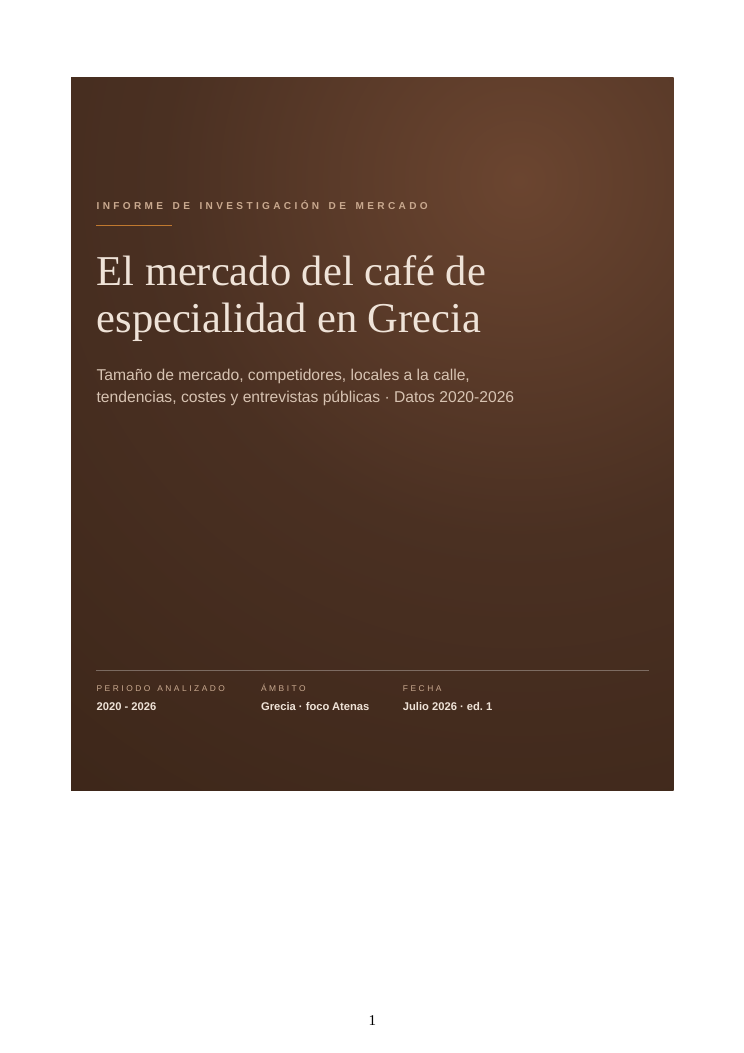
Greece combines a huge freddo culture (freddo espresso and freddo cappuccino, invented in Greece in 1991, make up 70-80% of the country's cold coffee) with a booming specialty scene in Athens, Thessaloniki and Crete, led by award-winning roasters (Taf Coffee by Yiannis Taloumis, The Underdog by Michalis Dimitrakopoulos, world barista champion) and strong chains (Coffee Island with over 450 stores, Gregory's, Mikel). Demand, competitive map and entry economics, with a key tax nuance (served coffee pays 24% ΦΠΑ / VAT but take-away pays 13%, rewarding take-away), a binding HORECA agreement (barista €950/month, 14 payments) and EFKA charges of 21.79%. Interviews with verifiable quotes from Greek leaders and barista champions. A tourist market with seasonal islands; EUDR applies as an EU country; eurozone (€). Deep dive of Athens, Thessaloniki and Crete. Data 2020–2026.

€299
individual licence · PDF
View details →
The specialty coffee market in SloveniaPDF interior
Available
2026 editionFree sample

The specialty coffee market in Slovenia

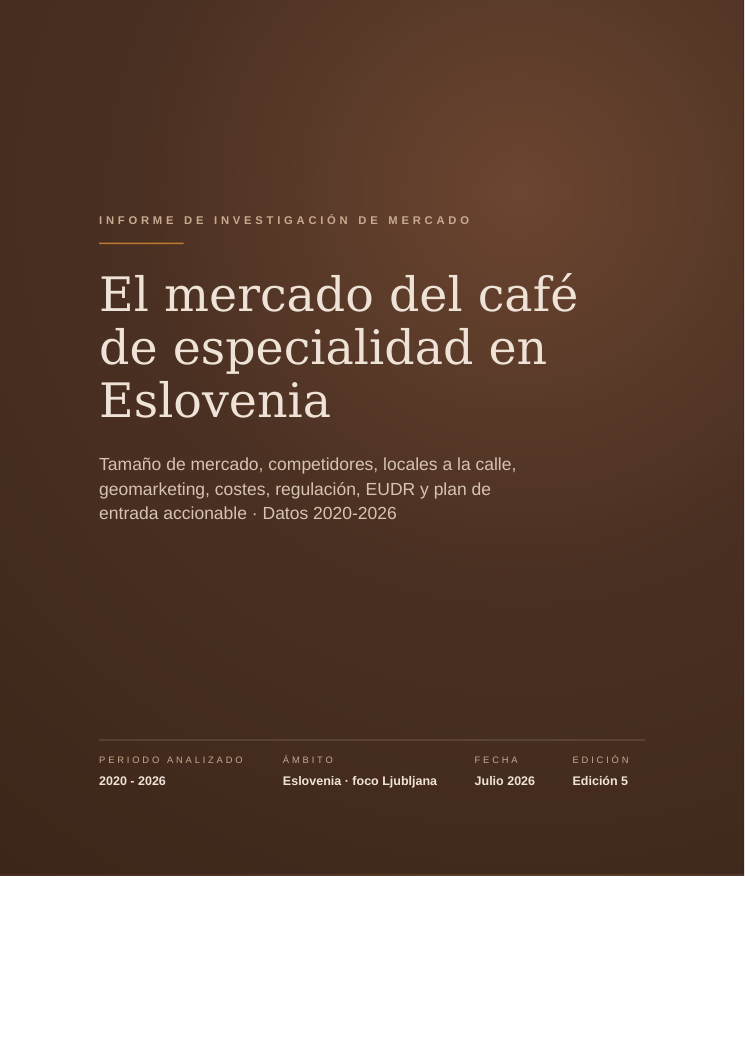
Slovenia is a small but high-quality scene: a country of just 2 million people with specialty concentrated in Ljubljana, Maribor and the Coast (Piran, Portorož, Koper), and reference roasters (STOW, Escobar, GOAT STORY, Čokl, Banibeans). The challenge is not volume but consumer education in a traditional market "between two walls", supported by a strong technical community (cuppings, events, the Ljubljana Coffee Festival). Demand, competitive map and entry economics with granular geomarketing by district (footfall, rent €/m², site selection), labour cost (the minimum wage rose +16% in 2026 to €1,481.88/month, with employer charges of 17.10%) and a key tax nuance: served coffee is taxed at 9.5% DDV / reduced VAT (only sugar-sweetened drinks moved to 22% in 2025) and retail beans at 9.5%. Legal forms d.o.o. (€7,500 capital) and s.p. Includes a decision simulator (GO/NO-GO profitability matrix and break-even) and distinctive blocks on food safety/HACCP, EUDR (staggered application 2026-2027) and traceability, packaging and PPWR, and entry feasibility (investment thesis, format, capital and payback). Interviews with verifiable quotes from Slovenian founders (STOW/Turšič, Escobar, Čokl/Buna, Banibeans). EUDR applies as an EU country; eurozone (€). Deep dive of Ljubljana, Maribor and the Coast. Data 2020–2026.

€299
individual licence · PDF
View details →
The specialty coffee market in RomaniaPDF interior
Available
2026 editionFree sample

The specialty coffee market in Romania

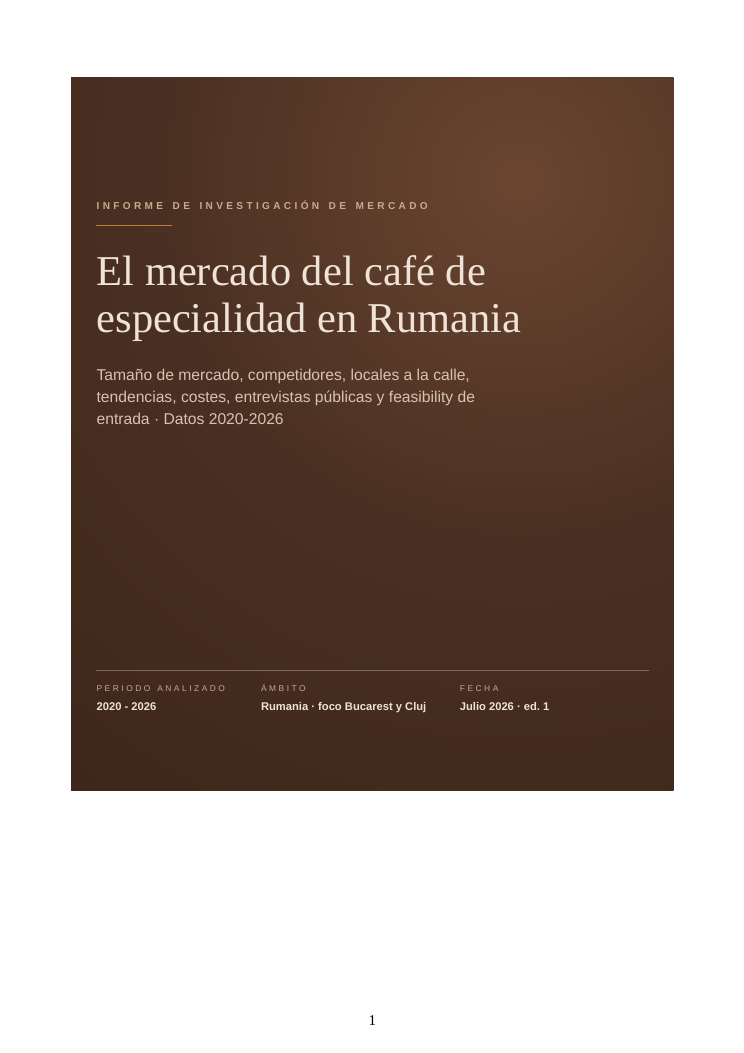
Romania has become a regional leader of specialty in Eastern Europe: the scene started late and grew fast by learning from mature markets, and today Bucharest and Cluj rival Western European capitals, with more than 200-250 specialty brands (Origo, Meron, MABÓ, Narcoffee, YUME) and strong low-cost chains (5 to go with over 700 units, Ted's Coffee) plus the COFFeEAST festival. Demand, competitive map and entry economics, with a key labour advantage (the employer charge is just 2.25% CAM, the lowest in the region; the rest is paid by the employee: CAS 25% + CASS 10%) and a relevant tax nuance (the Aug-2025 reform raised the general TVA to 21% and left served coffee at 21%, excluded from the reduced 11% for HORECA, with open litigation; retail beans go at 11%). Legal forms SRL/PFA/microîntreprindere, minimum wage 4,050-4,325 RON/month 2026. Interviews with verifiable quotes from Romanian founders and barista champions, plus an entry feasibility section (investment thesis, format, capital and returns). EUDR applies as an EU country; currency RON/lei (~5 RON/EUR). Deep dive of Bucharest and Cluj-Napoca. Data 2020–2026.

€299
individual licence · PDF
View details →
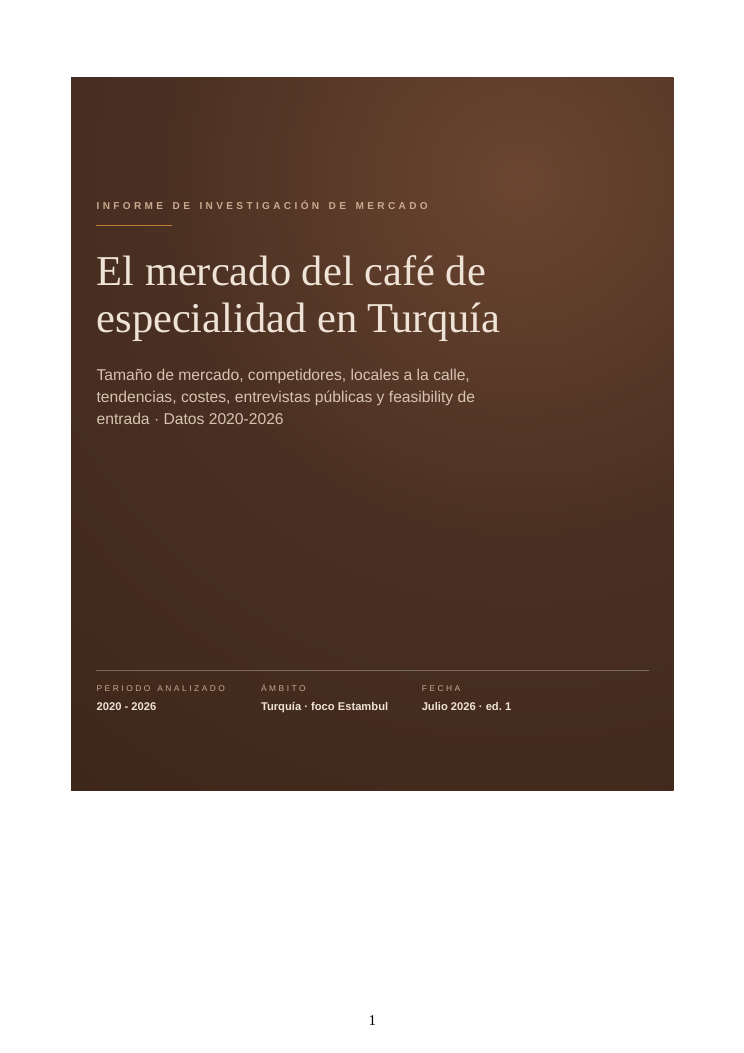
The specialty coffee market in TurkeyPDF interior
Available
2026 editionFree sample

The specialty coffee market in Turkey

Turkey is one of the largest and most complex markets in the region: 85.9 million inhabitants, a historic Turkish coffee culture (UNESCO intangible heritage) and a visible third-wave scene in Istanbul (Kronotrop, Petra Roasting Co., Coffee Department, Probador) that coexists with strong chains (Espressolab, Starbucks, Kahve Dünyası, Caffè Nero). The country imported 103.4 kt of HS0901 coffee in 2024 (91.3 kt of green, Brazil as the dominant origin), which favours local roasting but raises exposure to the dollar and FX. Demand, competitive map and entry economics, with labour cost in figures (2026 minimum wage of 33,030 TRY gross / 28,075.50 TRY net and SGK charges ~22.5%), the KDV nuance (served coffee 10%, packaged retail beans 1%, standard 20%), EUDR and entry feasibility with an FX buffer (investment thesis, format, capital and returns). Interviews with verifiable quotes from Istanbul founders and baristas. Operating currency TRY with high sensitivity to inflation and exchange rate; investment figures in euro equivalents. Deep dive of Istanbul, Ankara, Izmir and the coast. Data 2020–2026.

€299
individual licence · PDF
View details →
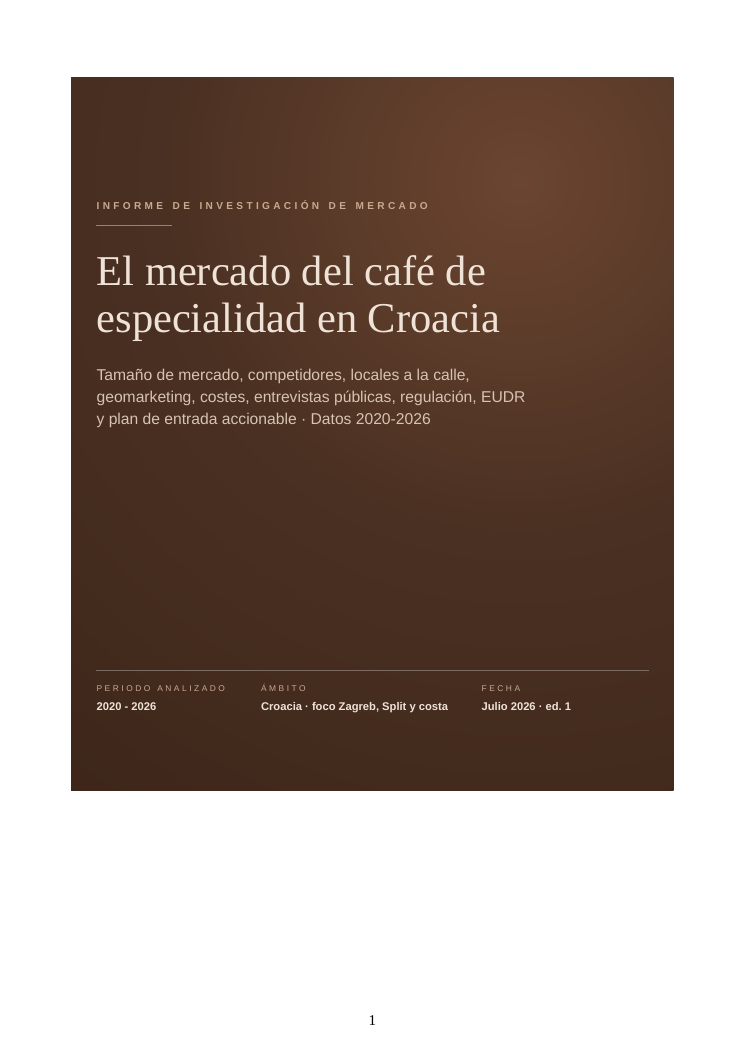
The specialty coffee market in CroatiaPDF interior
Coming soon
2026 editionFree sample

The specialty coffee market in Croatia

Croatia (in the eurozone since 2023) combines a deep-rooted coffee culture of long, unhurried social sit-down in the kafić with a young but solid specialty scene led by Cogito Coffee Roasters and Eliscaffe (Nik Orosi, the country's first barista champion) in Zagreb and D16 in Split. The market was built against the dark-espresso habit, through education and better origin. Demand, competitive map and entry economics, with labour cost in figures (2026 minimum wage of €1,050 gross / ~€799 net, employer charges of just 16.5%, hospitality collective agreement mandatory from 2026) and a counterintuitive tax nuance: the PDV (VAT) on served coffee and drinks is 25% (not the reduced rate), only served food goes to 13%, and retail beans to 25% plus an excise duty of ~€0.80/kg. EUDR and PPWR applicable as an EU member. Strong tourism seasonality on the coast (Split, Dubrovnik, Istria, islands). Interviews with verifiable quotes from Croatian founders. Currency euro (€). Deep dive of Zagreb, Split and the coast. Data 2020–2026.

€299
individual licence · PDF
View details →
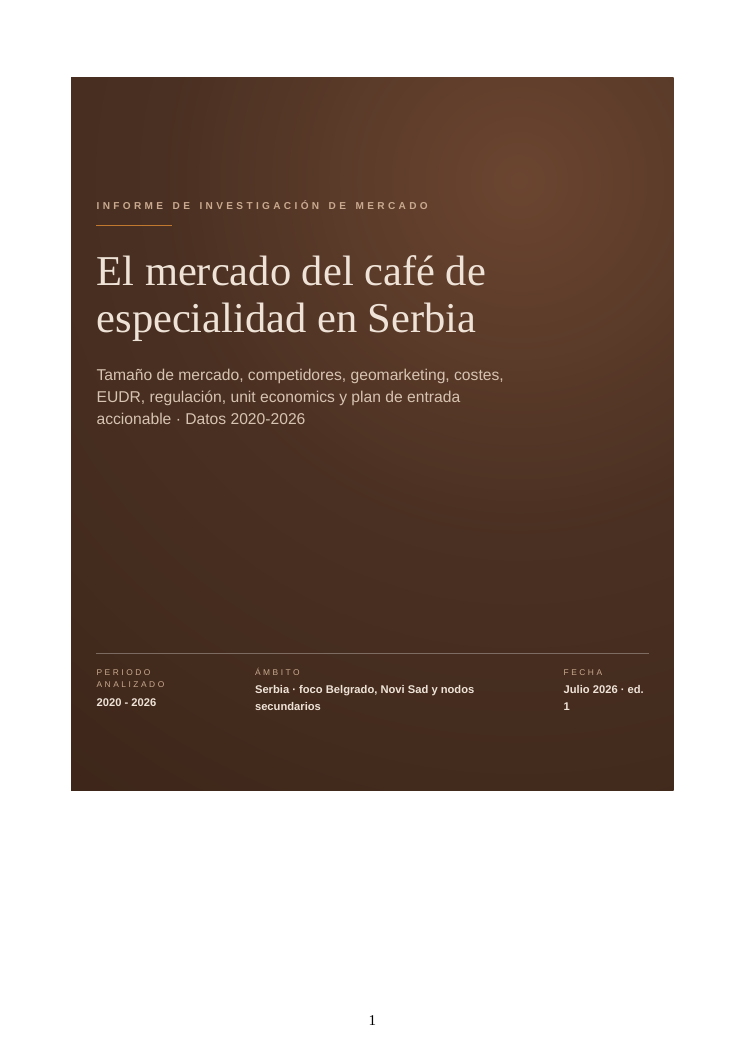
The specialty coffee market in SerbiaPDF interior
Coming soon
2026 editionFree sample

The specialty coffee market in Serbia

Serbia (outside the EU, currency dinar RSD) is a young specialty coffee market with a strong culture of sitting down at the kafana (traditional café) and a third-wave scene concentrated in Belgrade (Kafeterija —founded in 2014, already more than 60 locations—, Przionica D59B, Crna Ovca, 7AM, Aviator) and Novi Sad. Specialty is making its way against dark espresso and a structural price barrier (importing green coffee into Serbia costs more than into Germany, yet espresso sells for ~€1). Demand, competitive map and entry economics, with labour cost in figures (2026 minimum wage of 371 RSD net/hour, ~€533/month, employer charges of just ~15.15%), the 20% PDV (VAT) on served coffee and retail beans (the reduced 10% rate does not cover hospitality) plus an excise duty of ~140.88 RSD/kg on roasted coffee, mandatory e-fiscalisation (electronic fiscal invoicing) and an FX buffer (RSD/EUR ~117). Interviews with verifiable quotes from Belgrade leaders and baristas. Deep dive of Belgrade and Novi Sad. Data 2020–2026.

€299
individual licence · PDF
View details →
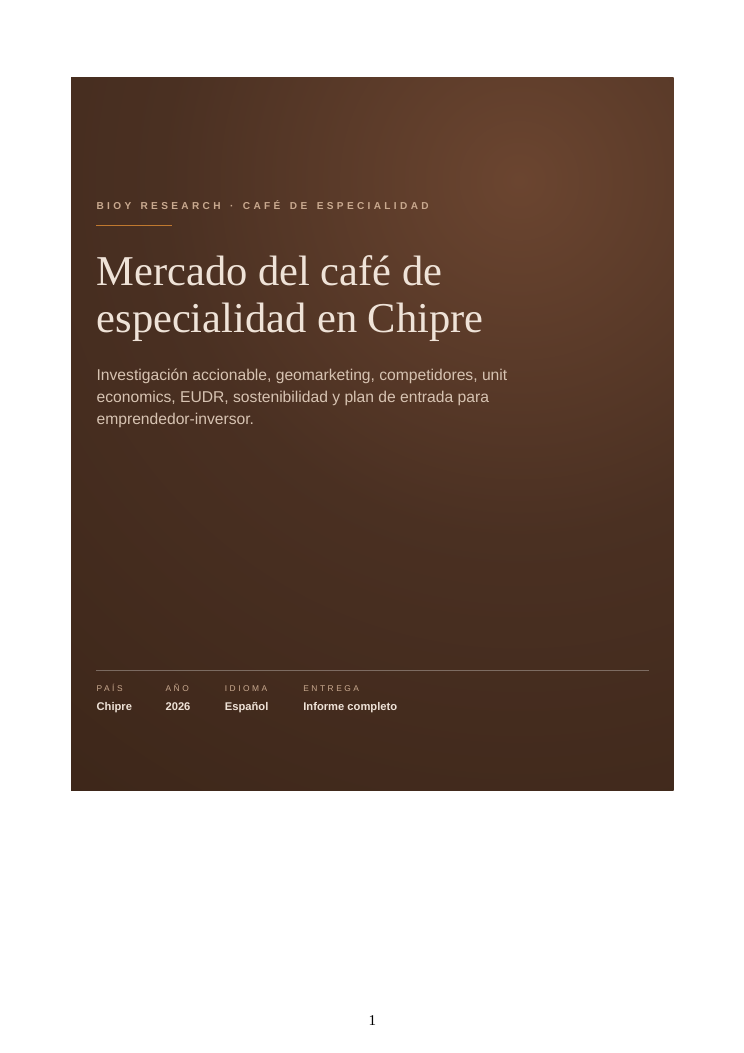
The specialty coffee market in CyprusPDF interior
Coming soon
2026 editionFree sample

The specialty coffee market in Cyprus

Cyprus (eurozone) has one of the highest café densities per capita in Europe (~12 kg/capita/year) and a deeply rooted cold-coffee culture (frappé and freddo), with a young but growing third-wave scene in Nicosia and Limassol (WAGMI Coffee, The Daily Roast, Utu, Kollaborative). Specialty competes by elevating the cold, not denying it. Demand, competitive map and entry economics, with labour cost in figures (2026 minimum wage of €979-1,088/month, employer charges of ~15.4%), a favourable tax nuance (the ΦΠΑ (VAT) on served coffee is the 9% hospitality rate and retail beans are at a temporary 0% until the end of 2026), EUDR and PPWR, and the island's logistics challenge. Strong tourism seasonality. Interviews with verifiable quotes from local founders. Currency euro (€). Deep dive of Nicosia, Limassol, Larnaca and Paphos. Data 2020–2026.

€299
individual licence · PDF
View details →
The specialty coffee market in LiechtensteinPDF interior
Coming soon
2026 editionFree sample

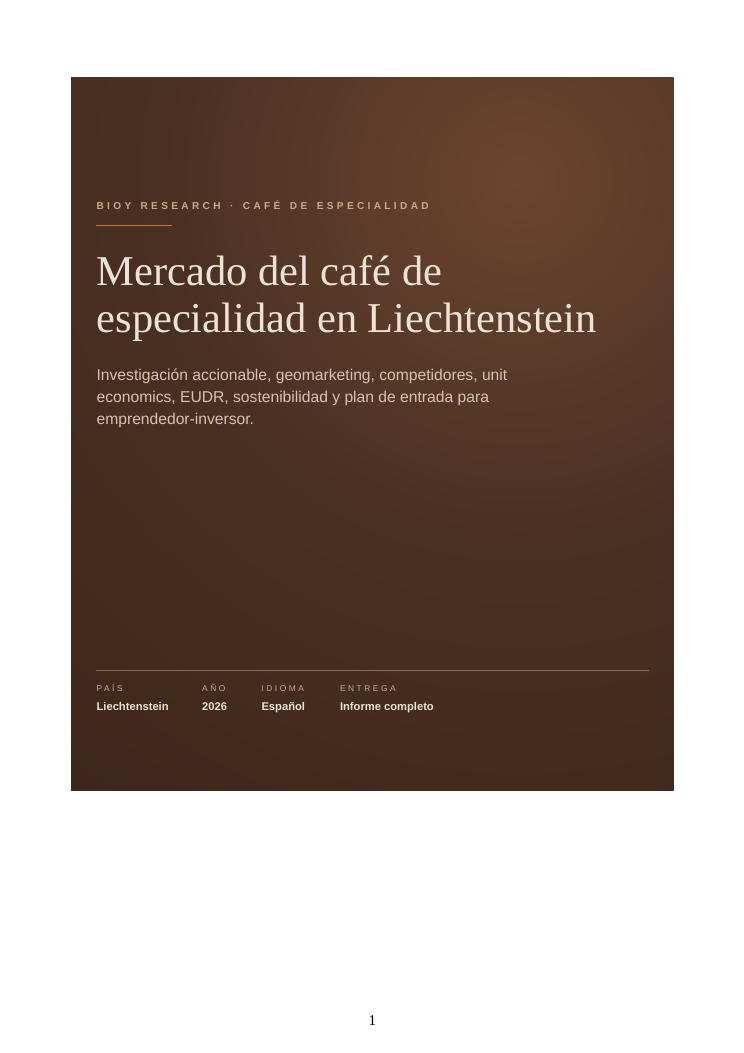
The specialty coffee market in Liechtenstein

Liechtenstein is the smallest market in the series (~40,000 inhabitants), in a customs and monetary union with Switzerland (currency CHF) and with the highest labour cost: a barista costs ~CHF 54,000-56,000/year. Despite its size, there is already local specialty roasting (Demmel Kaffee in Schaan, Coffee Manufacture Riesen in Triesen), proof that the category is viable. Realistic demand, location, cross-border competition and entry economics, with labour cost in figures (LHGV hospitality collective agreement CHF 3,468-3,866/month, employer charges ~12-16%) and the nuance of the Swiss MWST (VAT: coffee served on-site 8.1%, beans to take away 2.6%). The model rests on bean retail, B2B and consistency, not on footfall. Voices from the reference Swiss specialty scene. Figures in CHF with euro (€) comparisons. Data 2020–2026.

€299
individual licence · PDF
View details →
The specialty coffee market in SwedenPDF interior
Available
2026 editionFree sample

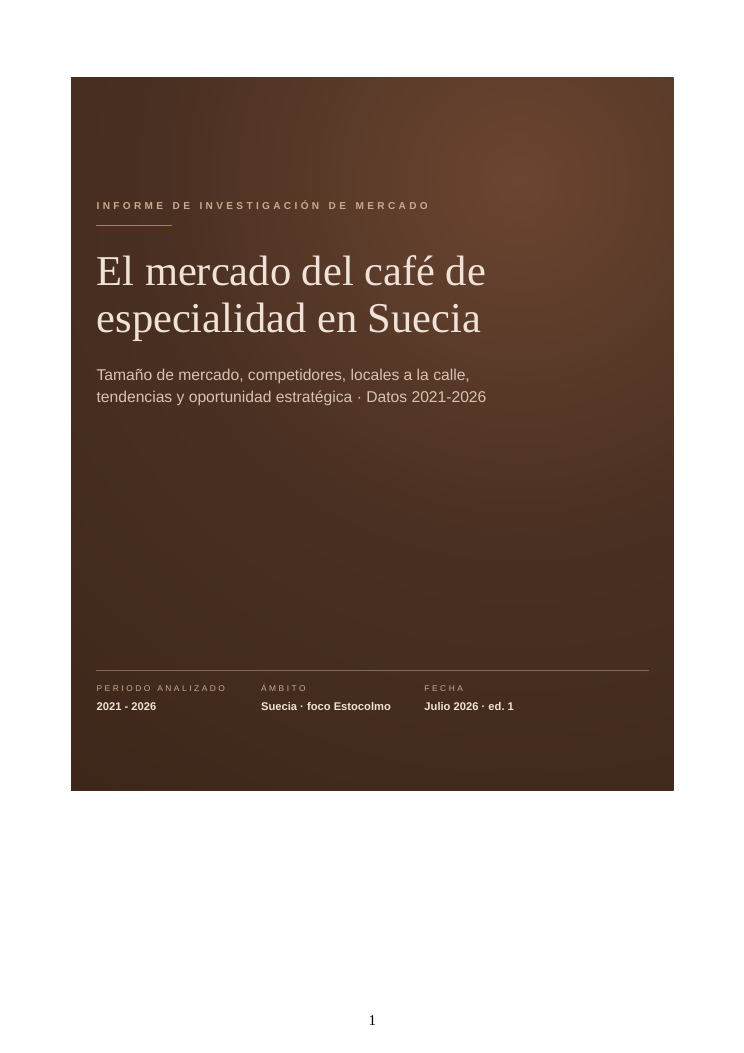
The specialty coffee market in Sweden

Sweden has one of the most mature and technical Nordic scenes in Europe: world-class roasters (Drop Coffee by Joanna Alm, Koppi by Anne Lunell, Da Matteo, Johan & Nyström, Lykke), very high per-capita consumption and the fika culture. The challenge is not quality but pedagogy against the dark-roast habit and hospitality as the differentiator. Demand, competitive map and entry economics, with the nuance of the moms (coffee served 12%, retail beans 6% temporary until 2027, standard 25%) and collective-agreement wages (Visita-HRF ~SEK 25,900-29,200/month, employer charges 31.42%; Sweden has no statutory minimum wage). Interviews with verifiable quotes from Swedish founders. Currency Swedish krona (SEK). Deep dive into Stockholm, Gothenburg and Malmö. Data 2020–2026.

€299
individual licence · PDF
View details →
The specialty coffee market in AustriaPDF interior
Available
2026 editionFree sample

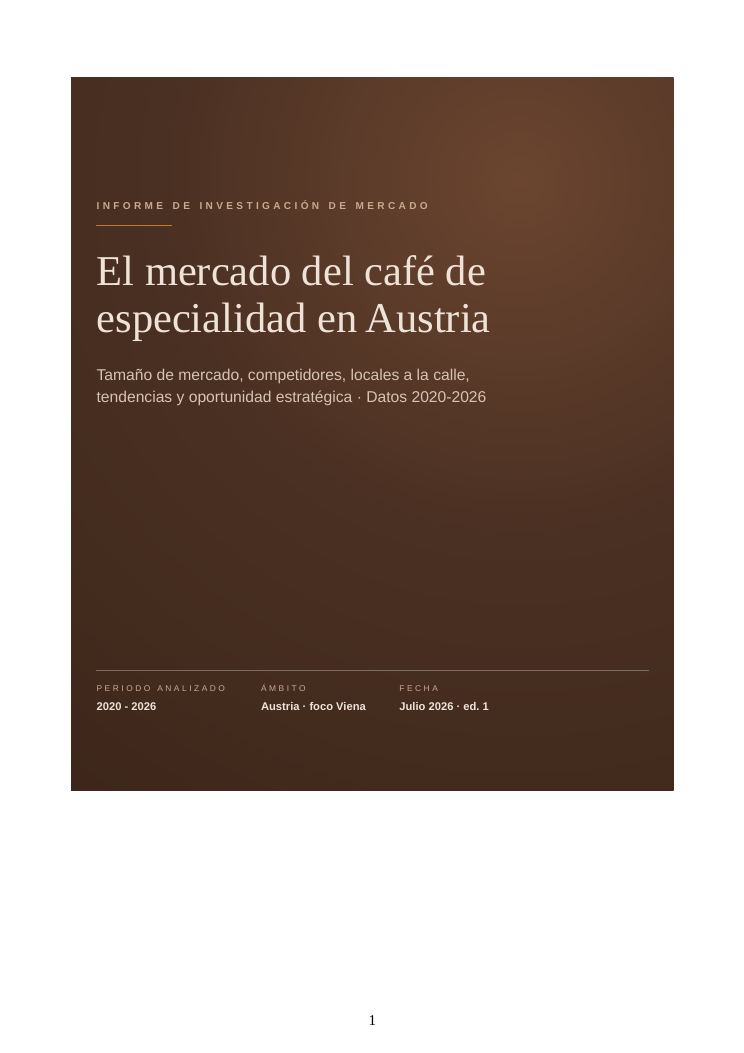
The specialty coffee market in Austria

Austria combines the historic culture of the Viennese Kaffeehaus (UNESCO intangible heritage, 350 years) with an elite third-wave scene: GOTA Coffee entered the world top 3 in 2025, Martin Wölfl was Brewers Cup world champion in 2024, and brands like Small Batch, Jonas Reindl and kaffeefabrik lead Vienna. The winning differentiator is hospitality executed with intention, not just technique. Demand, competitive map and entry economics, with the nuance of the USt (coffee is a Genussmittel at 20%, not the reduced 10% of catering; only food at 10%/13%), collective-agreement wages (Kollektivvertrag Gastgewerbe with 14 pay periods) and employer charges ~28-29%. Interviews with verifiable quotes from Austrian leaders and barista champions. Currency euro (€). Deep dive into Vienna, Graz, Salzburg and Tyrol. Data 2020–2026.

€299
individual licence · PDF
View details →
The specialty coffee market in PolandPDF interior
Available
2026 editionFree sample

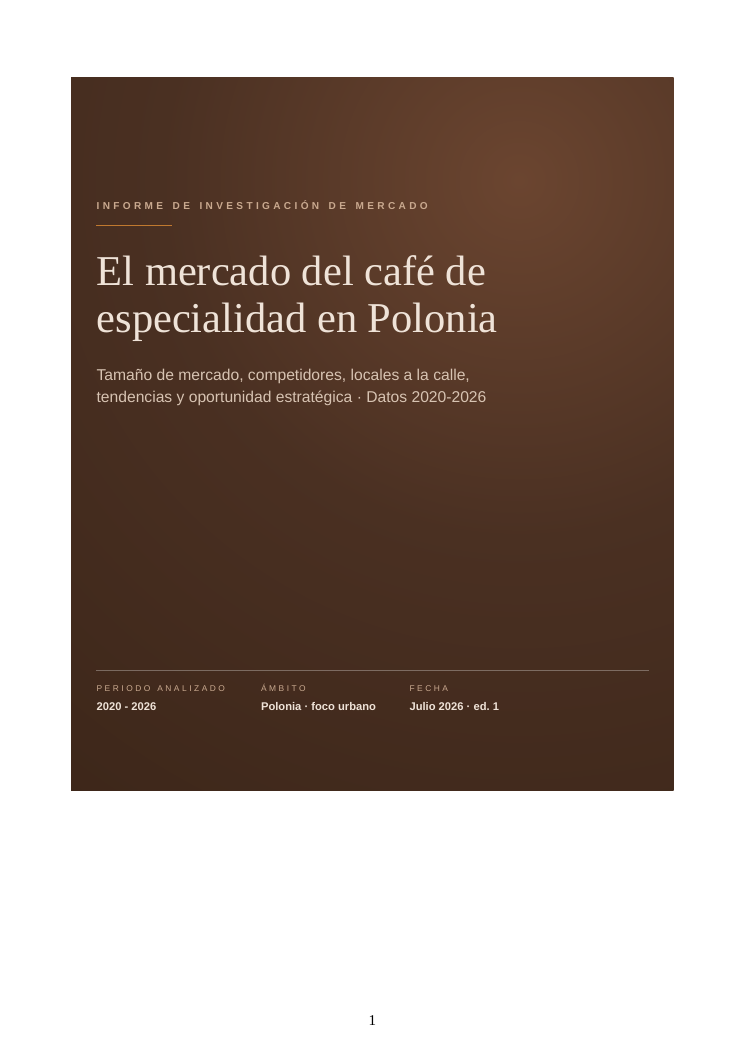
The specialty coffee market in Poland

Poland is one of the fastest-growing specialty scenes in Central Europe, with international technical recognition (Agnieszka Rojewska, 2018 barista world champion) and reference brands (Coffeedesk, HAYB, Hard Beans by Krzysztof Barabosz, Java Coffee), against the dominant convenience of Żabka Café. The challenge is translating specialty to a broad urban consumer without elitism. Demand, competitive map and entry economics, with the nuance of VAT (coffee served at 23%, drinks excluded from the 8% catering rate; food at 8%), a 2026 minimum wage of PLN 4,806/month and ZUS employer charges ~20.5%. Interviews with verifiable quotes from Polish leaders and barista champions. Currency złoty (PLN). Deep dive into Warsaw, Kraków, Wrocław and Poznań. Data 2020–2026.

€299
individual licence · PDF
View details →
The specialty coffee market in DenmarkPDF interior
Available
2026 editionFree sample

The specialty coffee market in Denmark

Denmark is one of Northern Europe's elite specialty scenes, with Copenhagen as its epicentre: The Coffee Collective, founded by Klaus Thomsen (2006 barista world champion), set the standard for price transparency to the producer, alongside La Cabra by Esben Piper and April Coffee by Patrik Rolf. The challenge is competing in a demanding, high-cost premium market. Demand, competitive map and entry economics, with the nuance of VAT (a single 25% rate for both coffee served and beans, no reduced rate), the absence of a statutory minimum wage (HORESTA-3F collective agreements of ~DKK 128-176/h), the coffee tax abolished in July 2026 and low employer charges. Interviews with verifiable quotes from Danish leaders and barista champions. Currency Danish krone (DKK, outside the eurozone). Deep dive into Copenhagen and Aarhus. Data 2020–2026.

€299
individual licence · PDF
View details →
The athletic footwear market in EuropePDF interior
Available
2026 editionFree sample

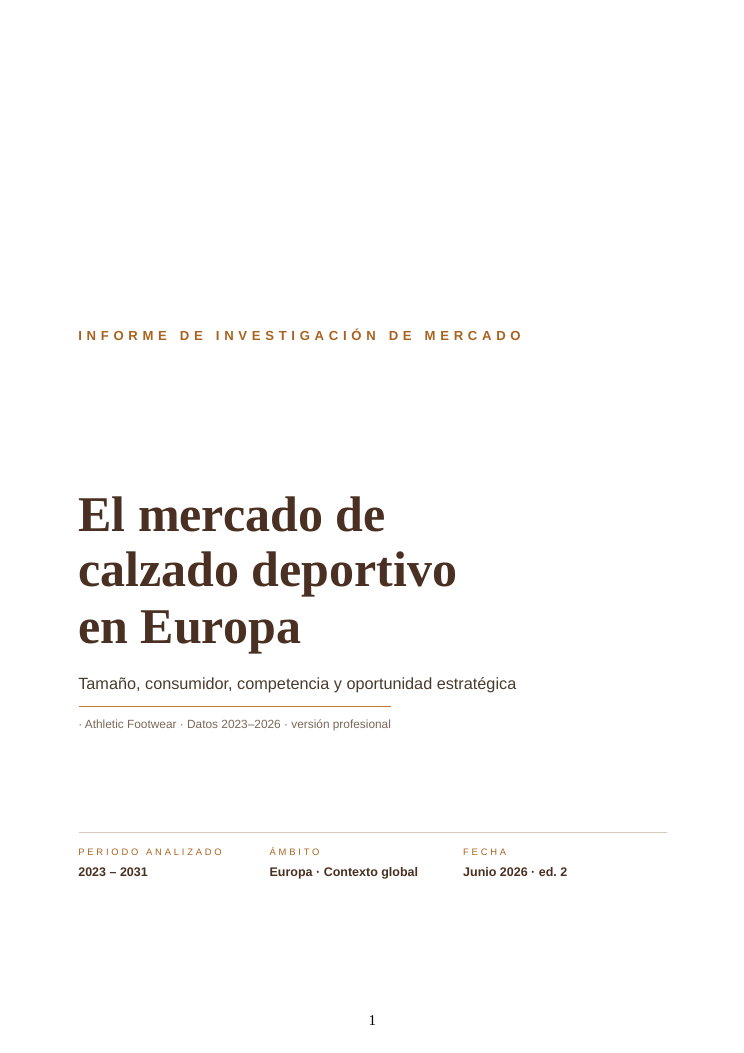
The athletic footwear market in Europe

Size, consumer, competition and strategic opportunity. SOM with Monte Carlo triangulation, brand financial profiles, pricing and economics by channel. Data 2023–2026.

€299
individual licence · PDF
View details →
The specialty coffee market in BrazilPDF interior
Available
2026 editionFree sample

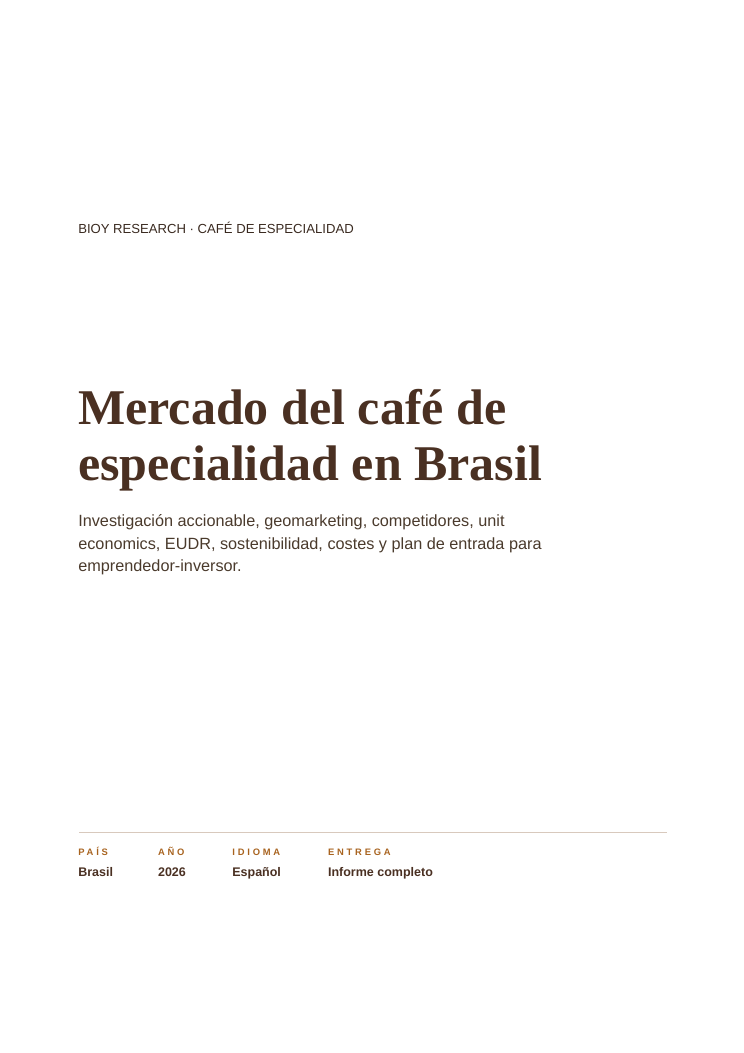
The specialty coffee market in Brazil

The world's largest coffee producer is living an expanding urban third wave. Demand, competitive map and entry economics, with a district-by-district read of São Paulo. Origin advantage (high-quality local bean), taxation and labour cost, and the opportunity of a roastery-café with a terroir story. Data 2024–2026.

€299
individual licence · PDF
View details →
The specialty coffee market in ColombiaPDF interior
Available
2026 editionFree sample

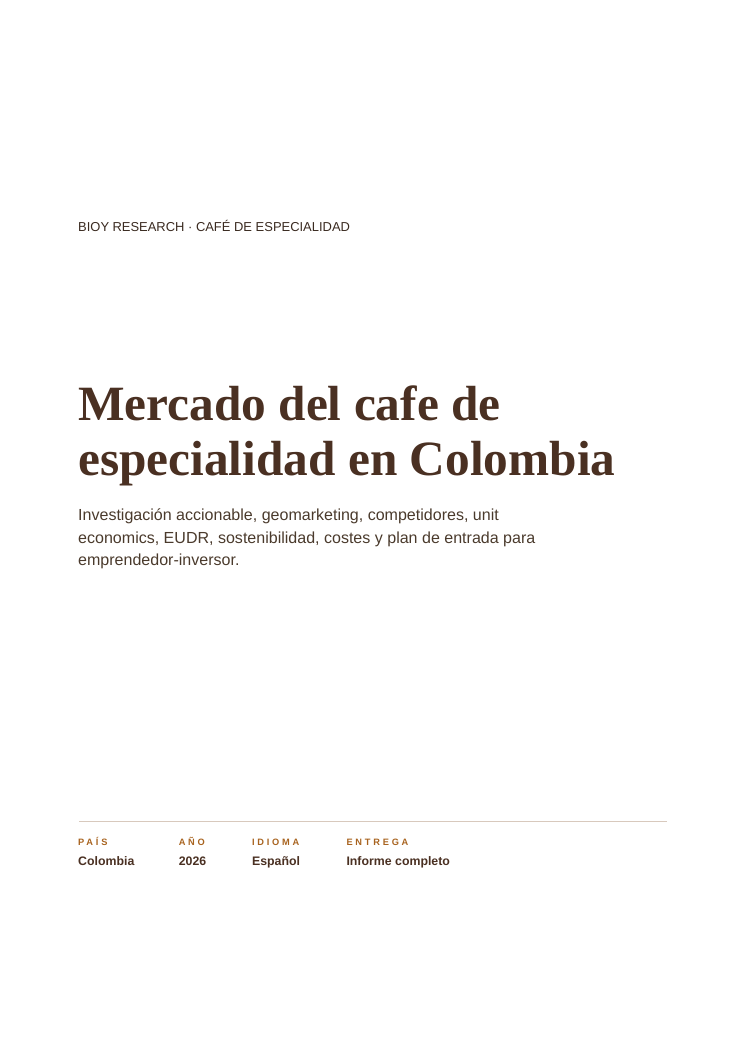
The specialty coffee market in Colombia

A coffee-growing country par excellence where domestic specialty consumption is growing fast. Demand, competitive map and entry economics, with a read of Bogotá by neighbourhood and of Medellín. Origin advantage, taxation and labour cost, and the entry plan for a roastery-café with an origin story. Data 2024–2026.

€299
individual licence · PDF
View details →
The specialty coffee market in EcuadorPDF interior
Available
2026 editionFree sample

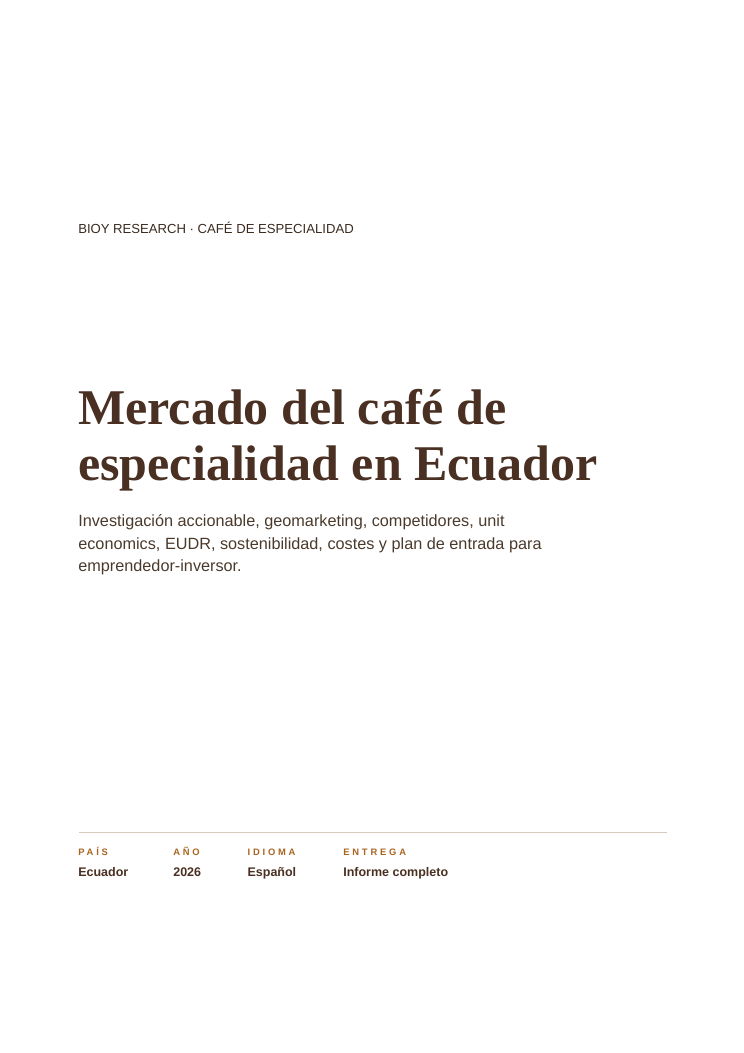
The specialty coffee market in Ecuador

An emerging, dollarized market with its own production and a young specialty scene in Quito and Guayaquil. Demand, competitive map and entry economics. The paradox of a producer that imports commodity coffee, taxation and labour cost, and the entry plan for a roastery-café. Data 2024–2026.

€299
individual licence · PDF
View details →
The specialty coffee market in IrelandPDF interior
Available
2026 editionFree sample

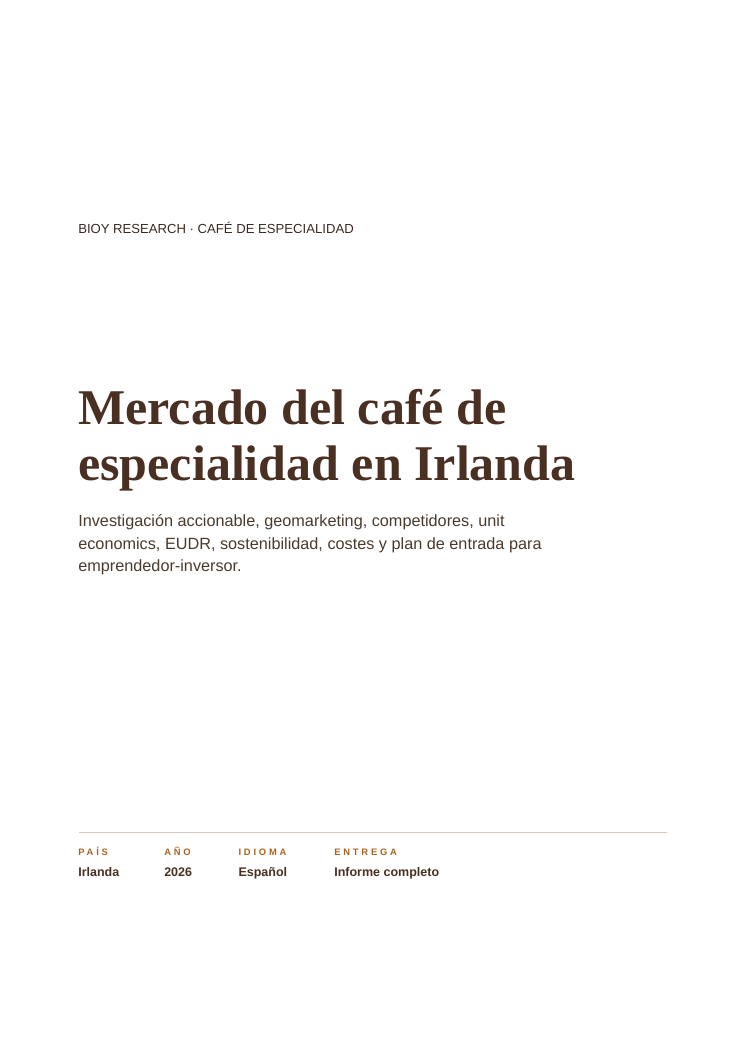
The specialty coffee market in Ireland

A mature scene in Dublin with margins under pressure: cost, not demand, is the threat. Demand, competitive map and entry economics, with a district-by-district read of Dublin. HORECA VAT at 9%, labour cost, EUDR applies and the entry plan modelled with a buffer. Data 2024–2026.

€299
individual licence · PDF
View details →
The specialty coffee market in PeruPDF interior
Available
2026 editionFree sample

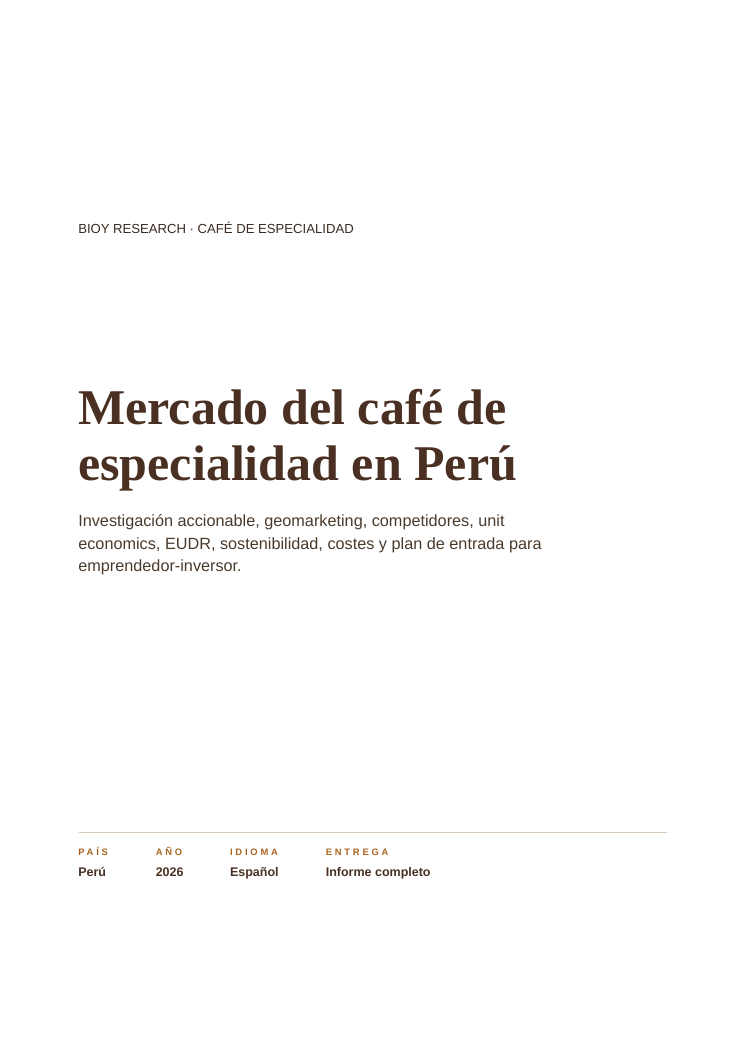
The specialty coffee market in Peru

A producing country with a booming specialty scene in Lima. Demand, competitive map and entry economics, with a district-by-district reading of Lima. Origin advantage (award-winning Peruvian beans), taxation and labour cost, and the entry plan for a roastery-café built on an origin story. Data 2024–2026.

€299
individual licence · PDF
View details →
The specialty coffee market in SwitzerlandPDF interior
Available
2026 editionFree sample

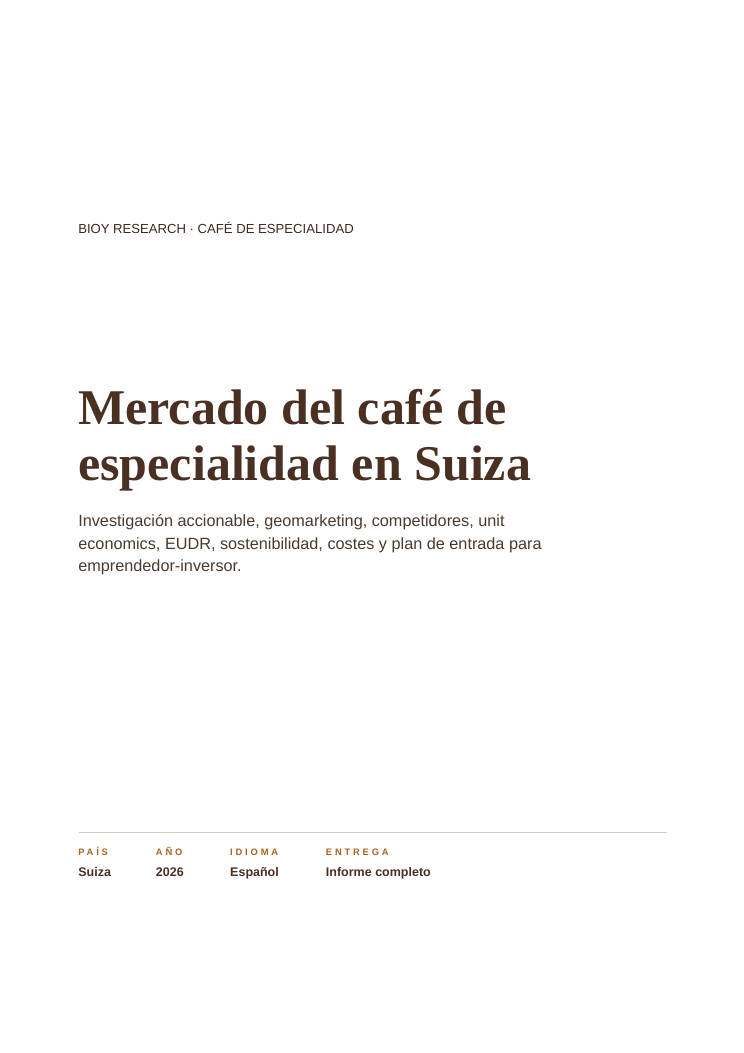
The specialty coffee market in Switzerland

The most expensive market in the world, with premium demand and a labour cost that defines the margin. Demand, competitive map and entry economics, with a reading of Zurich by Kreise. Swiss VAT (8.1% / 2.6% takeaway), L-GAV labour cost and the entry plan of a roastery-café. Data 2024–2026.

€299
individual licence · PDF
View details →
The specialty coffee market in ChilePDF interior
Available
2026 editionFree sample

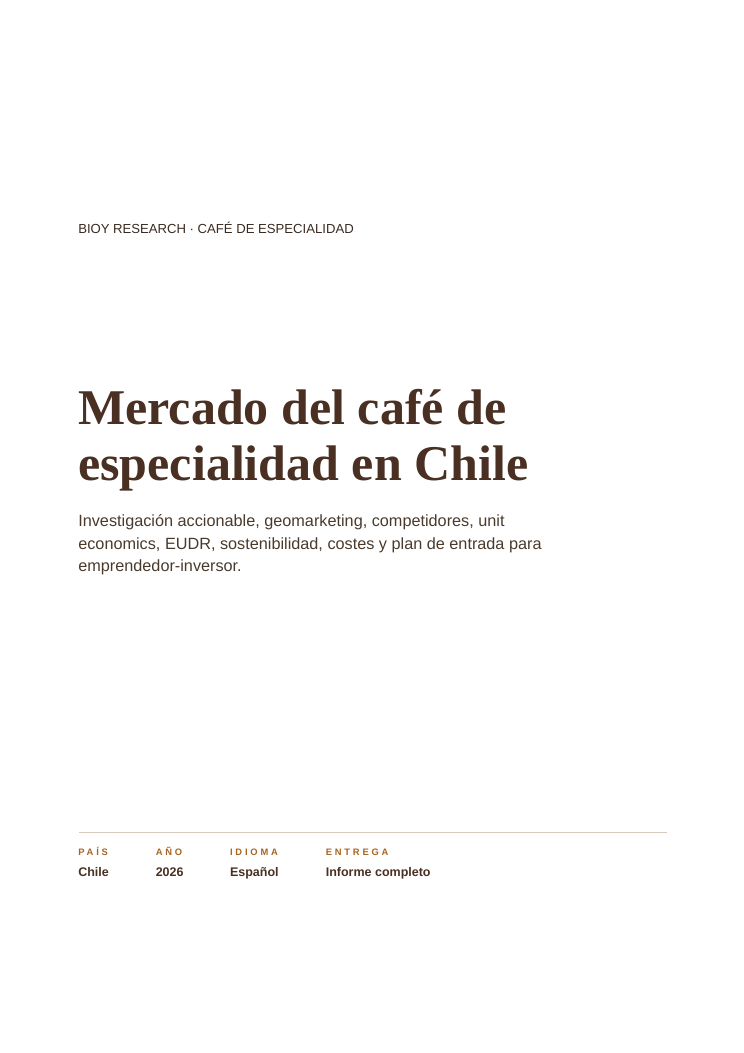
The specialty coffee market in Chile

An emerging market where specialty coffee is growing against a historical habit of tea and instant coffee. Demand, competitive map and entry economics, with a read of Santiago by district and the touristic south. The real barrier of imported green coffee, 19% VAT and the Pro Pyme regime, the REP packaging law and EUDR (does not apply except for exports to the EU). Data 2024–2026.

€299
individual licence · PDF
View details →
The specialty coffee market in UruguayPDF interior
Available
2026 editionFree sample

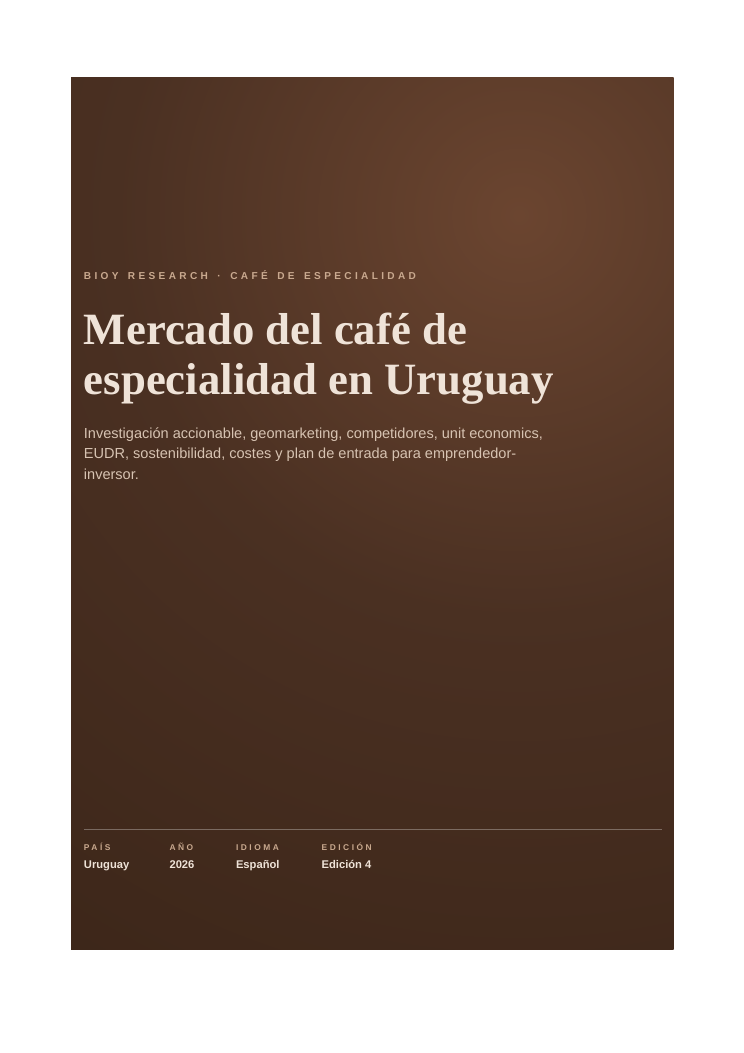
The specialty coffee market in Uruguay

The land of mate: specialty coffee grows against a deeply rooted habit of mate and infusions (142 cups/year per capita, 54% of the market still instant). Demand, competitive map and entry economics, with a read of Montevideo by neighbourhood (Pocitos, Punta Carretas, Cordón, Ciudad Vieja) and the emerging frontier. Uruguay imports all of its coffee, 22% VAT on served coffee and 10% on retail beans, EUDR (does not apply unless exporting to the EU). 2024–2026 data · Edition 4.

€299
individual licence · PDF
View details →
The specialty coffee market in ParaguayPDF interior
Available
2026 editionFree sample

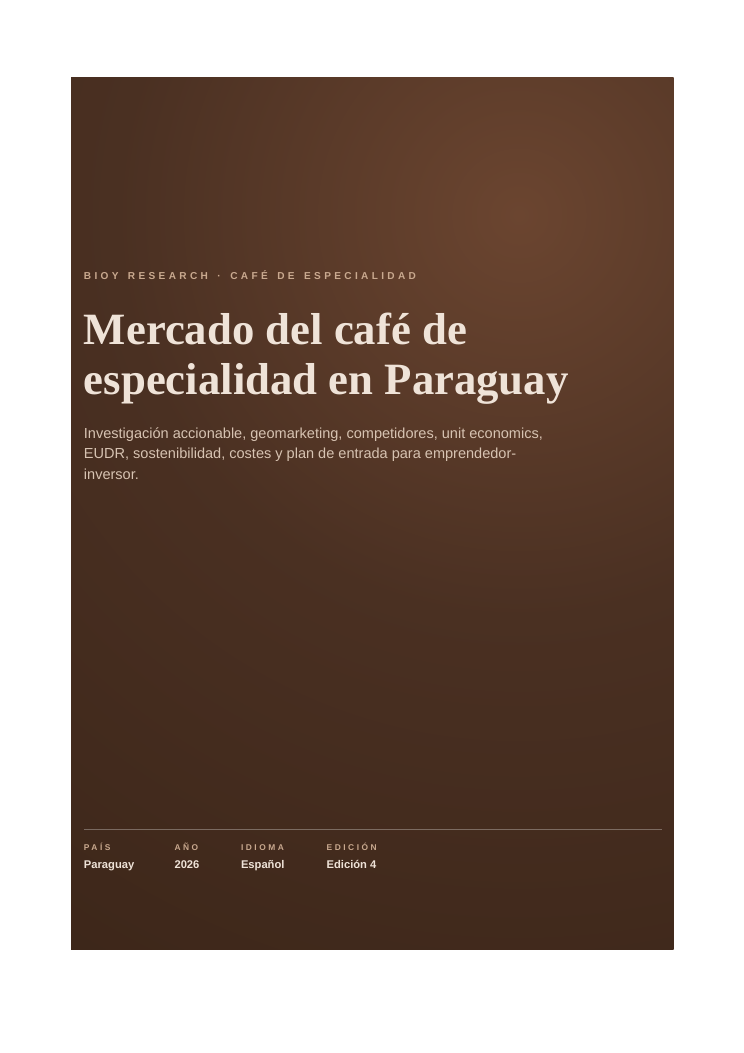
The specialty coffee market in Paraguay

An early-stage market where specialty coffee grows against the deep-rooted habit of tereré (81.6% urban penetration) and mate cocido. Per-capita consumption is very low but imports are surging (+71.8% in 2025), with cold brew as the entry lever driven by the hot climate. Demand, competitive map and entry economics in Asunción, with 10% VAT, IPS payroll costs and municipal + INAN licensing. EUDR does not apply unless exporting to the EU. Edition 4 with source traceability and a bottom-up market model. Data 2024–2026.

€299
individual licence · PDF
View details →
Methodology

Rigorous analysis, built to decide

Every report is built on verified primary sources and translated into actionable readings. These are our three commitments.

No inflated figures

When a figure is an estimate, we say so. Every number is triangulated and comes with its source and confidence level.

A concrete competitive view

Brand by brand, by name: how many locations, where they operate, whether they roast and their real size from public registries.

Decision-oriented

Which city, which format, what economics and who you're up against: the intelligence an entrepreneur or investor needs before investing.

Clear pricing

The analysis you need, at an accessible price

Each report combines the depth of market intelligence with a direct format and a price made for decision-makers. Here's what it includes.

Premium sector report

USD 2,000–4,750
Extensive reports focused on market size and its evolution, with deep macro-level detail.

Bioy Research report

€299 – 3,499
Decision-focused analysis: competitive map, density by city, economics and entry insight.

Bespoke study

€1,500–6,000
Tailored analysis for one specific site, with an on-site visit and a custom quote.

Let's talk

Support for your purchase, a general enquiry or a report on demand. Write to us and we'll reply.