PDF interior
What you will see inside
Real PDF pages: cover, executive summary, charts and competitive tables.
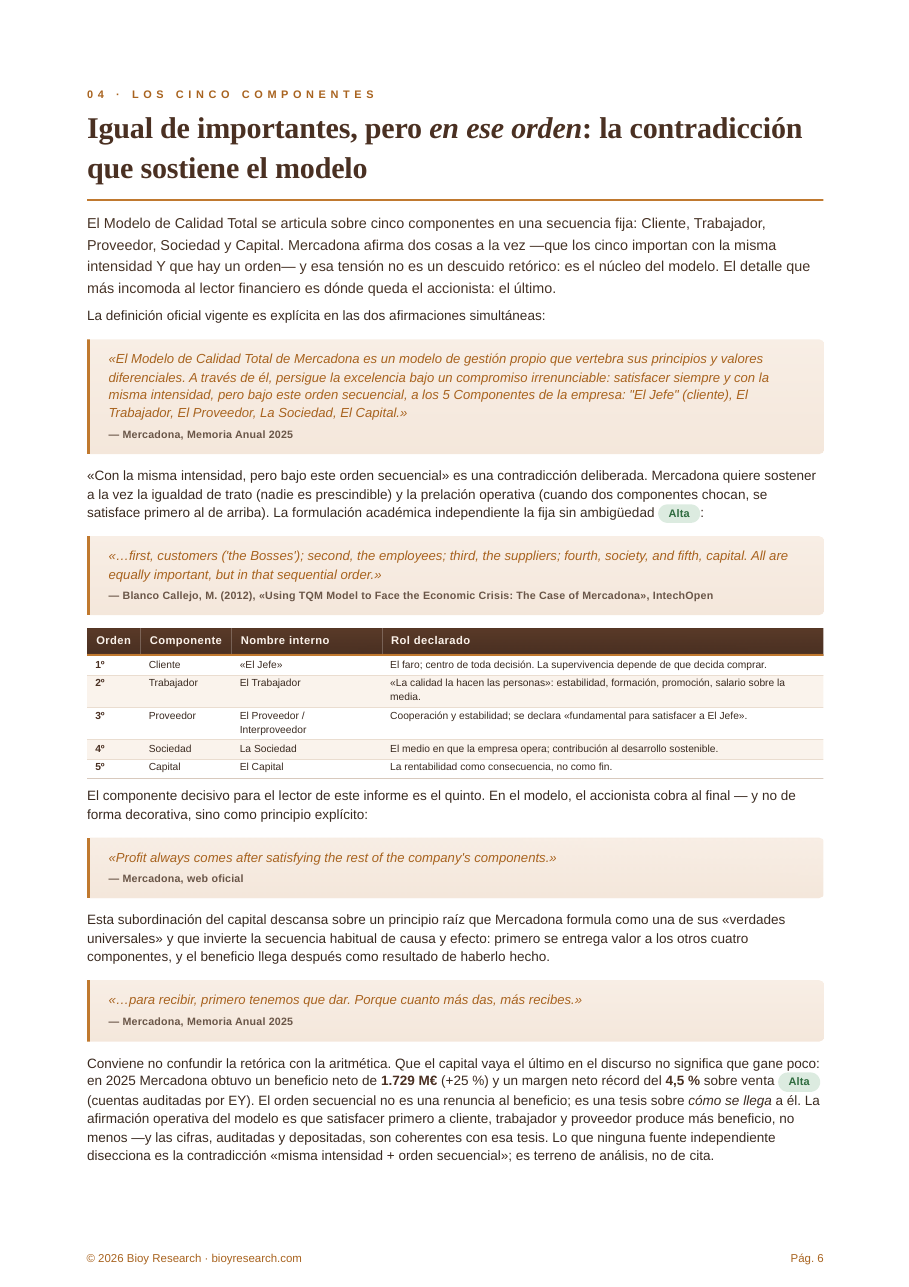
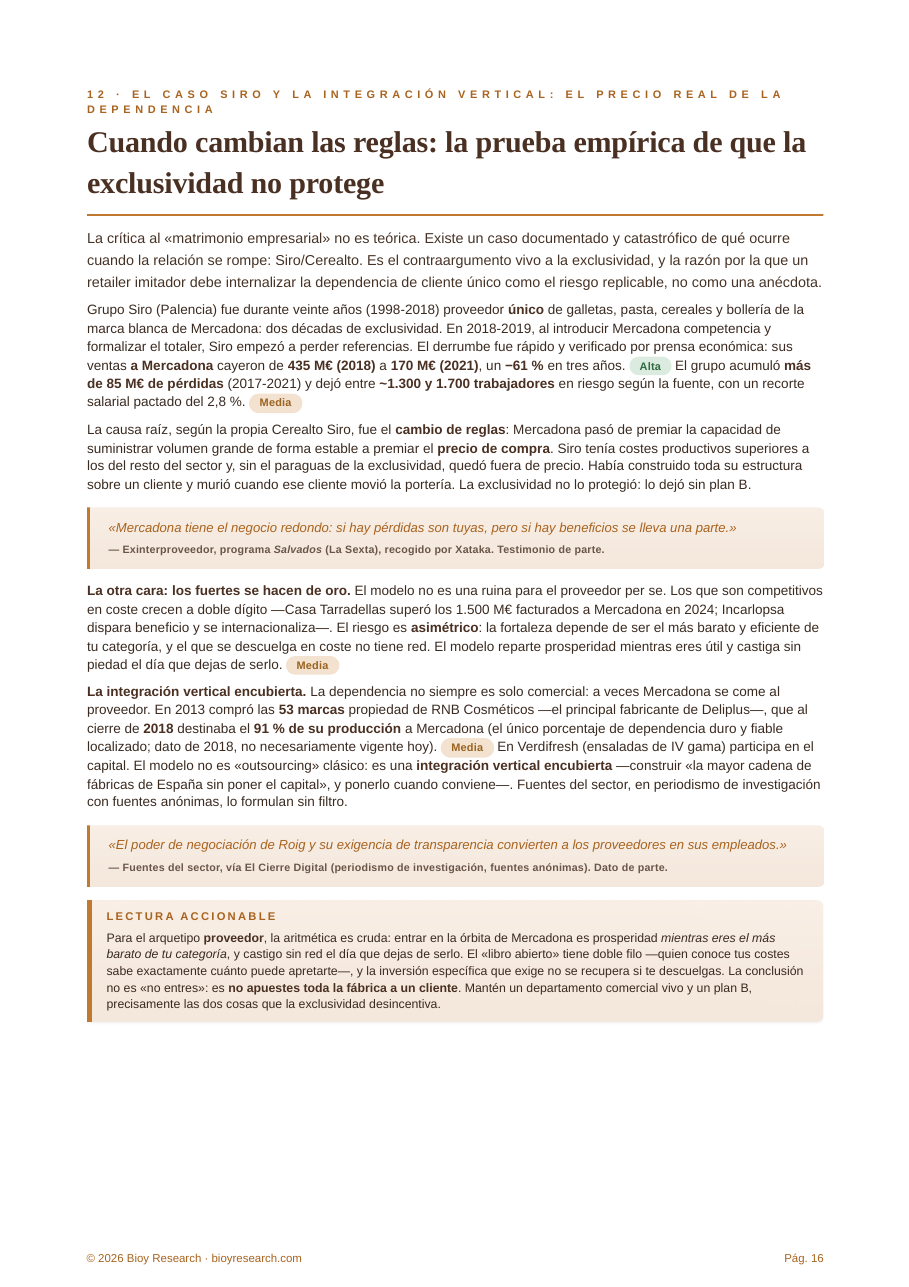
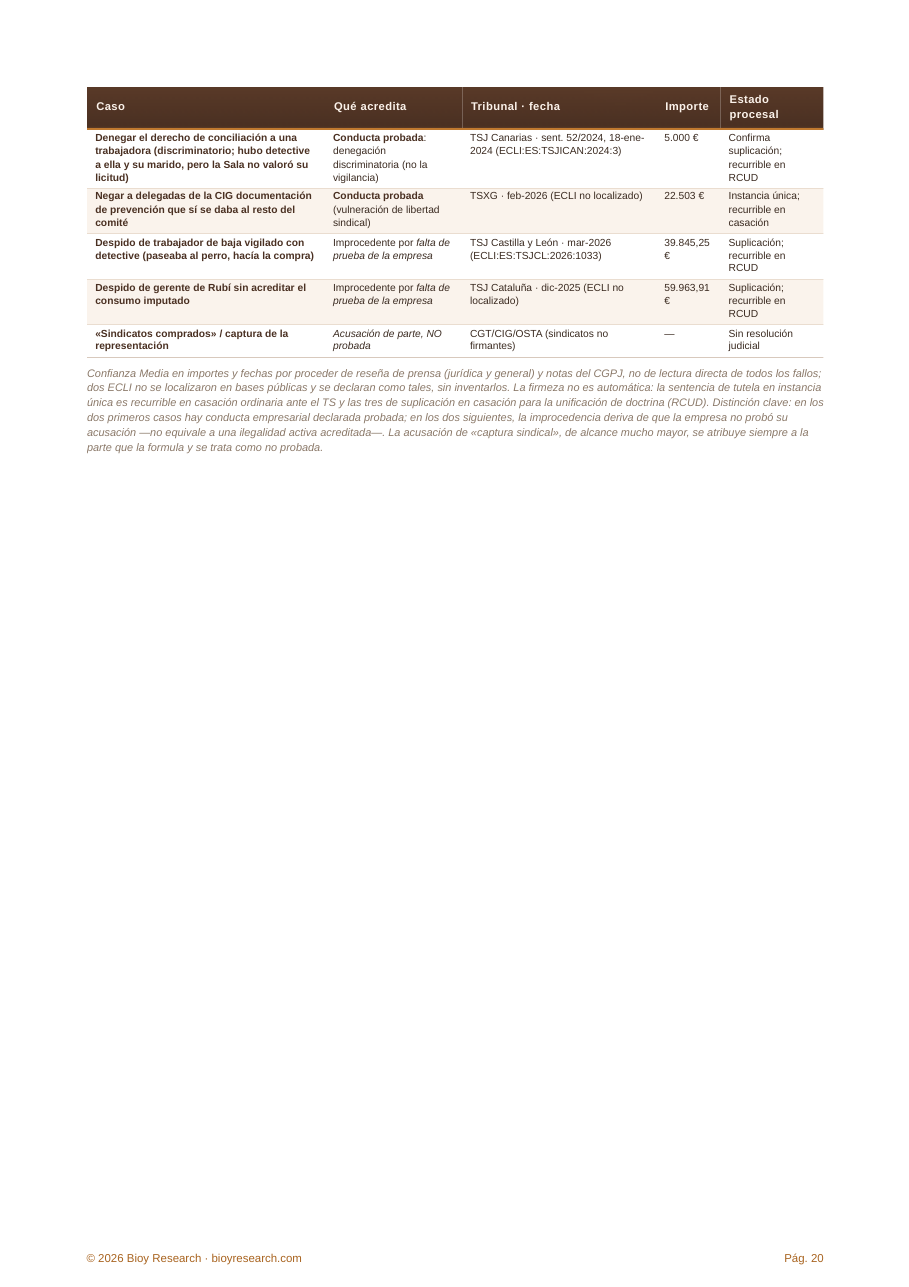
An analysis for anyone running a chain or a mid-sized retail business who has ever thought "we should do what Mercadona does." This is not a company biography: it is a reverse-engineering of the model, piece by piece, to separate what a retailer can replicate without Mercadona's size from what stays anchored to scale. With the real arithmetic of margin and turnover, the supplier system exactly as it works today, the labour pillar with its two sides as verified in the courts, and a replicability verdict component by component.
Real PDF pages: cover, executive summary, charts and competitive tables.
Each section answers a concrete question asked by anyone running a retailer and wondering what part of Mercadona they can bring into their own business.
How low prices and high wages are financed at the same time: net margin, inventory turnover, sales density per square metre and productivity per employee, each figure with its source and its confidence level, distinguishing what Ernst & Young audited from what the company merely states. The question it answers is not "is the model good?", but which parts of it depend on size and which do not.
What the interproveedor (co-supplier) was, why Mercadona buried its most quoted feature —category exclusivity— in 2019, and what the "totaler supplier" (full-range supplier) is today. The case, documented with figures, of a manufacturer that built its business on a single customer and what happened to it when the rules changed. The lesson in dependence that a supplier must internalise before signing.
The model cited as exemplary by academia (wages above the collective agreement, profit-sharing, training, internal promotion) and the adverse court rulings —each with its court, amount and procedural status—, separating conduct that a court declares proven from a dismissal for lack of evidence and from an unproven one-sided accusation. Sugar-coated in no direction.
Consum, Dia, the regional players, Lidl and the international cases (Trader Joe's, Wegmans, QuikTrip), with what each one teaches about what can be copied without scale and what cannot. And an element-by-element analysis —with its scale requirement— that tells you, without easy binaries, which parts of the model a retailer or a small business can take on, and at what cost.
Professional design, verified data and clear tables in every section.
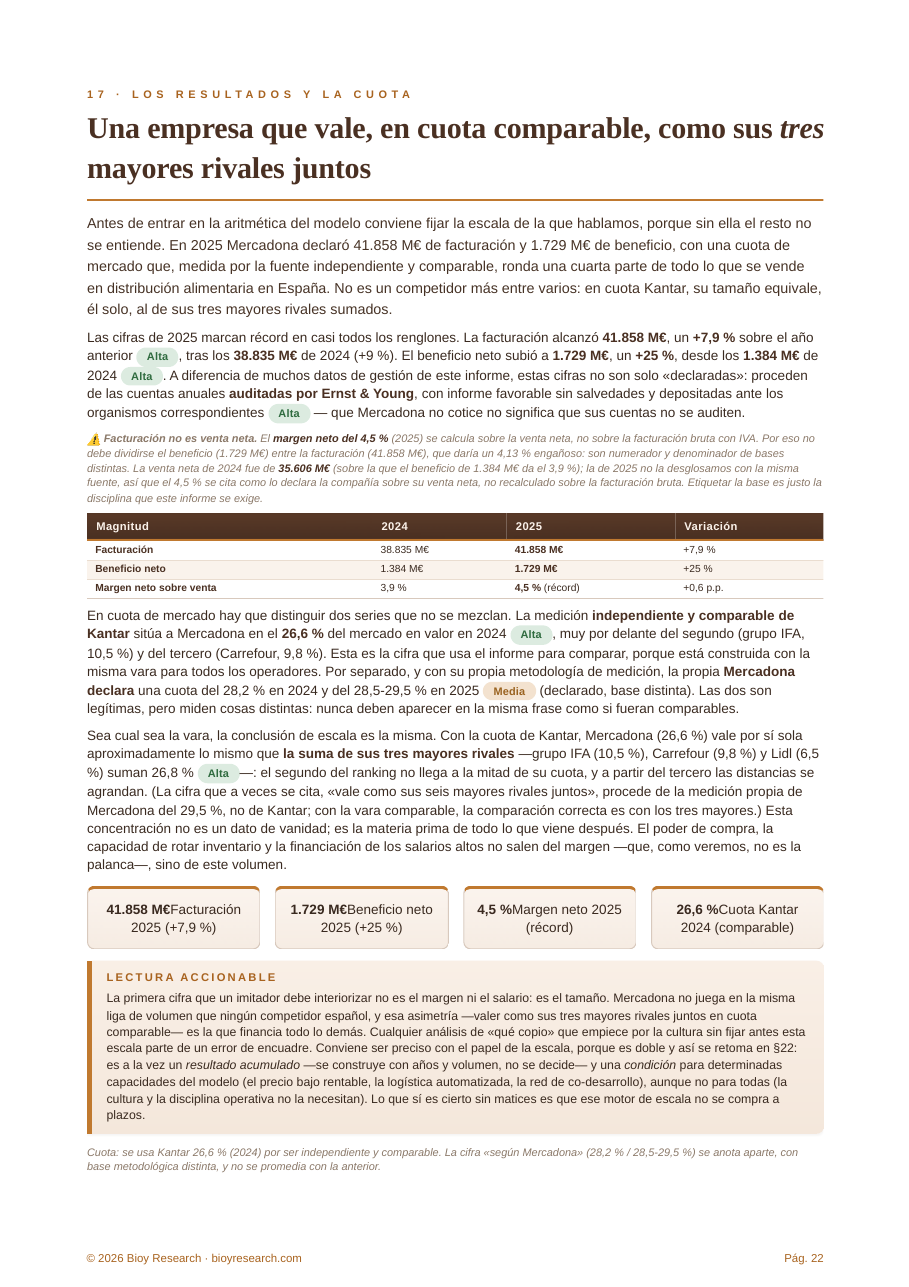
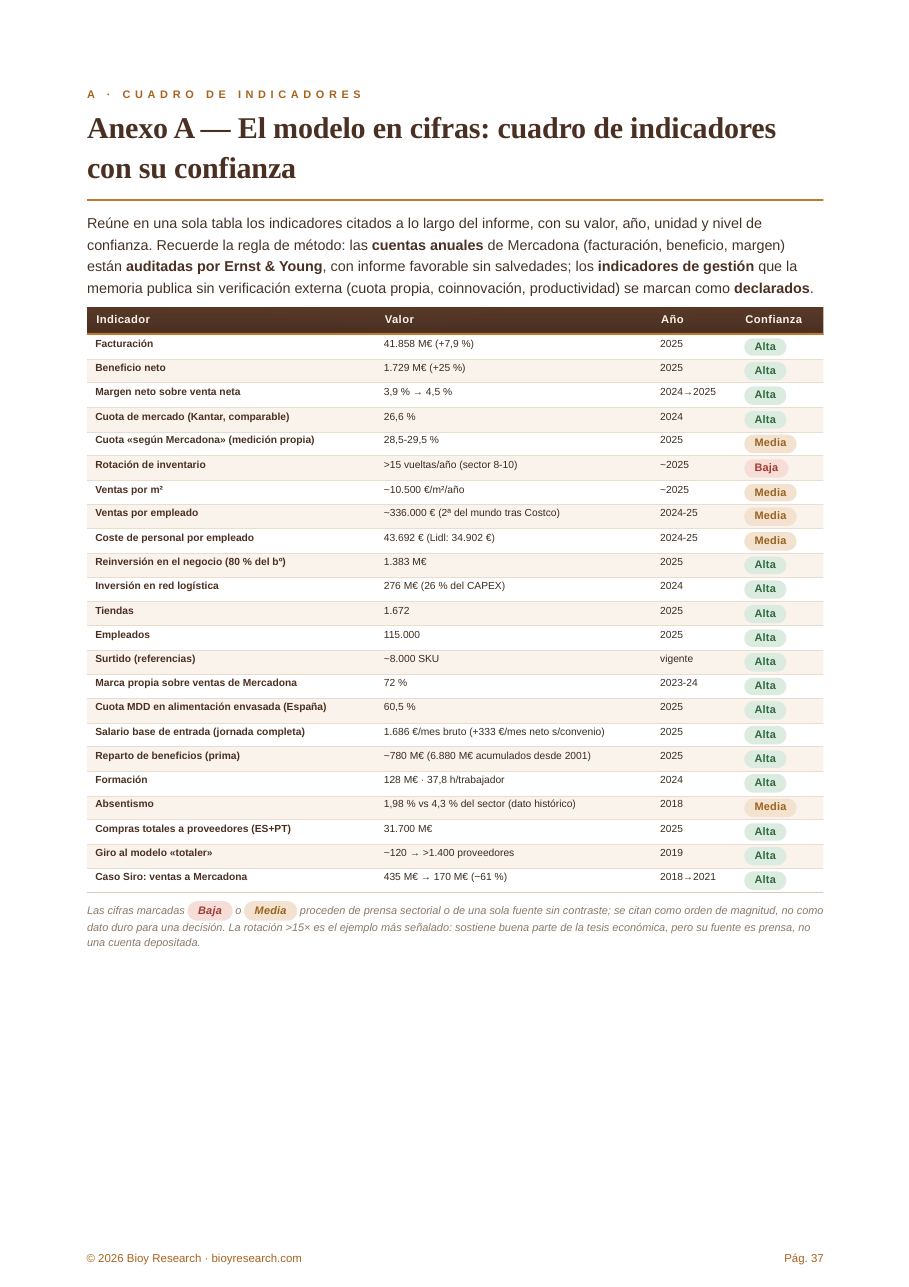
Sample of a few pages from the report. The full version includes all tables, figures and sources.
A 39-page PDF ready to read on any device or to print. You receive it by email immediately after payment.
For anyone running a regional chain, a mid-sized retail business or a growing banner and wondering whether the Mercadona model is a roadmap or a mirage. Secondarily, for the manufacturer weighing entry into Mercadona's orbit as a supplier: for them, the supply-chain section is a warning, with names and figures.
No. The report captures both sides of the model with the source in plain view: it is at once a management-textbook case in people management and a company with adverse court rulings; a marvel of efficiency and a system that, according to its critics, squeezes its suppliers. It sugar-coats in no direction.
It is not a bespoke consultancy nor a plan for your specific company. It is an analysis of the model, with its method and its data, that you apply to your own case to decide what to copy and what not.
This report is available in Spanish, English, German and French.
It saves you the imitator's most expensive mistake: copying the visible half of the model without the half that holds it up.
Buy the report · €990